Shared Flavors , Shared Memories
Ramyeon Beside Rice
From policy to pocket money, ramyeon became Korean not by replacing rice, but by standing beside it.
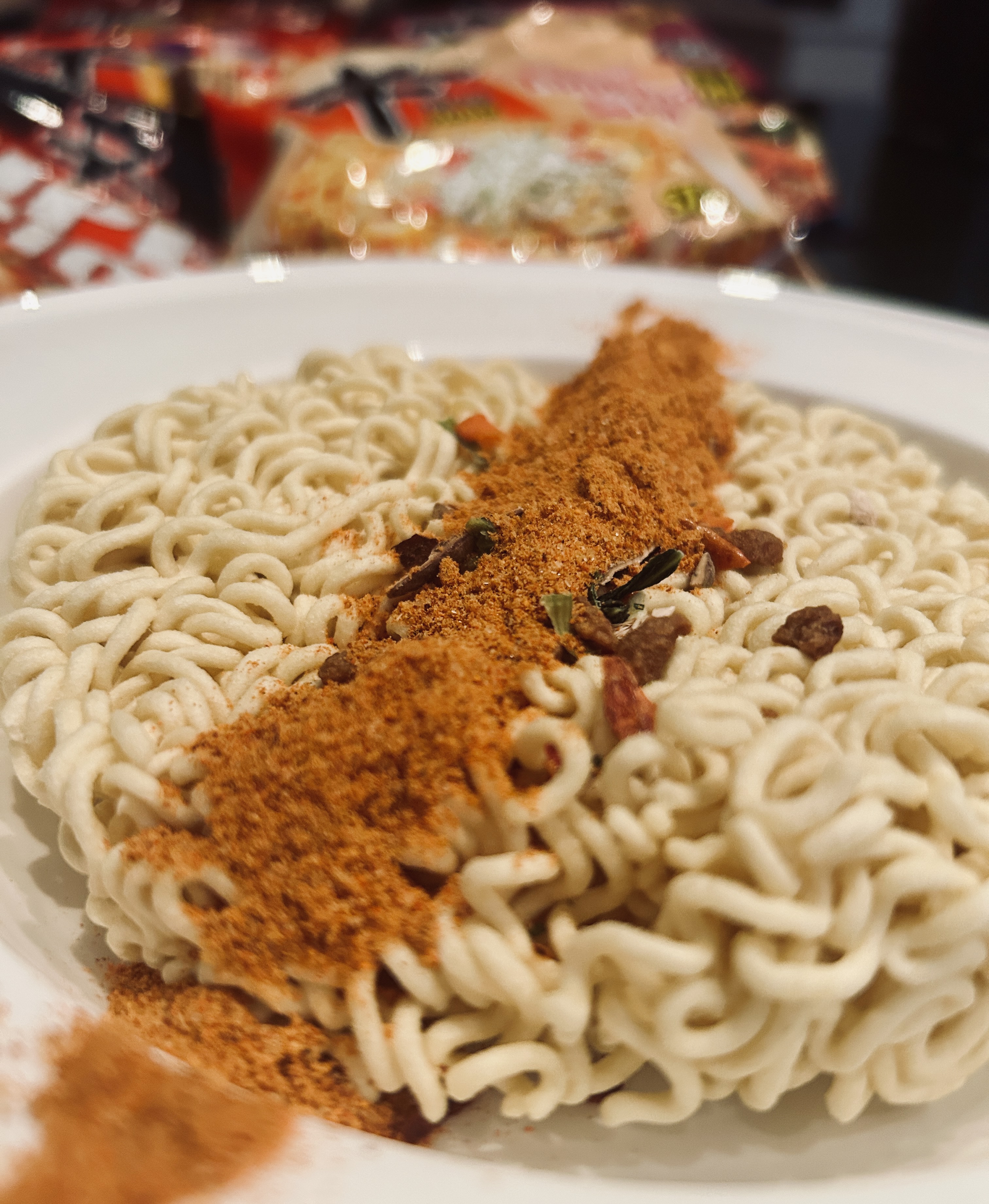
From policy to pocket money, ramyeon became Korean not by replacing rice, but by standing beside it.

"Really? You eat rice three times a day, every day?"
I hear this often from friends unfamiliar with Korean food culture. Just as bread anchors meals elsewhere, rice holds that place in Korea. For generations, rice defined what eating meant. Ssalbap (쌀밥), plain white rice, stood at the center of the table. Barley, buckwheat, millet... they existed, but belonged to a different emotional register. Sustaining, but rarely desired.
The phrase kkongboribap (꽁보리밥), plain barley rice, still carries the memory of scarcity. It recalls boritgogae (보릿고개), the late spring hunger when rice ran out before the next harvest. Barley kept people alive, but it was not the food people longed for.
And when rice became available again, it was eaten eagerly and in abundance.

I recognized this same hierarchy in my father-in-law, who grew up in socialist Hungary. He avoided barley whenever possible. He never dramatized it, but the association was clear. Barley meant rationing. Certain grains preserve the memory of instability long after the instability itself has passed.
When I was young, my father would look at a table set with bread or ramyeon (라면) and ask, half serious, half joking:
그거 가지고 되겠어? 밥을 먹어야지.
"Can you live on that? You need proper rice."
It wasn't about taste. It was about sufficiency. Bread was considered a snack. Noodles left you hungry again too soon. Only rice could anchor a meal. Even after finishing a bowl of ramyeon, rice would be added to the remaining broth. Only then did the meal feel complete.
Wheat had been present on the Korean peninsula for centuries, but Korea's farming system was built around rice paddies. Wheat had to be dried, milled, and kneaded before it became edible. Because of this, flour was rare — and its rarity made it valuable. Pure wheat flour once signaled access and privilege, not poverty.
Then the Korean War flipped everything. Rice became scarce. Wheat arrived in massive quantities through American aid. What had once been rare and precious became abundant and cheap.
The government responded with honbunsik (혼분식), a policy requiring restaurants to mix at least 25 percent barley or wheat into rice. "Flour food days" were designated. Schools inspected lunchboxes. Flour was no longer optional. It was enforced.
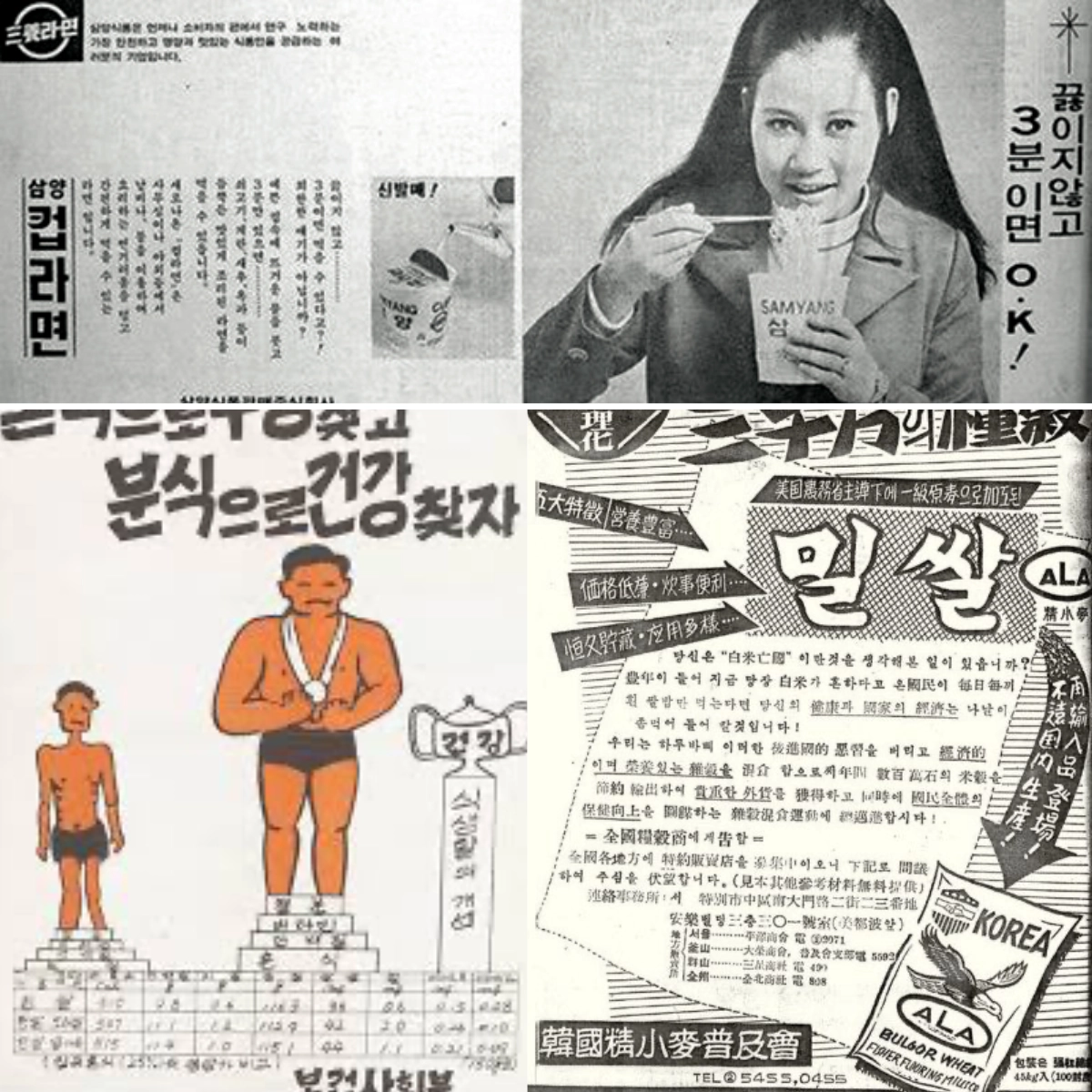
It was during this period that wheat-based dishes gained real traction: jjajangmyeon (짜장면), jjamppong (짬뽕), and soon after, instant ramyeon. First produced in Korea by Samyang in 1963, ramyeon was cheap, fast, and predictable. It suited a country rebuilding itself. Unlike traditional flour dishes, it required no skill. It could be made anywhere, by anyone.
But flour never replaced rice emotionally. It entered daily life through obligation, not choice. It existed beside the meal, not at its center.
Over time, bunsik (분식), literally "flour food," came to mean a whole world of affordable, everyday dishes: ramyeon, tteokbokki, mandu, jjolmyeon. Portable, cheap, easy to access. Bunsik became the food of students and young people living on pocket money.
I remember stopping at a bunsikjib (분식집) after school whenever I had enough coins. As the Korean saying goes, like a sparrow that cannot pass a mill, I could never walk by without going in.
My favorite was miltteokbokki (밀떡볶이), made with wheat-based rice cakes instead of traditional rice tteok. The texture was different: jjolgit-jjolgit (쫄깃쫄깃), elastic and pleasantly chewy. Coated in gochujang sauce, it balanced sweetness and heat in a way that appealed especially to younger palates. For many of us, it became the taste of childhood.
Ramyeon, in particular, wears many roles. Hangover food in the morning. Late-night food. Student food. Comfort food. Cheap and reliable. And endlessly adaptable. It absorbed whatever was available: eggs, kimchi, tteok, mandu, tuna, leftover meat. It did not resist modification. It welcomed it.
This adaptability helped make Koreans among the highest consumers of instant noodles in the world. Jjapaghetti (짜파게티), one of the few dry ramyeon styles, has remained hugely popular since 1984. Its name blends jjajangmyeon and spaghetti, though it resembles neither fully. Something foreign yet familiar.
My father still reaches for rice after finishing ramyeon. My mother still sets the table with banchan even when the main dish is noodles. Ramyeon didn't replace rice. It found a place beside it. Close enough to be constant, humble enough to never compete.