Shared Flavors , Shared Memories
A Whole Chicken in the Alley
A childhood treat from a small market alley leads to a story of how fried chicken transformed in Korea, and eventually traveled back out into the world.
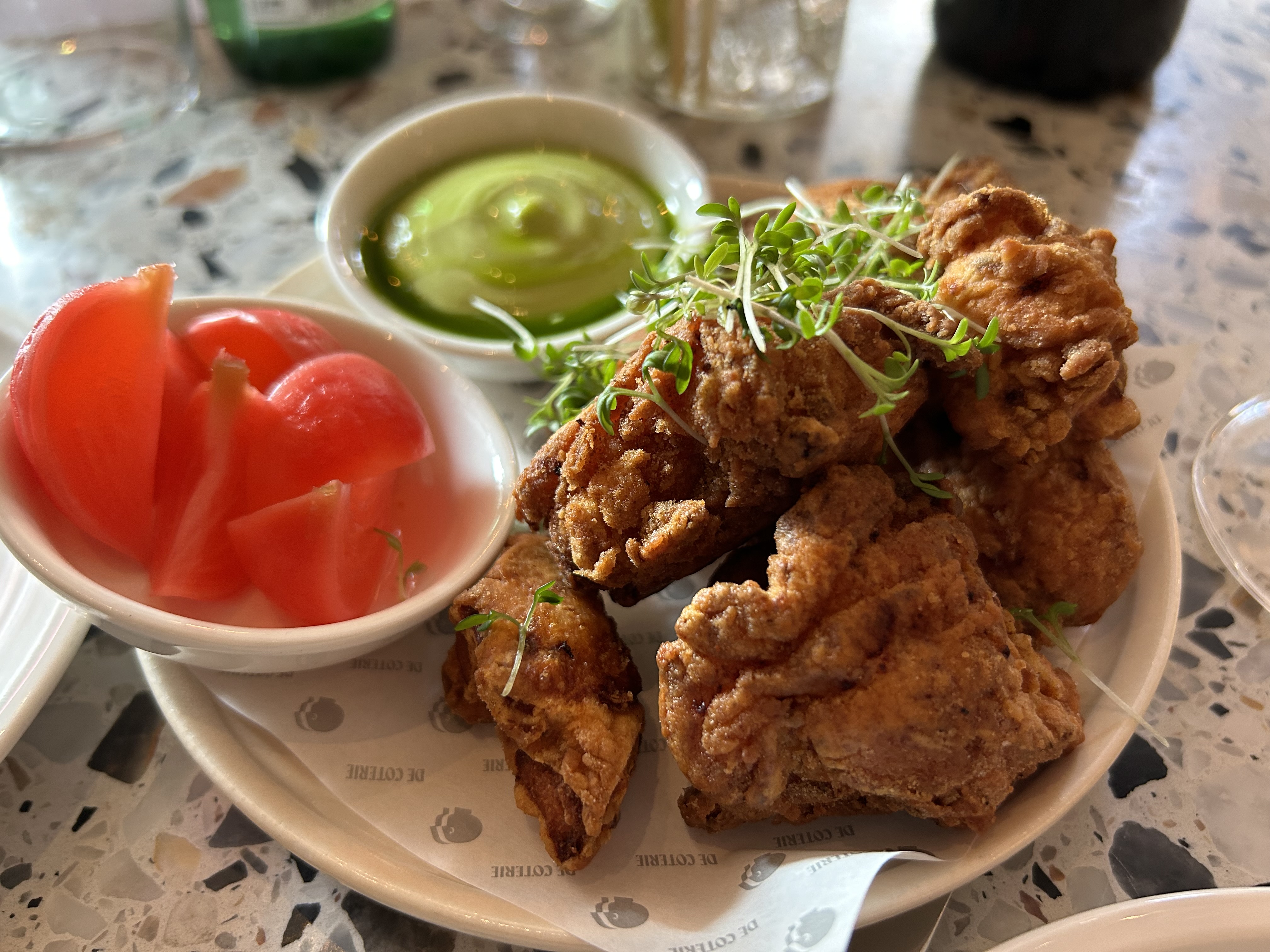
A childhood treat from a small market alley leads to a story of how fried chicken transformed in Korea, and eventually traveled back out into the world.

My earliest memory of fried chicken goes back to when I was about six or seven years old. One day I tried to run fast enough to catch up with my older brother so I could be part of the gang, and I ended up dislocating my shoulder.
One good thing about living in a small village is that you know exactly who to turn to when something like this happens. It was the weekend, but my parents knew where to go for help.
The taekwondo master in town, the sabomnim (사범님), was someone they personally knew. He reset my shoulder himself. I remember feeling relieved but also frightened, and I might have cried a little. To comfort my pain, or perhaps my little sadness, my parents decided to treat me to something special afterward.
Near the taekwondo gym there was a sijang (시장), a traditional market. At the edge of the market, down one of the narrow alleys, there was a small dakjip (닭집), a chicken shop. I remember it clearly because they sold everything related to chicken. Live chickens were kept in a coop, and when someone ordered one, the chicken would be processed on the spot.
The special thing about this place was that they also sold fried chicken. Not the small individual pieces that are common today. It was the entire chicken, deep-fried whole in one piece. I don't remember it being coated in batter or dredged in flour. It was simply a whole chicken lowered into hot oil.
We called it tongdak (통닭), literally "whole chicken." The word "fried" was already implied because deep-frying outside of tongdak was not really common. Today people often call it yetnal tongdak (옛날 통닭), meaning "old-style whole fried chicken," but back then it was simply tongdak.
That was my first memory of fried chicken.
Food like this did not appear often in our house. It was reserved for particular moments: when I was sick, when something important happened, or on wolgeupnal (월급날), the day my father received his monthly salary. Because it was unusual, it felt like a celebration.
Then it became ritual. Something to look forward to monthly, then weekly. New chikinjip (치킨집) started popping up in town. You'd call and they'd deliver in no time. I remember the TV commercials. Every brand had a catchy jingle I can still sing to this day.
It may have been around the time Seoul hosted the Olympics in 1988 when we first tasted something much better than the plain version: yangnyeom chikin (양념치킨). Coated in a sweet, spicy, garlicky glaze, and still crispy. I'm not sure how they kept it so crispy, but somehow they came up with a technique that held even after it cooled down.
Once sauced chicken became popular, the non-sauced version began to be called huraideu (후라이드), borrowed from the English word "fried." For those who couldn't decide, restaurants introduced the now-famous compromise: yangnyeom-ban huraideu-ban (양념반 후라이드반), meaning "half sauced, half fried."
I wonder if chicken would have gained this much popularity without the saucy version. Spicy and garlicky. It creates a taste profile that's unmistakably Korean. That sweet-spicy-garlic combination is what Koreans love and often cannot live without. There are stories of Koreans traveling to Italy or France and packing kimchi and gochujang in their suitcase. Maybe I'm one of them. When people say "Korean fried chicken," I think most picture the saucy version, not the plain huraideu.
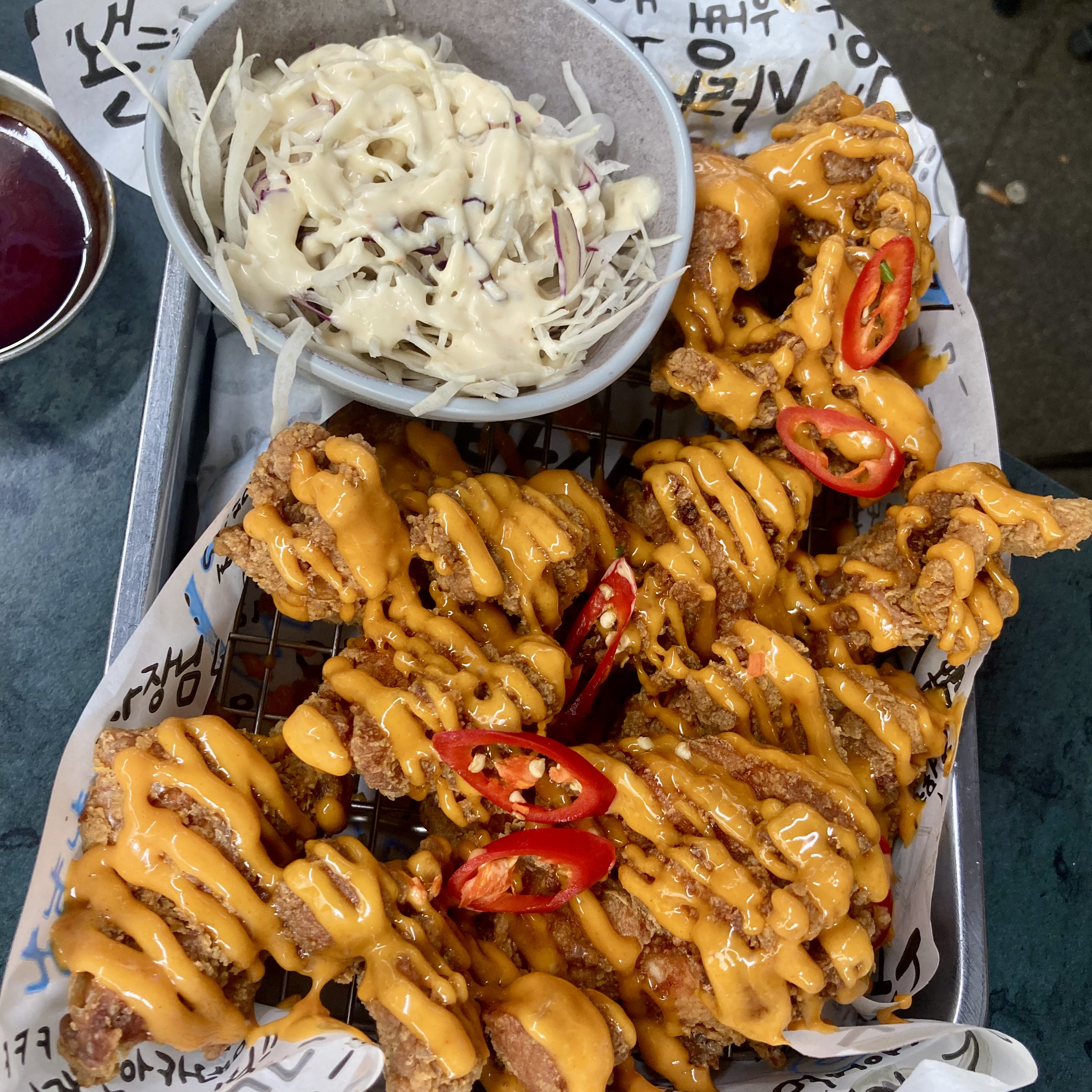
Another thing that makes Korean fried chicken unique is chikin-mu (치킨무), the small cubes of sweet-and-sour pickled daikon radish served with almost every order.
Just as kimchi appears at every Korean meal, and danmuji replaces it in the world of jjajangmyeon, chikin-mu takes that role in the fried chicken world. It only exists there. You won't find it outside of it. It's required when chikin is present, yet it never crosses into the world where kimchi lives. Each has its own territory.
When the economy was bad and many people lost their jobs, so many opened chikinjip that also served beer. Three people in our extended family did it. That's how common it was. Today it is almost impossible to walk through a Korean street without seeing the glowing sign of a chikinjip somewhere nearby. Competition is fierce, and many end up closing. Yet the popularity doesn't go down.
My mom used to make a ritual of it, chicken and beer. We used to call those places hopujip (호프집). I'm not sure if it was the beer that called for chicken or the chicken that called for beer. It's the chicken-or-the-beer problem.
Either way, fried chicken and beer became inseparable. Koreans call it chimaek (치맥), from chikin and maekju (맥주). On Friday nights, people gather with friends, order delivery, and share chicken with cold beer. It has become part of the atmosphere of bulgeum (불금), the feeling that the workweek is finally over.
Fried chicken in Korea is not just food. It became a ritual.
The first foreign fried chicken I encountered was KFC. To me, that was the original version from abroad. I remember admiring those large buckets. The taste was different, but what fascinated me most was that you could choose the parts you wanted. In Korea, you ordered the whole bird, which meant only two drumsticks. Someone always had to compete for them. If your rank in the family was low, you might end up with a chicken neck instead.
At KFC, the drumsticks felt endless.
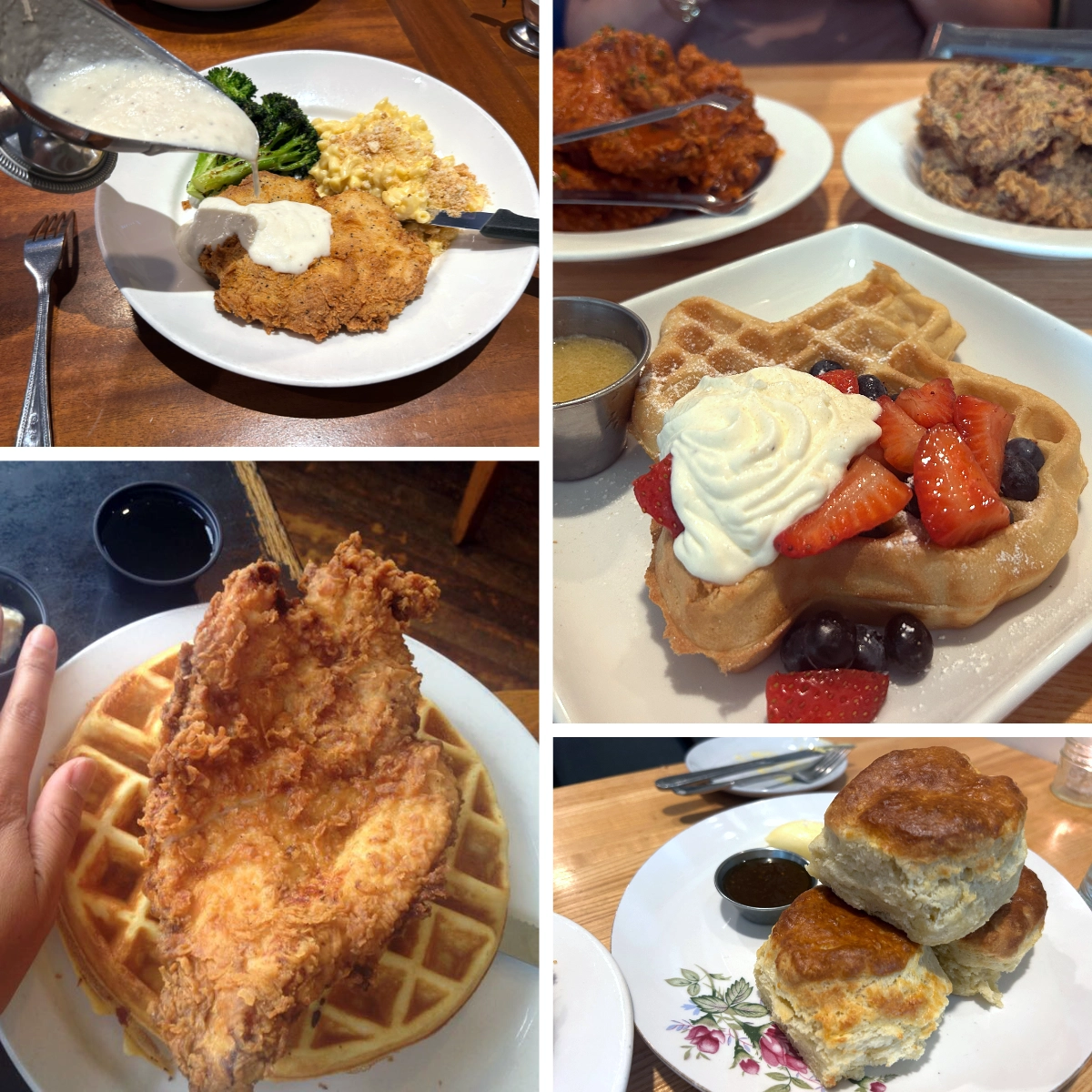
The frying tradition in America also produced some uniquely named dishes. Chicken-fried steak puzzled me at first. It contains no chicken at all. The name refers to the method: a thin beef steak coated in the same batter and deep-fried. Sometimes fried chicken appears on top of a Belgian waffle, in portions so large that even visitors from other states stare.
Among the many things I encountered, the most pleasant discovery was finding something that felt like an American version of my chimaek ritual: hot wings and beer.
The flavor was intensely spicy and vinegary. Very different from Korean yangnyeom sauces. It took time for the taste to grow on me. In Texas, places like Pluckers offered wings with spice levels ranging from mild all the way to something called "Armageddon." I can handle spicy food, but that was a different level entirely, the kind of heat that requires generous gulps of beer just to keep going. Much like chikin-mu in Korea, wings come with celery sticks and thick dipping sauces.
The ritual felt familiar: fried chicken, beer, and something crisp on the side. Yet each place revealed its own differences.
I still like KFC. But recently I noticed something unexpected. In some countries the menu now includes Korean-inspired flavors: Korean spicy chicken burgers, Korean-style fried chicken, even limited promotions tied to Korean pop culture.
The situation has quietly reversed.
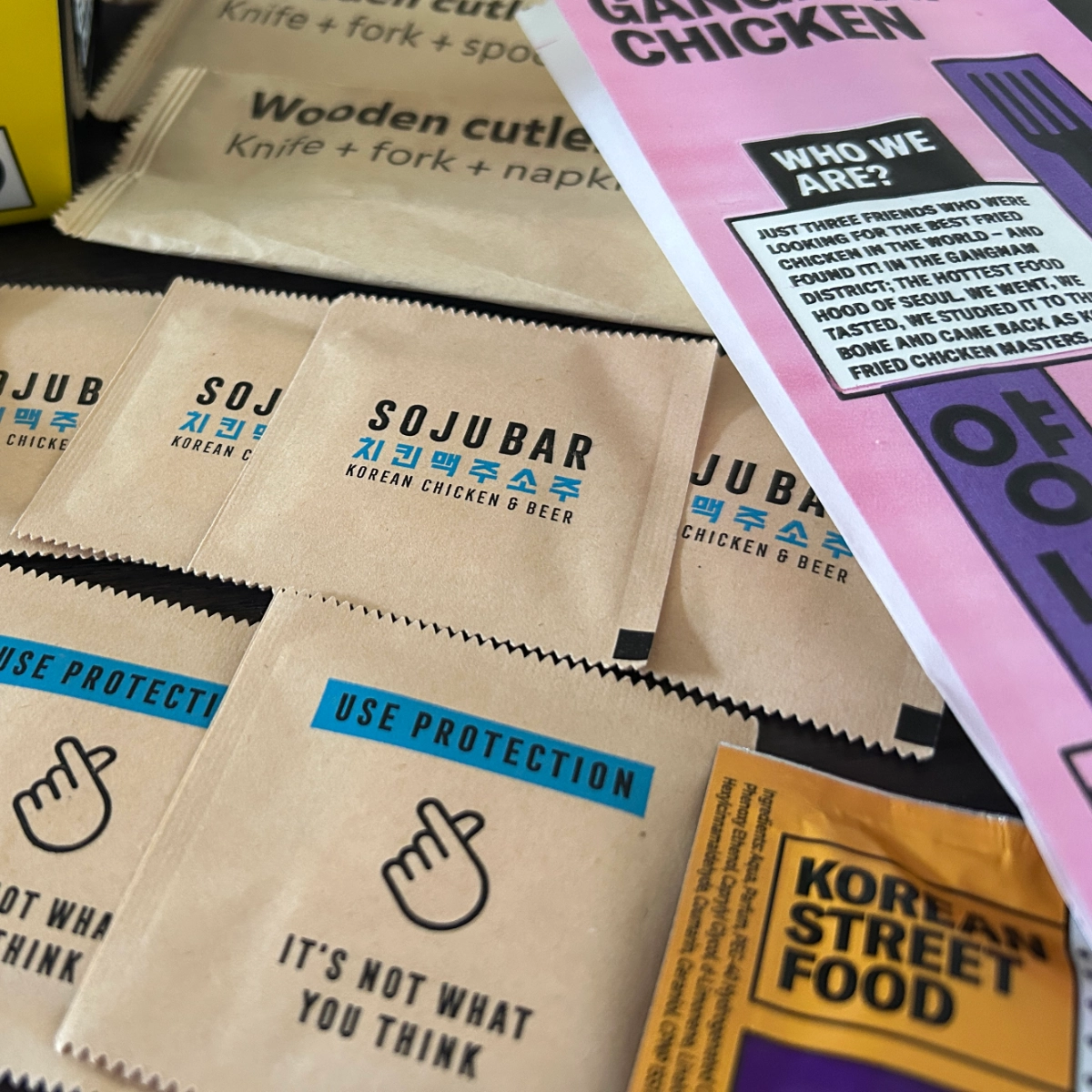
What once felt like foreign fried chicken arriving in Korea has now become Korean fried chicken spreading outward. I see it even where I live now, in the Netherlands, where Korean fried chicken restaurants have begun appearing. Sometimes they even introduce small details of Korean eating culture, like the disposable plastic gloves used when eating sauced chicken.
Every Friday we still look forward to chimaek. Whether in Korea or elsewhere, the ritual continues, sometimes with a slightly different setup depending on where we are. It has become a small weekly tradition, something that quietly resets the rhythm of the week.
What began for me as a rare childhood treat, a whole fried chicken from a small shop in a market alley, has now become a global food trend. Even though I can now afford a whole chicken for myself, and no longer have to compete with anyone for drumsticks, my mind still returns to that small shop near the market, and to the simple taste of tongdak shared on a special day.