Shared Flavors , Shared Memories
The World Inside a Small Shell
I learned to pull snails from their shells as a child at a Korean river. Years later, in a Dutch oyster bar, someone handed me a metal pin and I knew exactly what to do.

I learned to pull snails from their shells as a child at a Korean river. Years later, in a Dutch oyster bar, someone handed me a metal pin and I knew exactly what to do.

Summer vacation in Korea always began with the monsoon season. We watched the heavy rain clouds and waited for them to pass, knowing that once the sun returned we would head straight to the local river. Tents went up. My mother was constantly cooking, feeding us whenever we climbed out of the water. My father would arrive straight from work carrying food: samgyeopsal on one side, a watermelon on the other.
My brother earned a nickname that summer. Mulgae (물개), seal. He almost never came out of the water. He would dive and stay under so long that my mother began to worry, only for him to surface again somewhere downstream.
My reason for loving the river was different. I went for daseulgi (다슬기), small freshwater snails that clung to rocks beneath the clear water. We would lift the stones carefully and gather them one by one into a red onion sack, the loose mesh kind, tied to a rock so it wouldn't drift away in the current. I could spend an entire day doing this without noticing hunger.
Once we had gathered enough, my mother would boil them. Then everyone sat together and ate with toothpicks, pulling tiny pieces of meat from spiral shells. It required patience. If you weren't careful, half the meat stayed stuck inside, impossible to rescue. My parents especially loved the broth, apparently good for curing hangovers, though that was knowledge I had no use for yet.
Years later, the same skill resurfaced in a different form.
At Oesterij, a seafood spot near the North Sea, a platter arrived with two small metal pins stuck into a wine cork. I recognized what they were for immediately. These weren't freshwater river snails but common periwinkle, small sea snails from rocky European coasts, yet the gesture was identical: a tiny spiral shell, a small tool, the careful twist needed to pull the meat out cleanly.
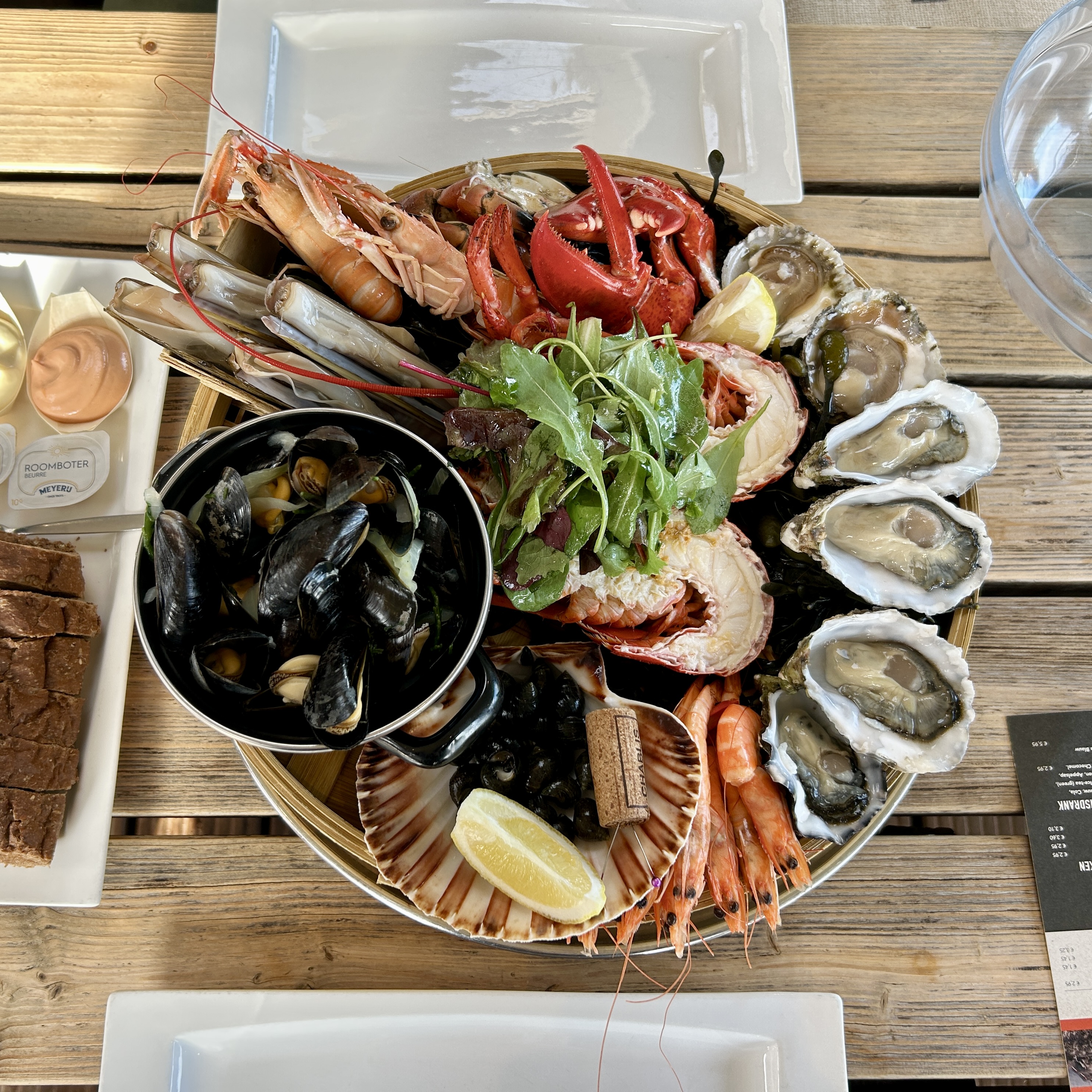
I found it quietly charming that the humble toothpick of my childhood had been replaced by metal pins in a wine cork. Oysters, white wine, the North Sea. The setting was different, but the ritual wasn't.
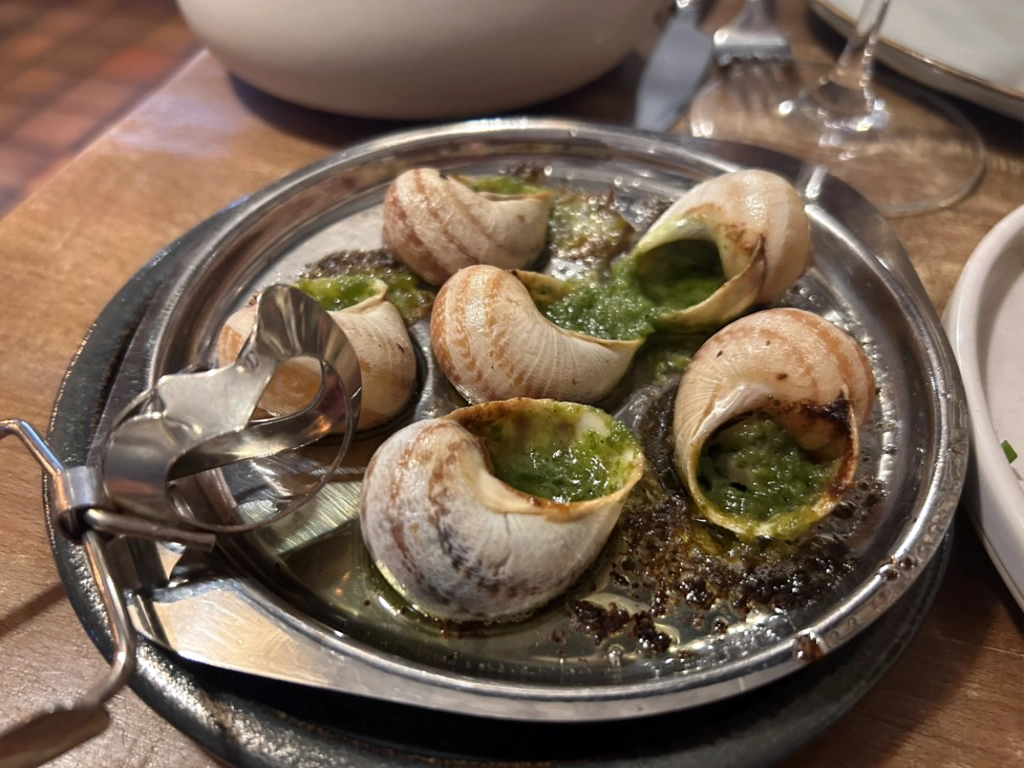
The same familiarity appeared again with escargot in a French restaurant: snails in their shells, arranged in a special plate, tongs holding the shell steady while a fork pulled out the meat. These were land snails, the small ones that appear in gardens after rain. In Hungary I had seen them everywhere after storms, in the grass and along garden walls. My husband mentioned that while walking the Camino de Santiago, he had seen people collecting them along the roadside after a stretch of rain. They were French pilgrims who planned to cook them for dinner that evening with a little wine.
That image returned escargot to what it once was: something gathered after rain by people who knew where to find them, cooked simply, eaten without ceremony. Only later did it acquire the garlic butter and the porcelain plate.
Back in Korea, the snail I came to love as an adult was golbaengi-muchim (골뱅이 무침), a classic anju, food meant to be eaten with a drink. Sliced sea snails tossed with cucumbers, carrots, and onions in a bright gochujang sauce, with the jjolgit-jjolgit chewiness Koreans love. Saucy enough that it arrives with somyeon, thin wheat noodles to mix in as you eat. The kind of dish that stretches a beer into a meal.
For a long time I had never seen the animal itself. In Korea, golbaengi almost always comes from a can: imported whelk, already cooked and preserved, sliced and mixed into the dish. I knew daseulgi. I had caught it with my own hands. But golbaengi I knew only through the can, which made the Oesterij moment stranger and warmer, the skills carried forward from the river suddenly applying somewhere I hadn't expected.

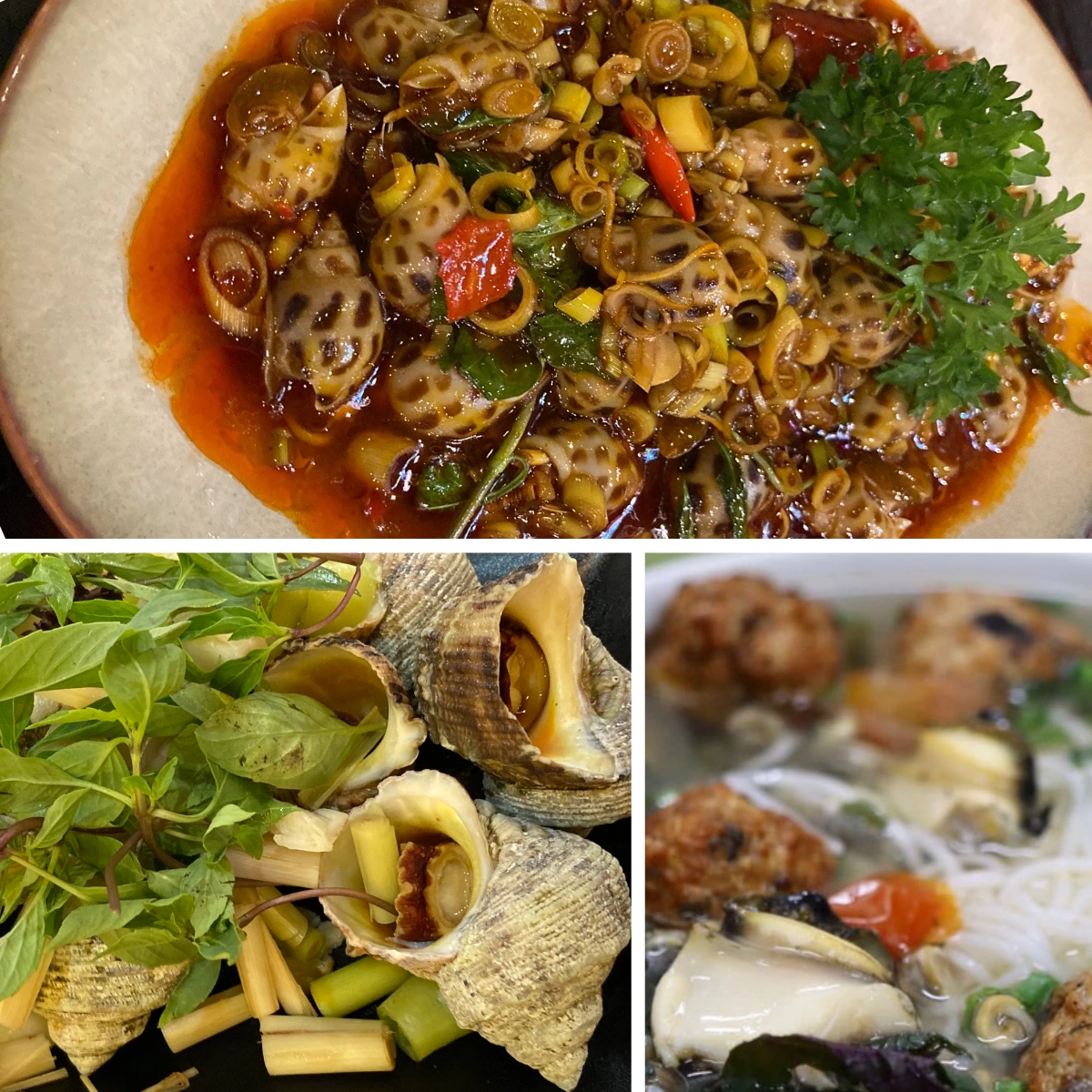
Vietnam was the place where snails felt most alive. At street stalls they are kept in shallow basins of water and cooked to order, with chilies, garlic, lemongrass, sometimes in coconut broth, sometimes in noodle soups like bún ốc. At small outdoor tables people share plates of ốc with beer and conversation, slowly, without hurry. It reminded me strongly of golbaengi in Korea — not elegant food, but food meant to be eaten while talking and drinking with friends, the shells accumulating on the table as the night goes on.
I used to find it hard to explain golbaengi to someone who hadn't grown up eating snails. It seemed like it might invite a puzzled look. Traveling changed that. The same small spiral shell kept turning up: at an oyster bar in the Netherlands, in a French restaurant, on a Vietnamese street corner, in the memory of a summer river in Korea. The tools varied: toothpick, pin, fork, chopsticks. Yet, the gesture remained unchanged.
The taste of the water the snail came from, whether sea or river, is always in there somewhere.