Shared Flavors , Shared Memories
Convenience That Keeps You Moving

Convenience food isn’t just about speed. In cities shaped by movement, it becomes part of how people pause, warm up, and keep going.

Han River, Where Convenience Becomes an Experience

In spring, when cherry blossoms begin to fall, people gather along the Han River (한강). Picnic mats spread across the grass. Someone opens a box of gimbap (김밥). Another group waits for fried chicken delivery. Nearby, a couple sits quietly with cup ramyeon (컵라면). Eating here has never been formal. It is casual, shared, part of being outside.

In the past, instant ramyeon outdoors meant pouring hot water into a paper cup. Now, small ramyeon machines stand inside nearby convenience stores. You place the noodles inside, press a button, and the machine measures the water, controls the temperature, and cooks it evenly. The machine does most of the work, yet you still take part in the process.

There is a common belief that ramyeon tastes better when it feels “made,” not just soaked in boiling water. The machine imitates human cooking just enough to preserve that feeling. It is still quick and still convenient. Semi-cooked by a machine, it somehow feels better than cup ramyeon where you only add hot water.

You sit by the river as steam drifts into the night air. The cold settles around you, and the bowl warms your hands while city lights ripple across the water. There is a quiet romance in the ritual. Couples on dates make ramyeon together. People call it Hangang ramyeon (한강라면), named after the place where this machine-cooked bowl became its own experience. They insist it tastes different here, better than anywhere else.

Convenience becomes part of the outing, not separate from it.

Everyday Eating, Without Ceremony

In Korea, convenience stores, known locally as pyeonuijeom (편의점), are more than retail spaces. Open 24 hours a day, they serve food that is quick yet still feels like a proper meal: gimbap, cup ramyeon, and ready-made dishes that can be heated on-site. They become places to sit and eat, especially for students, shift workers, and people moving through the city late at night.

Small tables, microwaves, hot water dispensers, and ramyeon machines create something that almost resembles an open kitchen. These spaces make solo eating feel normal and convenient. You sit at a narrow counter facing the window, watching people pass while eating on your own. Being alone does not feel awkward here. People move in and out, picking up snacks or ingredients they forgot for dinner. Others may sit beside you, also alone, which makes it an ideal place for honbap (혼밥), solo dining. It reminds me of the bar seating I prefer when I travel alone: you are by yourself, but not entirely on your own.

Convenience here does not replace restaurants, however. It fills the gaps between obligations. You eat, you finish, you leave. The rhythm of the city continues.

Over time, I’ve noticed that same rhythm beyond Korea, where different places develop their own convenience food spaces shaped by local habits yet serving a similar role.

In Japan, convenience stores — known as konbini (コンビニ) — have developed their own deeply embedded food culture, not unlike Korea’s. A square metal pot of oden (おでん) often sits near the counter. Daikon radish, fish cakes, tofu, and eggs simmer quietly in broth. Customers choose their pieces one by one. The square pot itself signals comfort rather than fast food, a warm pause inside an otherwise efficient space.

In Taiwan, that role is often filled by tea eggs, chá yè dàn (茶葉蛋). They sit for hours in dark soy-tea broth, and their smell often defines the store before you even see them. You grab one on the way to work, peel it while standing near the counter, eat it in a few bites, and move on. Cheap, warm, and portable, they offer just enough substance without slowing you down.

In Vietnam, the function shifts slightly. Convenience stores often double as informal gathering spots. Air-conditioned seating, small tables, a place to rest. People do not only grab food and leave; they linger. Convenience becomes part of social space rather than just transit.

Simmered broth, tea-stained eggs, packaged snacks—the food varies, but the space repeats the same pattern: warmth, affordability, and a brief pause that fits the rhythm of the city.

When Movement Shapes the Meal

Convenience food spaces tend to flourish in dense, walkable cities where people rely on public transportation, cycling, and short-distance travel. Constant foot traffic makes small, fast food spaces viable.

The contrast becomes clear when visiting a convenience store attached to a gas station in the United States. The atmosphere often feels different — more centered on car travel, with larger packaged items like boxed donuts rather than ready-to-eat meals. Gas-station food in many parts of the U.S. rarely occupies the same cultural role as convenience food in East Asia.

In contrast, Korean highway rest stops, hyugeso (휴게소), elevate convenience food to another level. They are not merely places to refuel; they are destinations in their own right.

Travelers expect a wide range of choices — from small snacks to full meals — combining restaurants, convenience-style counters, vending machines, and vendors in one place. Here, convenience becomes attraction rather than compromise.

The Korea Expressway Corporation (한국도로공사) even publishes maps highlighting the representative foods at each stop. In a way, it recalls how the Michelin tire company originally created its guide to encourage motorists to travel more by car — food becoming an incentive for movement.

The link between mobility and food does not stop at Korea’s highways. It appears in other cities shaped by constant movement.

Food in Motion: The Dutch Automatiek

Many European cities are more walkable than those in the United States, and street food is common. Some spots stay open late, much like convenience stores in many Asian cities.

Dutch vending-machine snack culture is one example of how convenience adapts to movement.

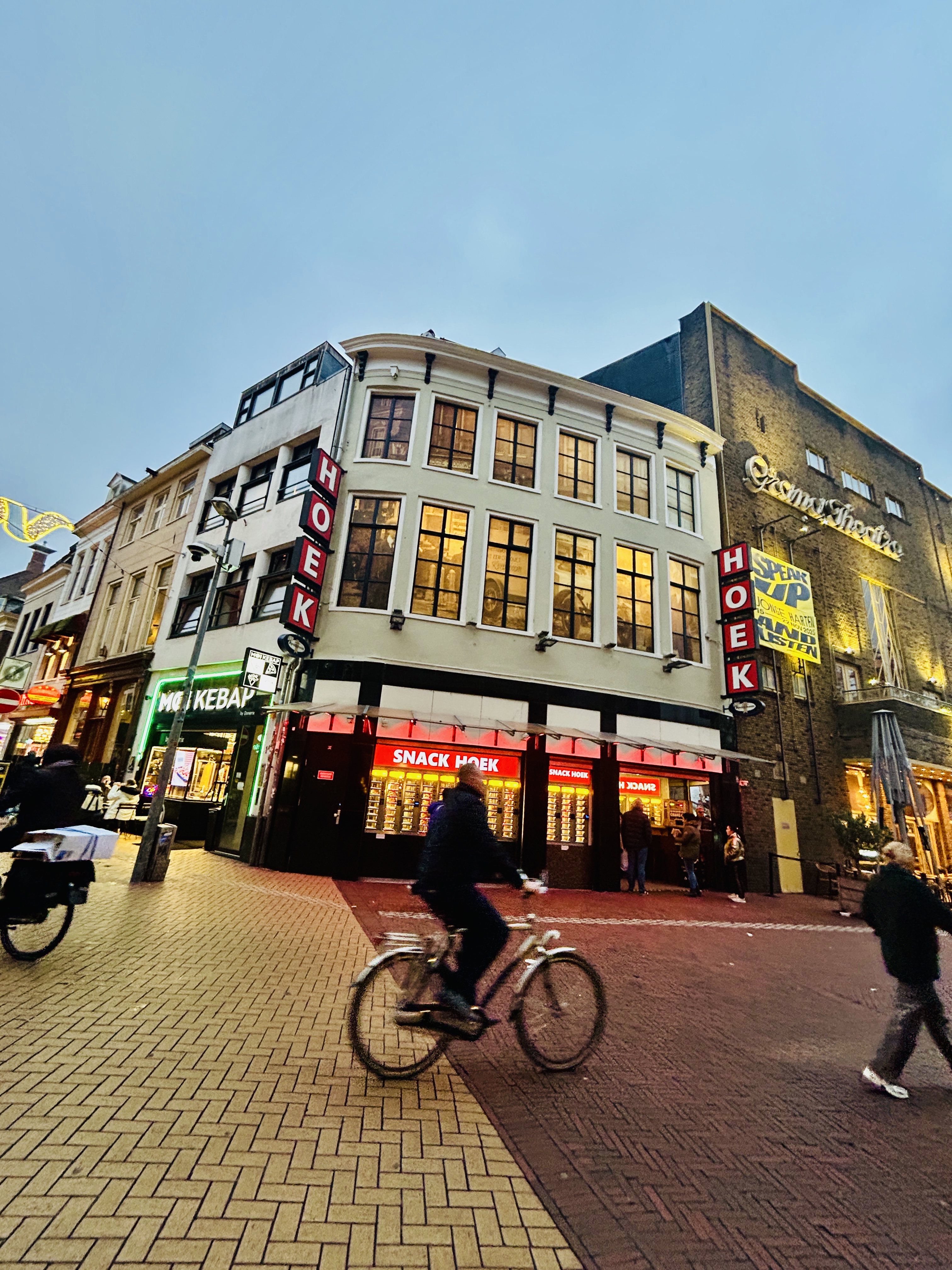
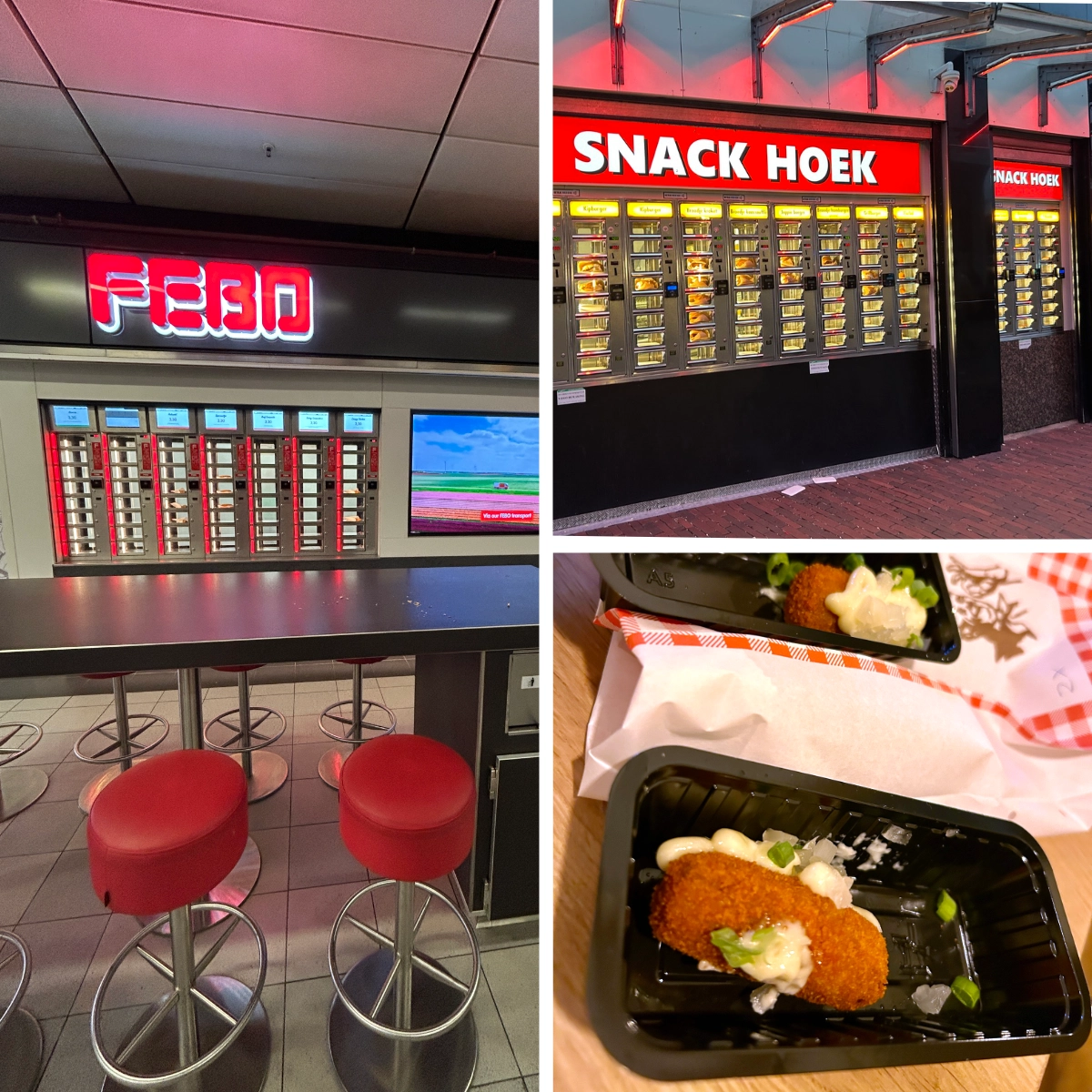
In many Dutch cities, bars stay open late, trains continue running, and people cycle home well past midnight. On the way back, you might stop for a warm kroket or frikandel from a vending wall like FEBO. The snacks are hot, fried, and ready the moment you open the small glass door.

To many visitors, it appears unusual. But coming from a culture where convenience food is eaten casually in public, it feels familiar.

Unlike Hangang ramyeon or konbini oden, these foods are fully self-contained. There is no broth to sip, no bowl to hold, no rice to accompany them. They are designed to be eaten while standing, walking, or waiting for a train. Convenience here means portability above all.

The structure reflects the rhythm of the place. In a country built around cycling and short urban distances, food fits into motion rather than asking for pause.

Collage showing Dutch FEBO and snack vending walls with rows of heated compartments dispensing fried snacks, along with a close-up of a kroket served in a small tray with sauce and chopped onions.
Dutch snack vending walls — FEBO and “snack hoek” automats where kroketten are bought from. Photo by the author

Machines and Warmth

In Europe, vending machines often prioritize portability. Elsewhere, they serve a different purpose. Vending culture is not only about automation or late-night snacks. It can also be about access — new ways for small sellers to reach customers.

In Malaysia, a documentary followed a vendor who rented a vending machine through a government aid program and used it to sell homemade food such as nasi lemak. The food became popular with students at night because it was affordable and always available.

What stood out was that the machine did not replace cooking; it replaced the storefront. The food remained homemade, simple and clearly prepared by hand, but the vending machine extended its reach. It functioned as a 24-hour distribution point rather than a factory substitute.

Thinking about Hangang ramyeon (한강라면) brings to mind another example: Indian Maggi stalls.

Small roadside stands sell quick bowls of Maggi noodles, especially in colder or mountainous areas where heat matters as much as taste.

A friend once pointed to a small shack in the mountains where she liked to sit with a bowl on cold days. When she said, “I like to eat Maggi when it’s cold like this,” she did not say instant noodles. She said Maggi. The brand name has become shorthand for the dish itself. It is so embedded in everyday life that the stalls are simply called Maggi stalls, much like warung Indomie in Indonesia.

These stalls are popular with students and travelers because they are cheap, fast, and comforting. The setup is different from Korean convenience stores, yet the feeling is familiar: a brief stop, a hot bowl, and a small pause before moving again.

The scene at the Han River no longer feels isolated. ramyeon machines, convenience store counters, Maggi stalls, Dutch snack walls, Japanese oden pots, and Malaysian vending machines reflect a shared logic. Modern cities create spaces where people can eat quickly and affordably, without ceremony.

Machines and systems shape these environments, but the purpose remains human: warmth, pause, and sustenance woven into movement.