Shared Flavors , Shared Memories
The Squid I Wanted to Marry
Everyone else was in the long line at the best satay stall. I was standing alone at the wrong one, except it wasn't wrong at all.
Everyone else was in the long line at the best satay stall. I was standing alone at the wrong one, except it wasn't wrong at all.

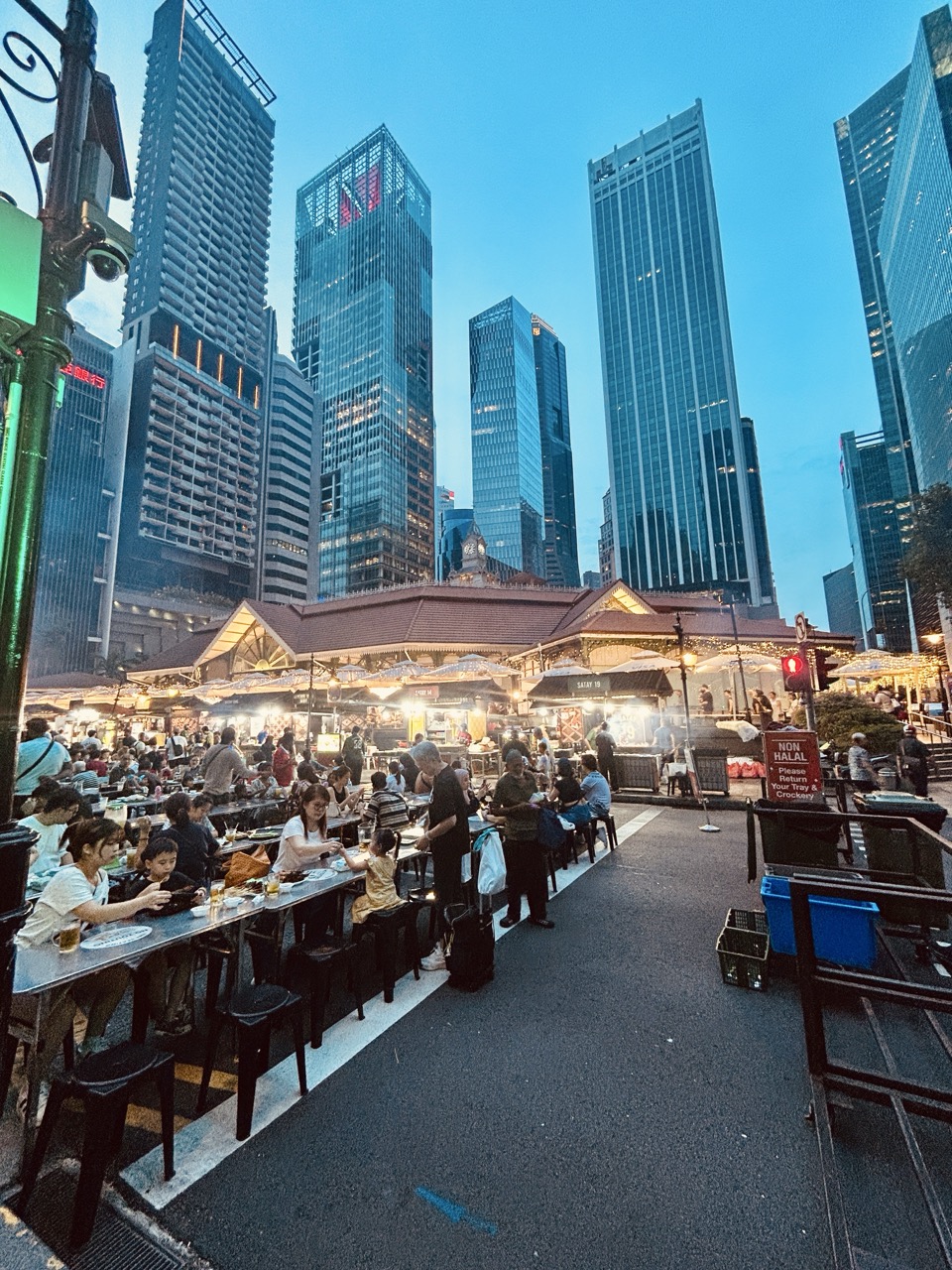
Near the hotel where we stayed was Lau Pa Sat, a hawker center in the middle of downtown Singapore, a single-story space surrounded by glass towers that rise so high they seem to lean inward. I’d seen it on TV many times, one of the must-visit places. We rushed to get there, as soon as we checked in, not wanting to miss the opportunity in case it closed early. We starved all day for this. At 7pm, it was still lively: it was bright, hot, thick and humid, I wasn’t sure if the heat came from the food or the air itself. My husband and I stood there trying to decide, knowing that whatever we chose, we could not have it all.

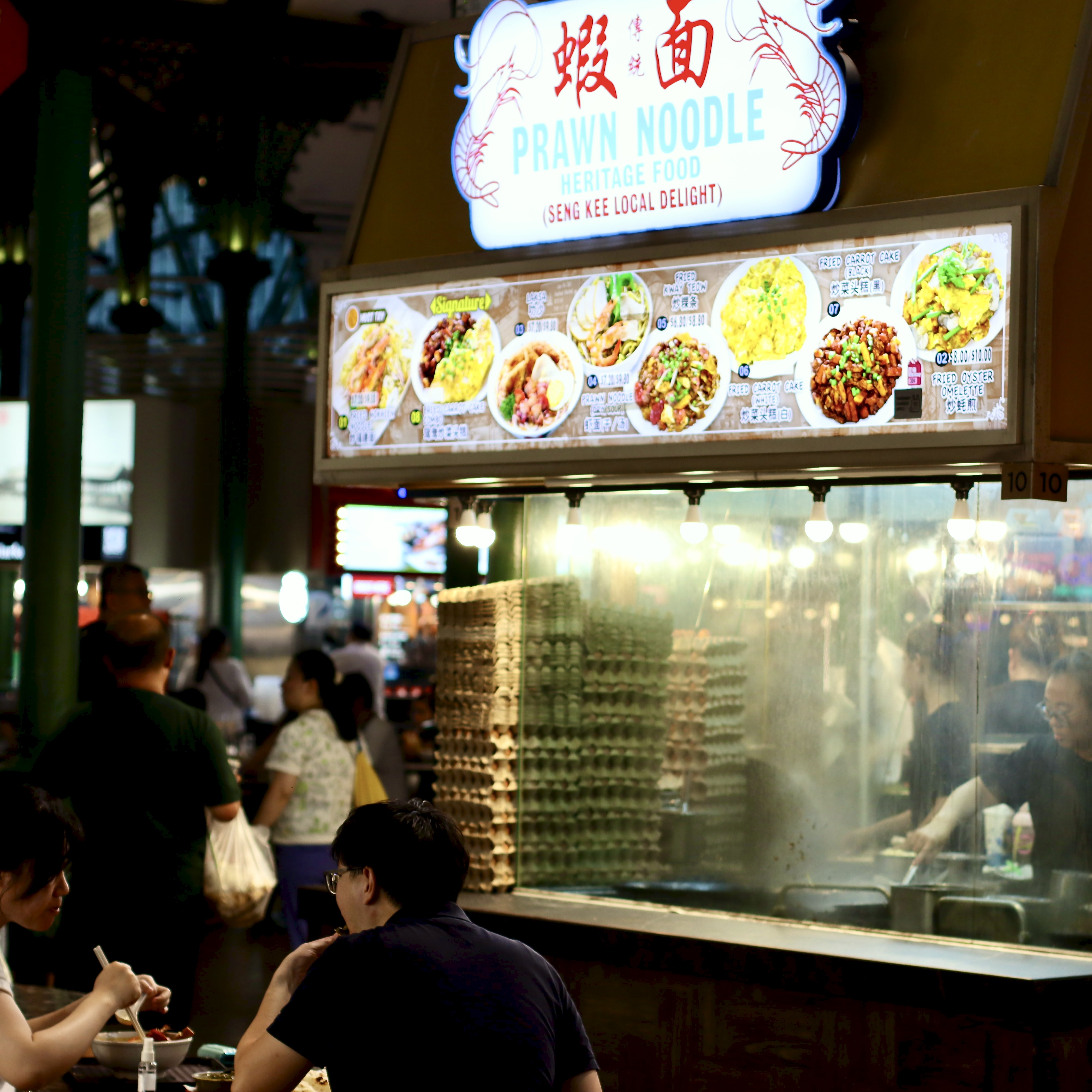
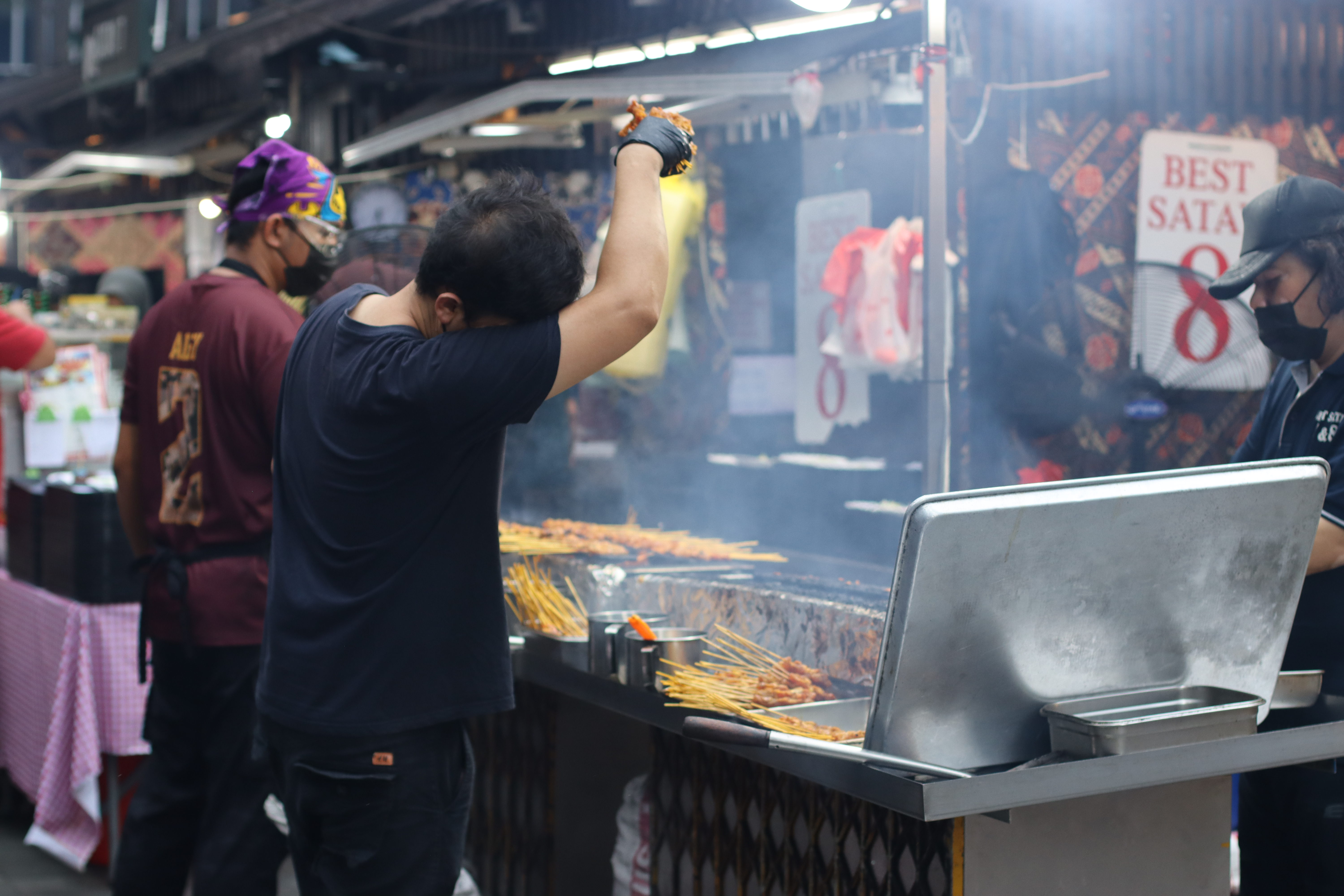
As the sun went down, the vendors outside along Satay Street set up their fires. Smoke filled the air. The lights came on. People began to gather and the lines formed quickly, every stall announcing itself as the best satay, the longest lines collecting at the loudest claims. I don't like standing in long lines. I scanned for the shortest one, reasoning that shorter means faster, not necessarily worse.
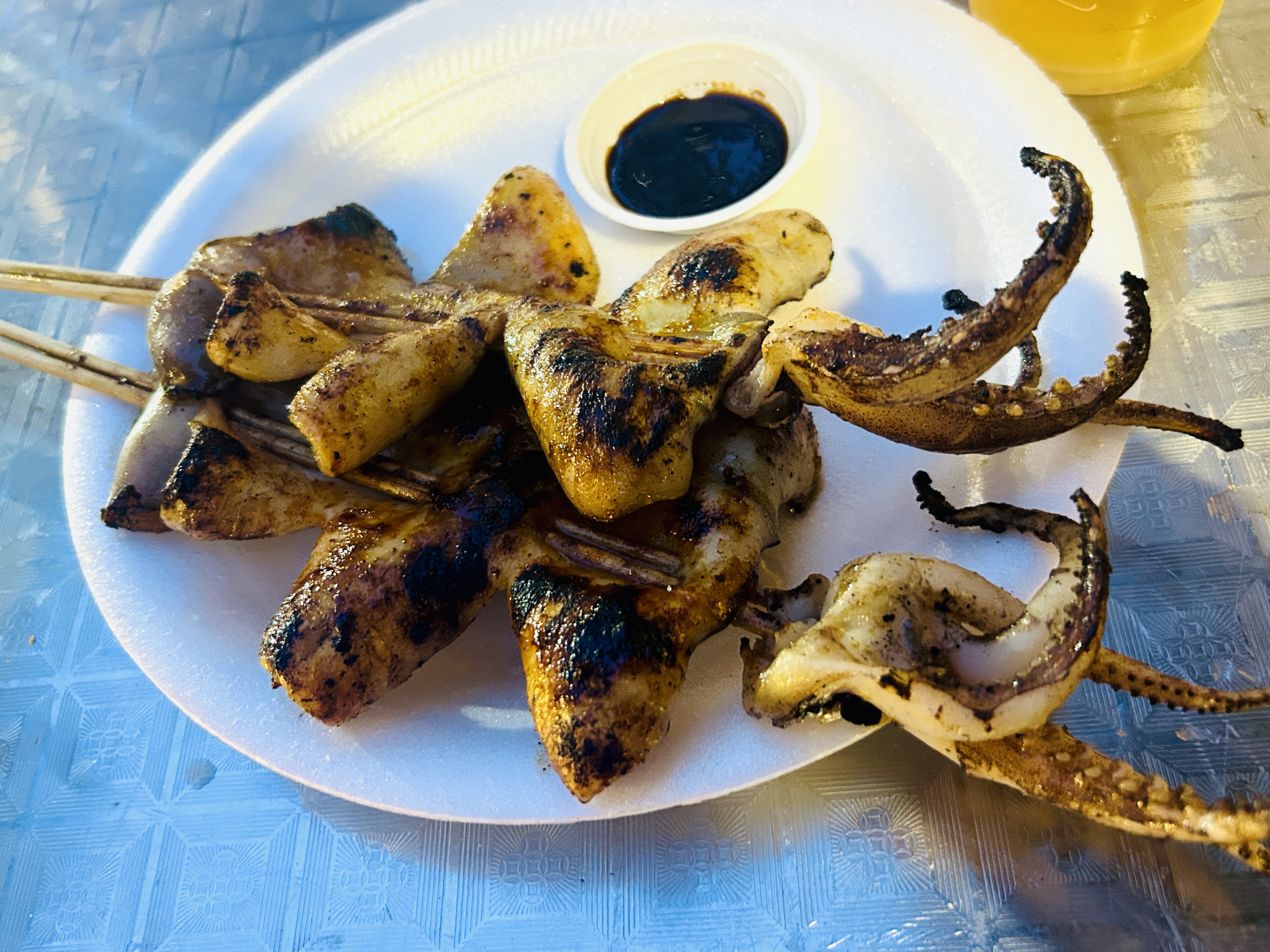
But what pulled me toward one particular stall had nothing to do with the line. It was the smell. Before I saw what was on the grill, I knew. Ojingeo (오징어), squid. A whole squid on a bamboo stick, charcoal-grilled. I moved closer to confirm what my nose had already told me. Everyone else was standing in a very long line at the best satay stall. I was the only person standing at the squid one, the only one who had recognized it before seeing it. I was so happy I must have looked strange.
Squid has been with me my whole life. Growing up, I loved dried squid in particular, the kind you bought at the bus terminal before a long journey. As soon as the money changed hands, the ojingeo went straight onto the open burner, curling as if dancing as it shrank, the edges catching char, sending up smoke. The whole terminal, by then, knew exactly what I was getting. Stink or not, I loved chewing dried squid, the saltiness, the chewiness, something to hold onto while the road moved. It helped soothe my motion sickness on long bus trips.
Even now, living abroad, my parents still send me home with it, wrapped tight and double-bagged in my suitcase before I fly back. Never just a few. At least a han-chuk, twenty ojingeo minimum. I keep them in the fridge and ration them until the next time I go home. Grilling one takes a little coordination: I crack the window, keep an eye on the smoke alarm, and hope the smell is gone before it settles into the apartment. The smoke alarm has gone off once. It could go off again. I found out that if I soak the squid in water first and microwave it, there is less smoke. It comes out half-dried, thicker and softer, and I actually like it better than fully dried ojingeo.

As a child, I loved ojingeo so much that at one point I announced, quite seriously, that I was going to marry a squid catcher. The reasoning, in my young mind, was simple: I could eat squid endlessly, as much as I wanted, forever. I am not sure who I told. Probably my parents, or anyone who would listen.
As the biggest fan of ojingeo, Sokcho means more to me than a port city on the East Sea. Our family trip there was not particularly sunny or beautiful, but it remains one of the most memorable vacations we ever took. I still remember catching bajirak, digging the shellfish out of the wet sand with the heel of my foot. Getting there meant crossing one of the highest mountain passes in Korea, Hangyeryeong, just to reach the coast.
It was probably the first place I saw squid alive, swimming in tanks painted a vivid aqua blue outside the restaurant. Before we even sat down, my parents would bargain with the owner, pointing at the squid swimming in the tanks. They shot through the water like bullets, then squirted when lifted out with a fish net. They wiggled, very much alive. The deal was made. Manwon, about ten U.S. dollars, for three ojingeo, maybe more depending on size. That is what I remember: standing there as they made their choice, fascinated watching them swim, actual living things, not the dried version I'd only known until then.
They cut the squid into thin raw slices and served it plain, nothing else on the plate. The side dishes and sauces came separately. It was still moving a little. When I picked up a piece and dipped it in soy sauce, its suction cups kept latching onto the little plastic ganjang-jongji and wouldn’t let go. For a moment, I felt sorry for it. Then I moved on. The raw squid was only a teaser, before the real meal. They brought out a bowl of freshly cooked rice, still steaming, topped with shredded lettuce. You were meant to repurpose the ojingeo hoe you had not finished earlier: add it to the rice, then squeeze over a generous amount of cho-gochujang and sesame oil from the plastic sauce bottles. An instant hoedeopbap. All this was only possible because the ojingeo had been caught fresh that day, right by the sea, on the east coast of Korea.
It is harder to find now. People overfished them, even the young ones. In Korea, people call it geum-jingeo, gold squid, because ojingeo has become so expensive. Dried ojingeo from Ulleungdo can cost around $100 for half a han-chuk. The days when three live ojingeo cost manwon are long gone. Rising water temperatures have chased them north, just as they did myeongtae, the national fish that now arrives mostly imported. What was once abundant and cheap has become scarce and expensive. Even in Korea, the abundance I knew is gone.
That is why the smell at Lau Pa Sat stopped me. Before I saw the grill, my nose had recognized the same smell that calmed my stomach on long bus rides from the terminal. In a way, it stinks. But it is a good stink. I ate the whole squid. I could have eaten another, if not for our dinner reservation. I had never associated that smell with anywhere outside Asia. The closest thing I had found in Europe or the Americas was small, thin, mild squid, usually battered and fried. Calamari, they call it. Great bar food, by the way, served alongside beer.
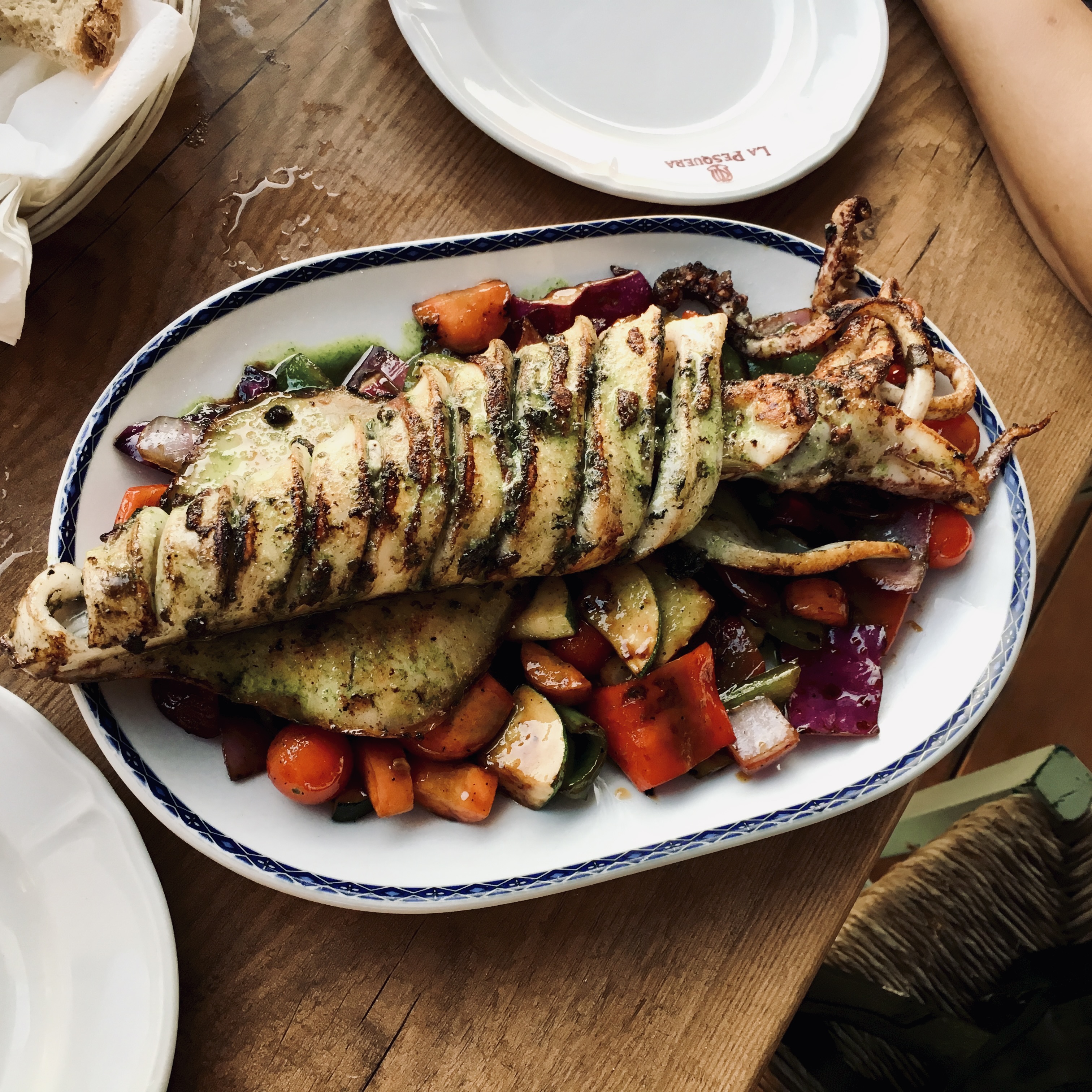
Then, one day in Tarifa, at a restaurant by the water on the southern tip of Spain, a large whole squid arrived, charcoal-grilled, scored across the body, with roasted vegetables alongside. This was the real thing: the large ojingeo I knew growing up. My nose had recognized it first. So far from Korea, in a place where I never expected to find it, it felt like a reunion with a friend I had not seen in years.