Shared Flavors , Shared Memories
The Real Food
From spotless supermarket shelves to whole animals at the market, a quiet shift in how we see meat reveals more than just what we eat.
From spotless supermarket shelves to whole animals at the market, a quiet shift in how we see meat reveals more than just what we eat.

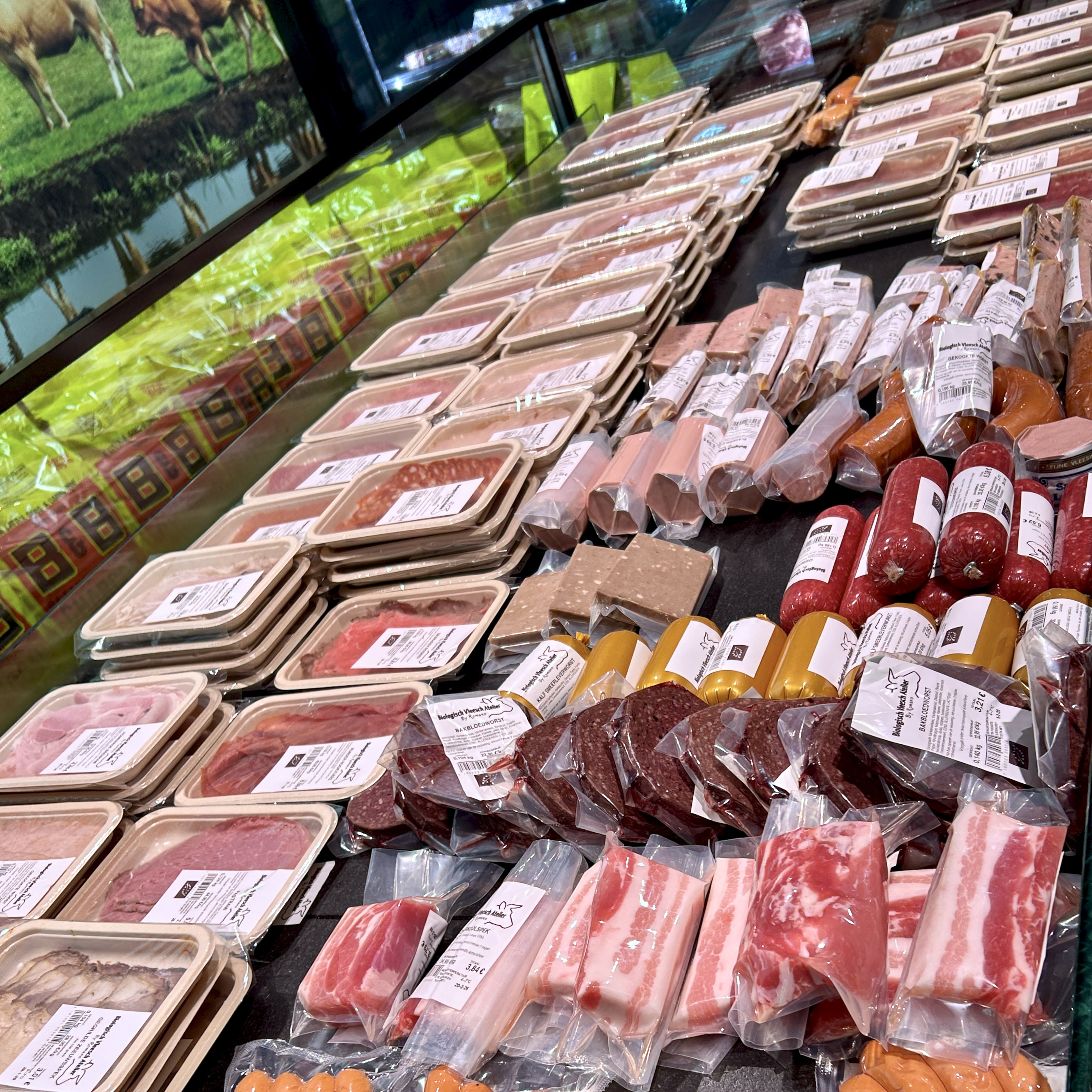
I remember the first time I walked into Whole Foods. It was beautiful. Greens, reds, yellows. Vegetables stacked along the aisles, forming a wall of color that almost looked like art. Even the meat was neatly portioned and tightly wrapped in plastic. There was no smell. No trace of the animal.
People joked it was "Whole Paycheck." But standing there, it made sense. Everything felt premium: organic, clean, carefully packaged. I didn't mind paying for it. Everything felt right, safe, exactly as it should be.
And yet I found myself looking elsewhere for things I couldn't find there. Chinese or Korean grocery stores, a habit I still carry. In the Netherlands, that often means a Turkish butcher or a small Italian-owned shop with a wider range than most.
At places like Haagse Markt, one of the largest multicultural markets in Europe, the difference is immediately visible. Organ cuts are displayed openly, alongside whole animal heads. Lamb heads with the eyes still intact, cow heads with the tongue slightly sticking out. I don't enjoy seeing them. If anything, it makes me more aware of what I am eating, not less.
But it was in Hungary where that awareness became something I could taste.
I was given a piece of körömpörkölt, a dish made from trotters. Something slipped out of my mouth. Only then did I realize it was part of the nail. Apparently, even by Hungarian standards, it wasn't supposed to be there. But somehow, on my very first bite, it ended up with me.
Lucky me, I thought.
It was a very direct reminder of what I was eating. And strangely, it felt familiar, not so different from the jokbal (족발) I had grown up with.
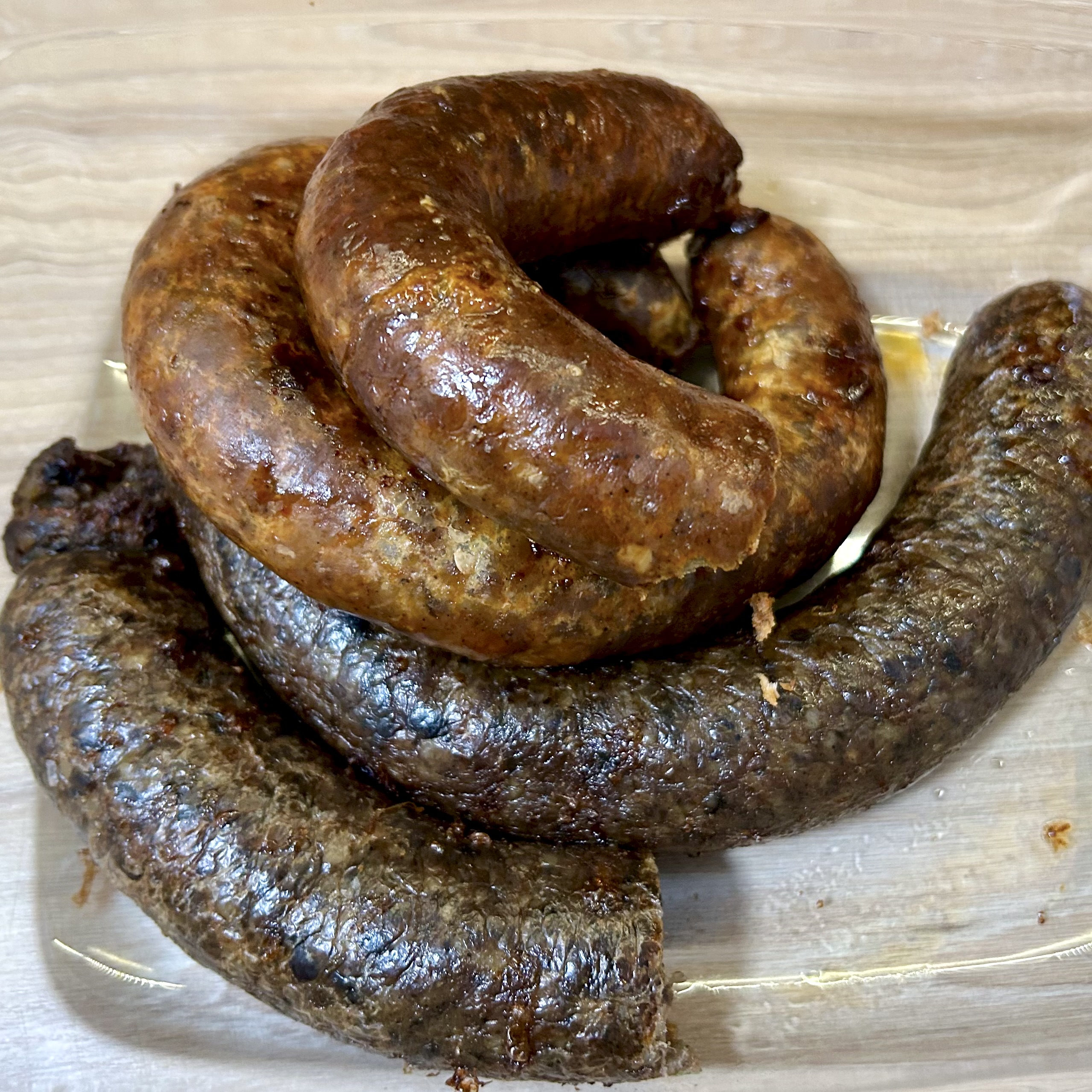
That was the beginning. There was kocsonya, where meat sets into a delicate jelly, mild-tasting, until a piece of pork nose stares back at you from the aspic. There was véres hurka, a blood sausage that reminded me immediately of my all-time favorite, sundae (순대). On special occasions like Christmas, I saw whole pig's heads, split in half, being baked.
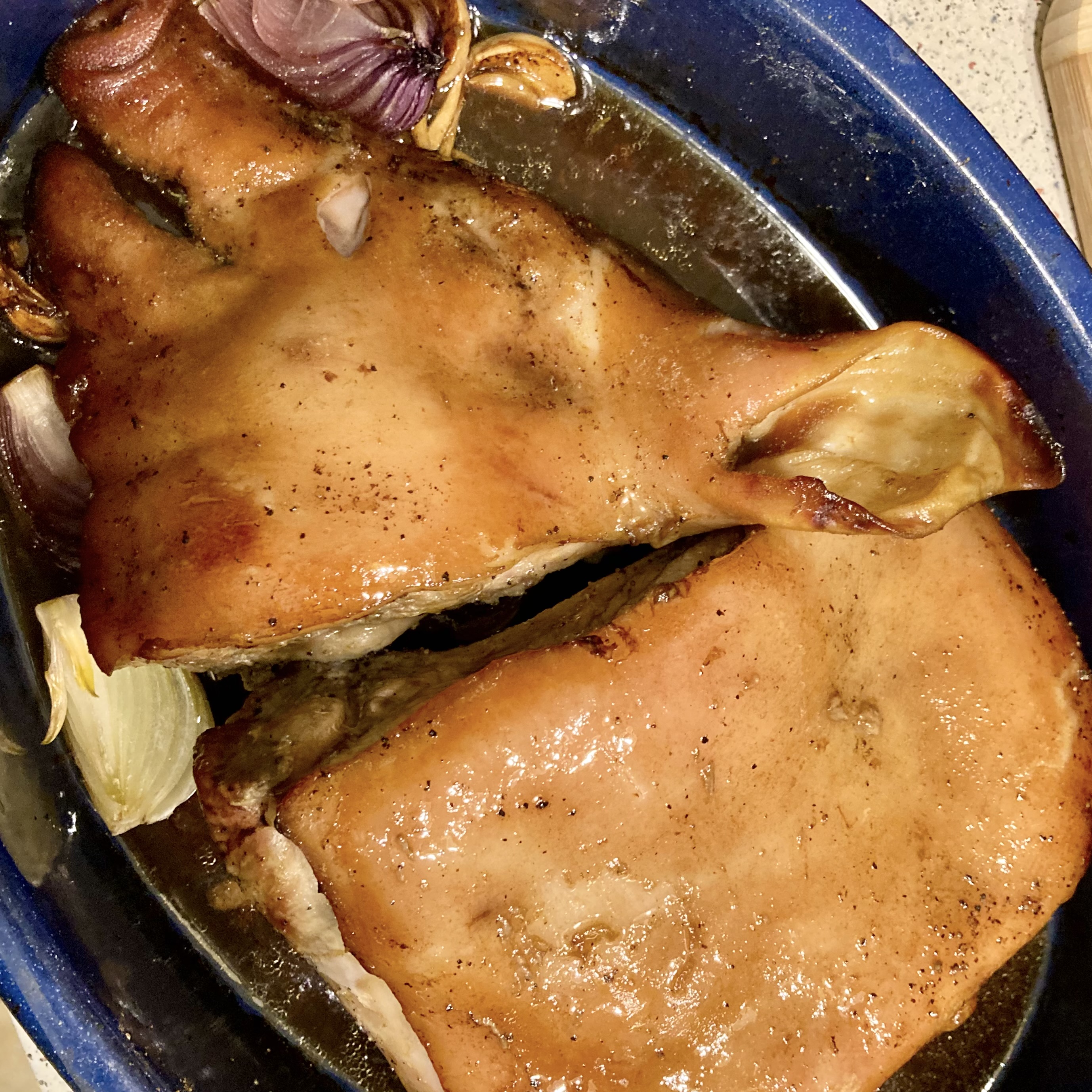
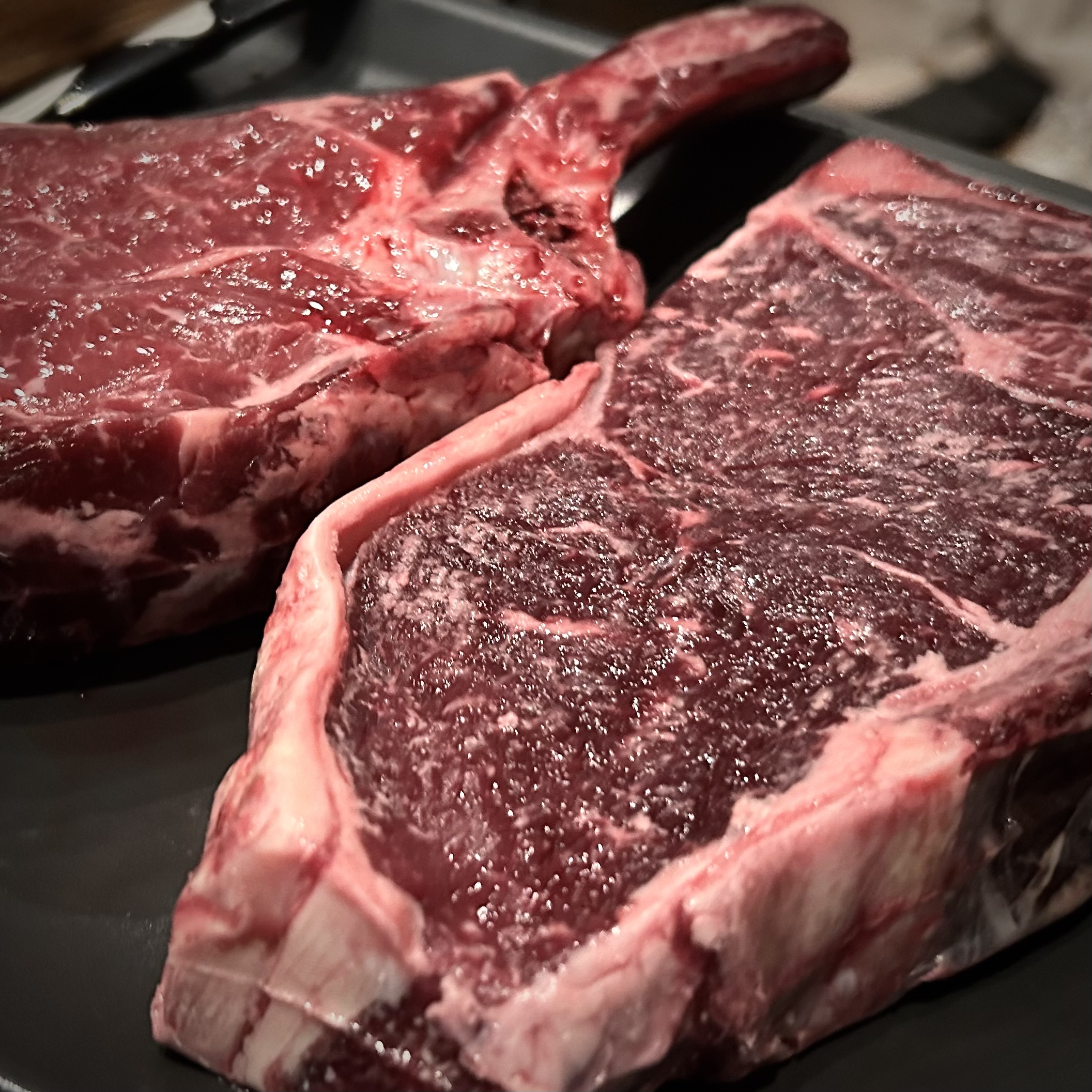
In Hungary, pork is not a collection of familiar cuts. It is the whole animal: the head, the skin, the organs, the trotters. Fat is carefully saved and reused. In winter, hams and sausages hang in the corners of pantries, slowly curing, fat dripping as they age. Nothing is wasted.
So I asked about it. How all of this was made.
My mother-in-law didn't find it pleasant. She still remembers hearing the pig scream. But for others, it felt different. They spoke of it as a gathering. Something they remembered fondly.
Every winter, there would be a day when people gathered early in the morning for disznóvágás, the traditional pig slaughter. The work lasted all day: cutting, sorting, making sausages, rendering fat. My husband remembers being a boy, tasked with stuffing sausage mixture into intestines. Some people worked while others cooked. There were even foods you could only have on that day, like hagymás vér, made when the blood was still fresh.
And, of course, there was pálinka.
People started drinking early, and as the day went on, the work slowly shifted into something else, less labor and more a gathering, a shared ritual. By the end of the day, people were tired, sometimes drunk, sometimes careless. The stories that remained were less about the animals, and more about the people.
Growing up, I had assumed that in Western countries, people mostly ate steaks. That offal was something people avoided, or only ate out of necessity. I'm not sure where that idea came from. Maybe the movies I watched. But it was something I believed without questioning.
Hungary unraveled that assumption. And then traveling unraveled it further. In southern France, we came across tripes de veau (braised intestines). There were blood sausages there too: boudin noir in France, morcilla in Spain. Each time we saw them, we were drawn in almost immediately. The shape, the casing, the way they held together. You could recognize them at a glance.
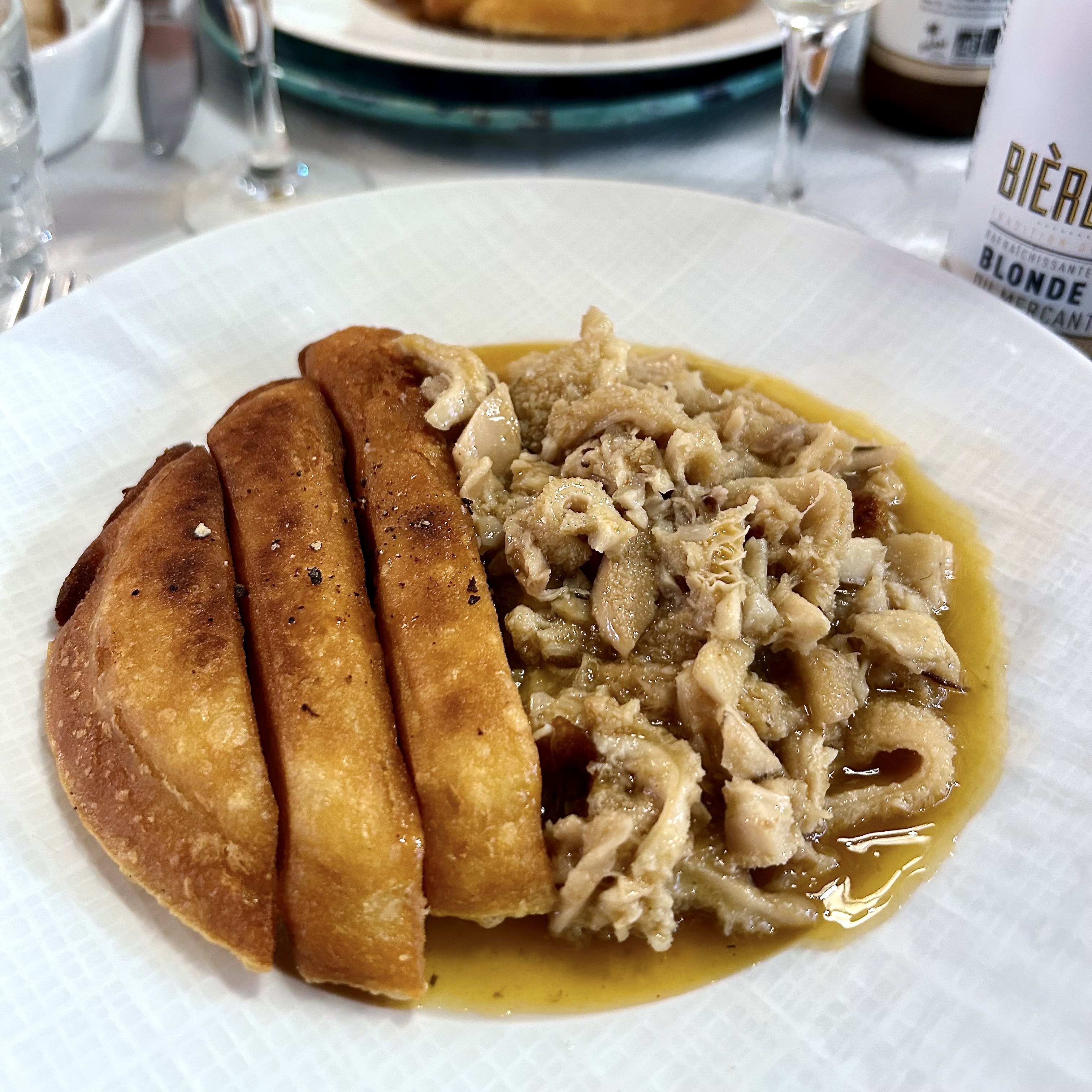
What struck me was not just that other cultures eat the same parts, but how differently they arrive at the table. In France, boudin noir is sliced and pan-fried until crisp, served with apples. In Hungary, blood sausage is baked alongside other sausages, eaten with mustard. In Korea, these same parts become soup.
That is what Korea does with offal. It dissolves it.
A few pieces of sundae added to broth become sundae-guk (순대국). The bowls are topped with buchu and onions, adding color to what would otherwise be a plain-looking dish. When everything is boiled together, bones, skin, parts you might not recognize on their own, the collagen melts into the broth, turning it thick and cloudy. What once felt distinct softens and blends in.
Having grown up eating food like this, I recognized it immediately when I saw menudo at a taqueria. The same logic, the same warmth, the same quiet use of everything.
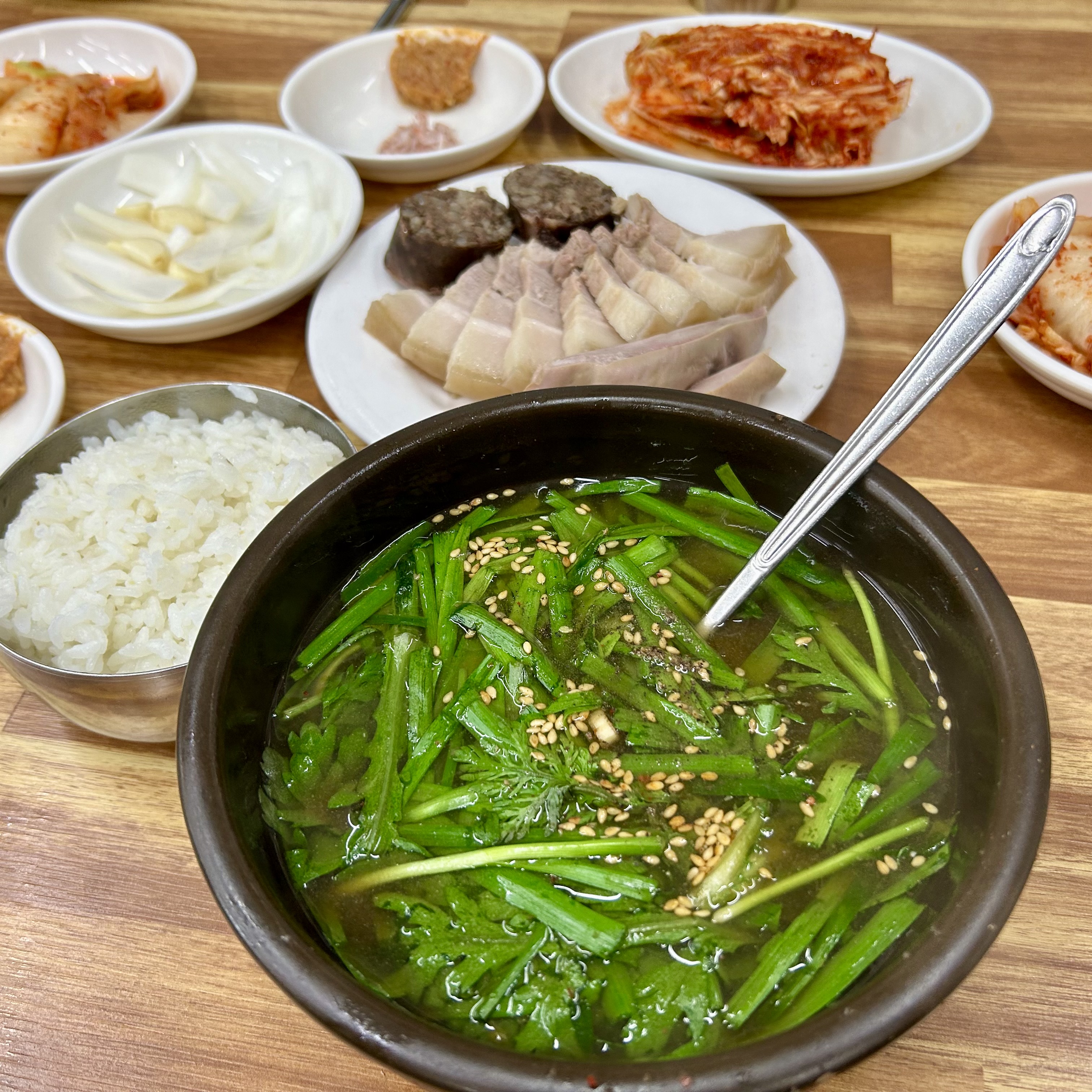
And yet, in the United States, these dishes feel uncommon. Not because meat is scarce, in Argentina and Uruguay, meat is just as abundant, and offal remains part of everyday cooking. But in American supermarkets, the animal has almost disappeared. It arrives already cut, packaged, ready. Uniform, clean, consistent every time.
There is a kind of comfort in that. I am used to it. I don't mind it.
Yet I've noticed that some of my friends from other countries hesitate. They say the meat tastes different. I'm not sure if that is entirely true, but I understand what they mean. It isn't just about taste. It's about where the food comes from, and whether you feel connected to it.
Maybe that's why I find myself drawn to smaller, local butcher shops. The cuts are less predictable, but they feel more real. You trust what you're buying not because it looks perfect, but because you can see a little more of where it came from.
And that, to me, feels closer to real food.