Shared Flavors , Shared Memories
How We Wrap Winter in Dough
From clearing out old kimchi jars to dumpling traditions across the Silk Road, mandu is both a family ritual and a shared human story of wrapping love into dough.

From clearing out old kimchi jars to dumpling traditions across the Silk Road, mandu is both a family ritual and a shared human story of wrapping love into dough.

On mandu day, the whole family sat on the floor around a low table.
My mom managed the operation: keeping everyone's tea cups full, bringing out more filling as needed, whisking away finished mandu to be steamed or boiled. She cooled them on trays outside on the balcony. Winter in Korea made a perfect natural freezer.
The reason for making them was practical. By spring, the kimchi from the previous winter's kimjang (김장), the tradition of making large quantities before the cold, had become mukeunji (묵은지), aged and intensely sour. Delicious to some, like me. But not everyone. My mom, ever resourceful, repurposed the old kimchi into mandu fillings. The kimchi was finely diced and squeezed dry, mixed with crumbled tofu, boiled dangmyeon (당면), seasoned pork, and blanched bean sprouts. The taste of the filling alone was so good we had to stop ourselves from eating it before wrapping.
Part of her goal was to clear space for fresh batches. But we also ended up with enough mandu to last until New Year, when they'd be served with tteokguk (떡국), rice cake soup in rich bone broth. Comfort in a bowl.
I described it once to my mom in a way she'd understand. I'd sent her a photo from a trip: ravioli in Italy.
"It's like small Italian mandu," I told her.
She understood immediately. That's how she makes sense of the world I send back to her, through food she already knows.
When I first came across mantu at a local Afghan restaurant, it looked just like the mandu I grew up eating. Even the name sounded familiar.
It wasn't coincidence. Across Asia, especially along the Silk Road, dumplings traveled with traders, migrants, and families for centuries. Names shifted slightly: mantou in China, manti in Central Asia, mantu in Afghanistan, mandu in Korea. Fillings adapted. Shapes changed. But the structure remained: dough, filling, hands.
The dumpling moved. The word moved. People moved. And somehow, the wrapping stayed.
A Polish classmate from language school told me he makes hundreds of pierogi every Christmas. He called it tradition. I don't know whether it's a national custom or his family's ritual, but I understood it immediately. Like Mexican families gathering to make tamales before Christmas: folding, steaming, stacking. It's a way of wrapping winter in dough.
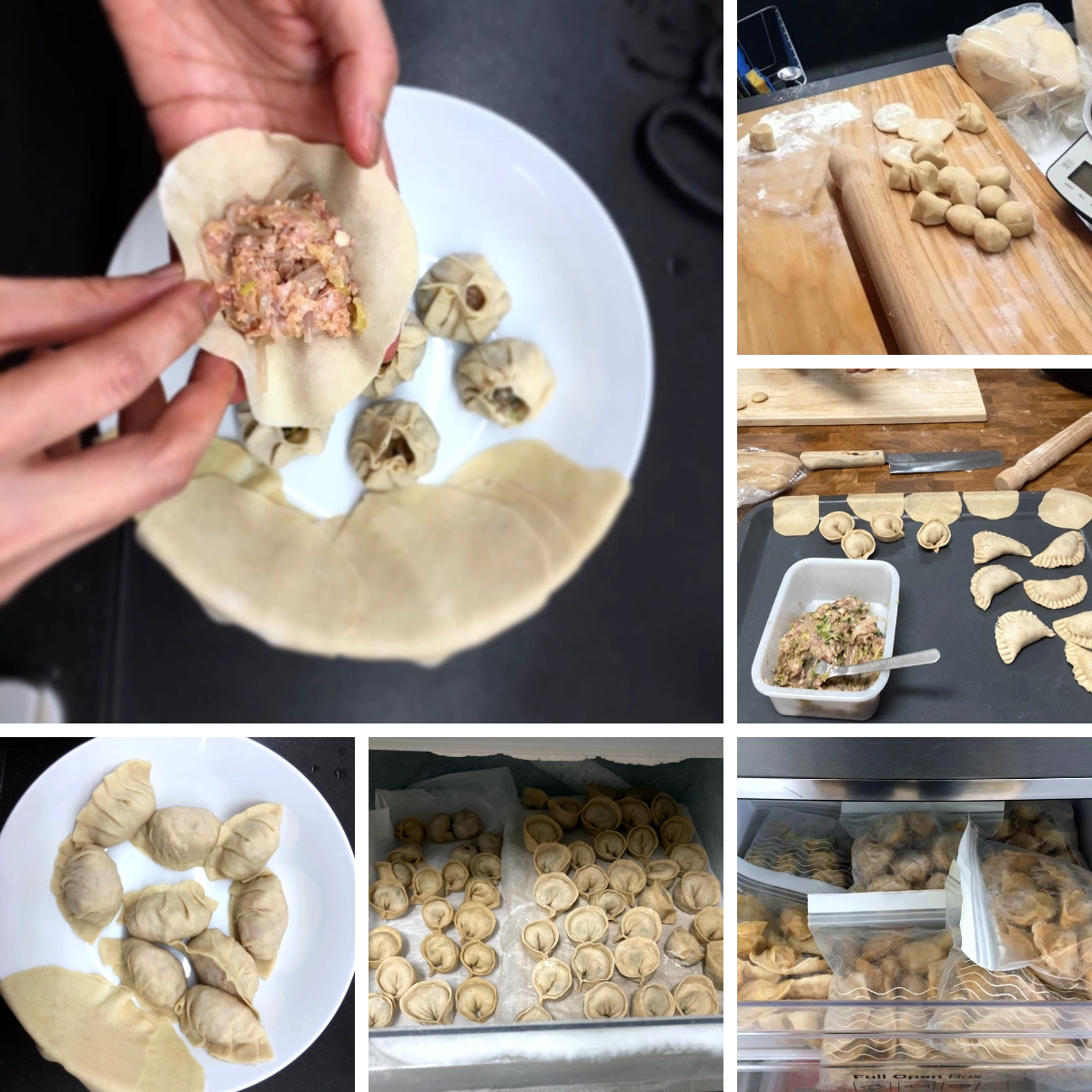
During the COVID lockdown, my husband and I began making mandu at home again. Not in the large winter batches my mother made, but smaller rounds — enough for a few meals at a time. We tried different fillings, adjusted seasoning, folded them in uneven shapes that revealed our inexperience and patience at the same time.
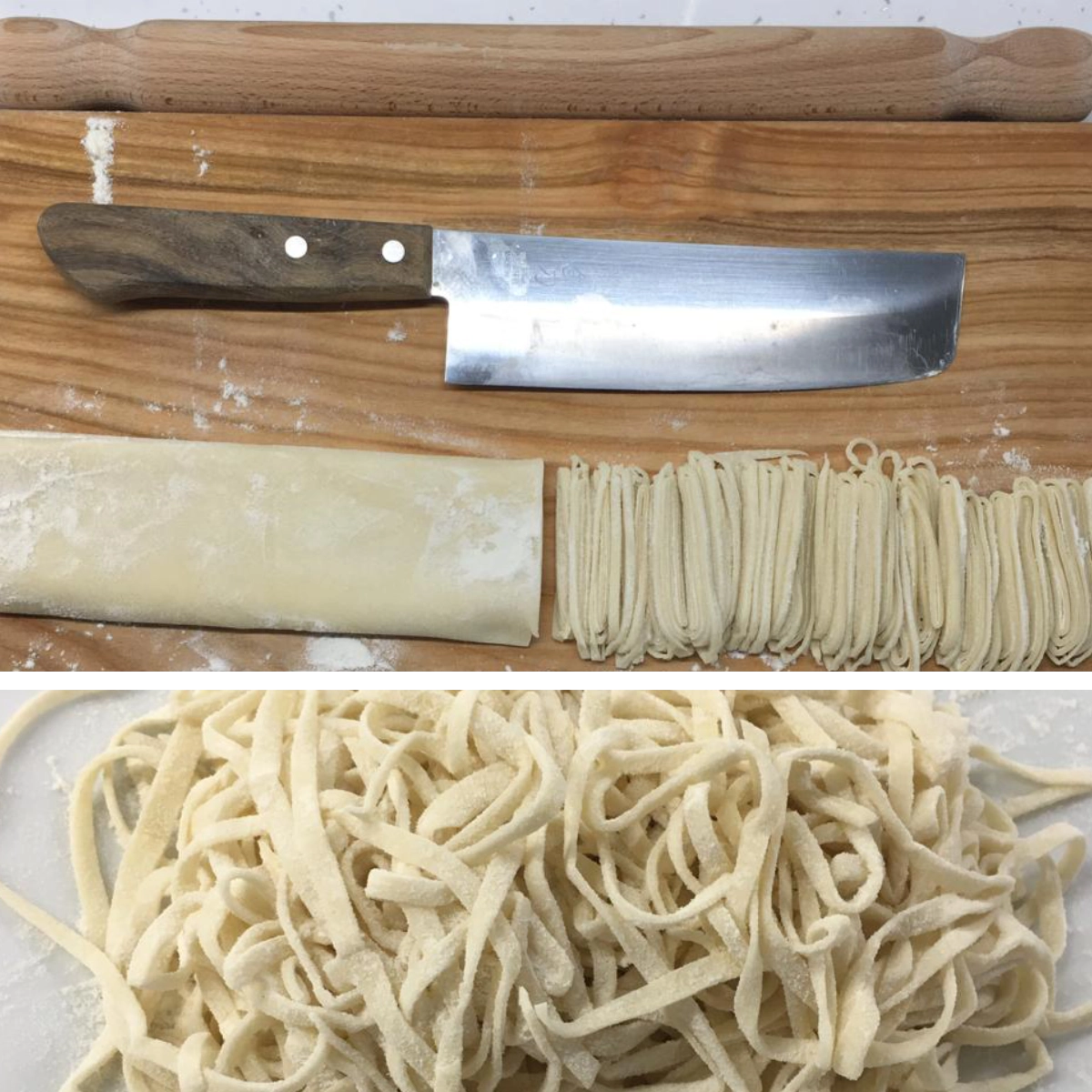
Leftover dough never went to waste. We rolled it out and cut it into strips for kalguksu (칼국수). The kitchen counter filled with flour. The freezer slowly filled with trays.
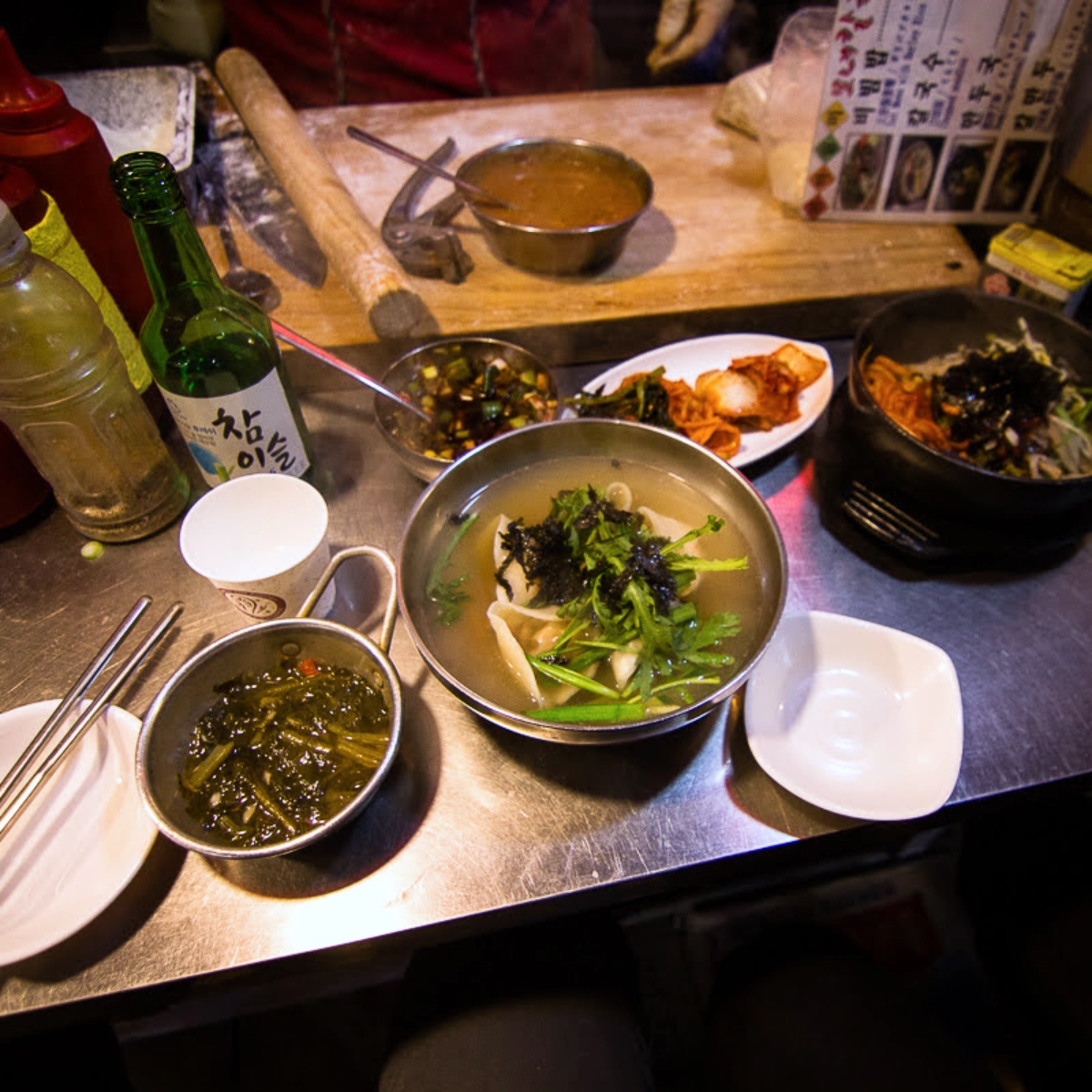
These days, my favorite way of eating mandu is simpler. I buy them from a local supermarket, Korean brands, neatly packed and frozen. I boil them and drop them into ramyeon, or make a quick manduguk (만두국) when I want something warm but uncomplicated. It's not ceremonial. It's practical. But it still carries the same comfort.
Mandu no longer fills our balcony in winter. It sits quietly in my freezer. And yet, whenever I boil a few, it still feels like something wrapped from home.