Shared Flavors , Shared Memories
The Soup I Wasn't Supposed to Eat
My first Christmas in Hungary, the choice was halászlé or duck. I had a family rule about carp. Nobody at the table knew.

My first Christmas in Hungary, the choice was halászlé or duck. I had a family rule about carp. Nobody at the table knew.

My first Christmas in Hungary, the table held two choices: halászlé or duck. I had barely learned what halászlé was. A fish soup, paprika-red, made from freshwater fish: ponty or harcsa (carp or catfish). My mother-in-law ladled it out with quiet pride. I took a bowl.
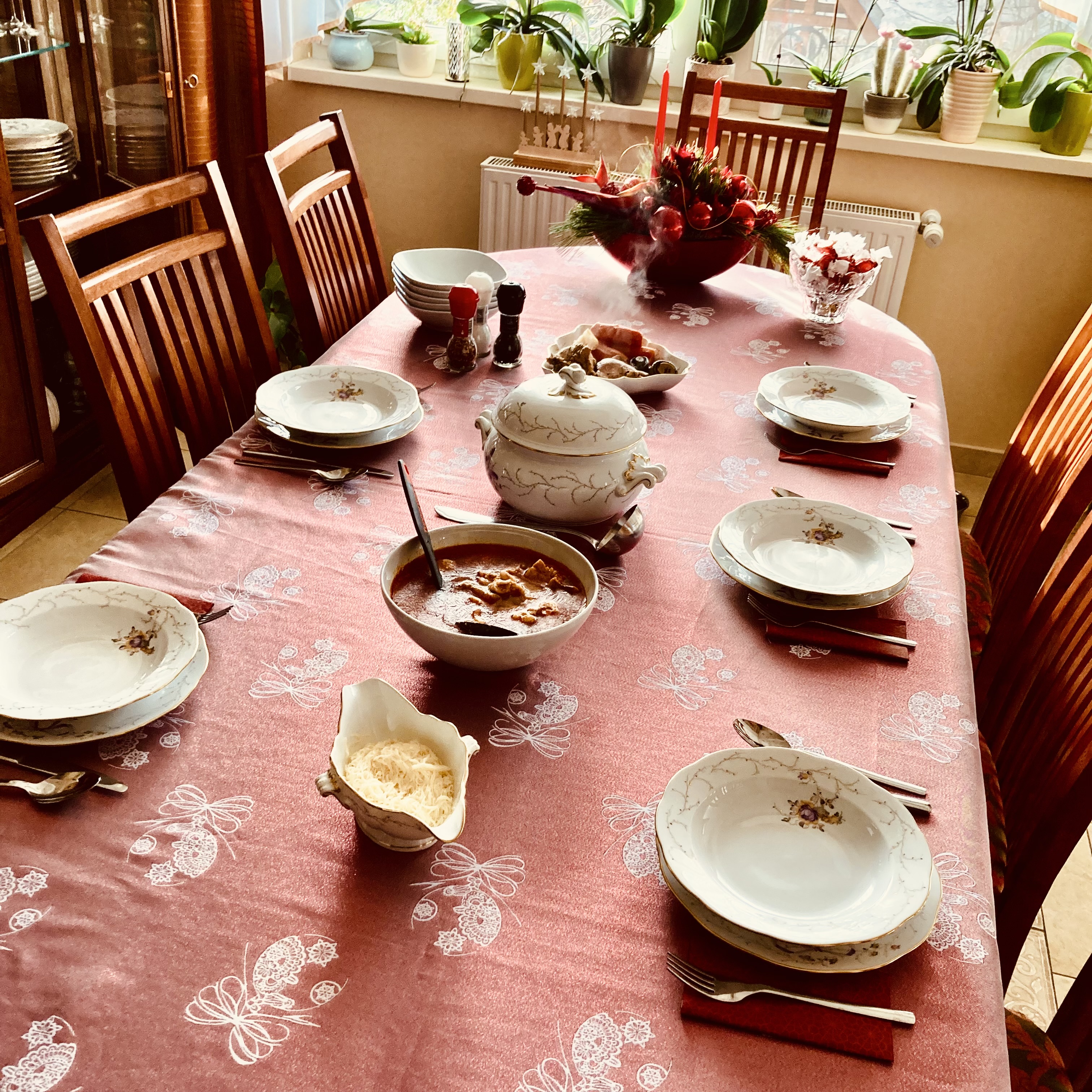
Inside, something clicked. The heat of the broth, the freshwater fish, the paprika...it reminded me of maeuntang (매운탕), the spicy fish soup I had eaten as a child near the river where I grew up. Not the Seoul version. The one from before Seoul, from a small town where restaurants sat right on the water, megi-maeuntang (메기매운탕), catfish, and ssogari-maeuntang (쏘가리매운탕), Korean perch with sharp bones and clean flesh. Something murky underneath the freshness, specific to where the fish had lived. I had never loved the taste. But I knew it...the way you know something from a long time ago, before you had opinions about it.
What nobody at the table knew was that I wasn't supposed to be eating carp at all.
In my family there is a rule about ing-eo (잉어), carp. An ancestor, a battle, a river with no way across. When the situation seemed hopeless, a school of carp appeared and formed a bridge, and the ancestor crossed to safety. The rule passed down through generations: we do not eat the fish that saved him. It was never explained with great ceremony. It was simply known.
I had carried that rule quietly into a Hungarian kitchen. And there I was, at our first Christmas together as a family, my husband's family, now mine, taking a bowl of carp soup out of respect for people who didn't know any of this. The hesitation was entirely internal. I didn't show it.
I tasted it. It was good.
As I moved to the city, I developed a preference for saltwater fish. The taste of freshwater I had almost forgotten about.
Then I had it again, in a landlocked country where carp fills the markets more than any other fish. Restaurant menus lean toward freshwater, ponty, harcsa, süllő, before anything from the sea. Pisztráng from mountain streams. Even hekk, the one saltwater outlier, appearing on menus alongside everything freshwater, the exception that makes the rule visible. Hungarians still love it the way I once did, before my palate changed. They never had to make that shift.
Halászlé, my mother-in-law told me, means fisherman's soup. Hal is fish. Lé is juice, or liquid. I asked why halászlé and not simply halié, fish soup. She didn't have an answer. Just like how carbonara got its name, she said. Some things you accept without explanation.
This month, while visiting Hungary, I stumbled into a Halünnep, a fish festival, on a sunny Saturday by a lake. It had an opening ceremony, a marching band, official tents and price boards. But walk a little further and it looked less like a festival and more like a very large family cookout. Groups had brought their own tents, their own bogrács, their own woodpiles. The smoke was already rising when I arrived in the morning, slow and grey against the blue sky. Someone had started the fire early.
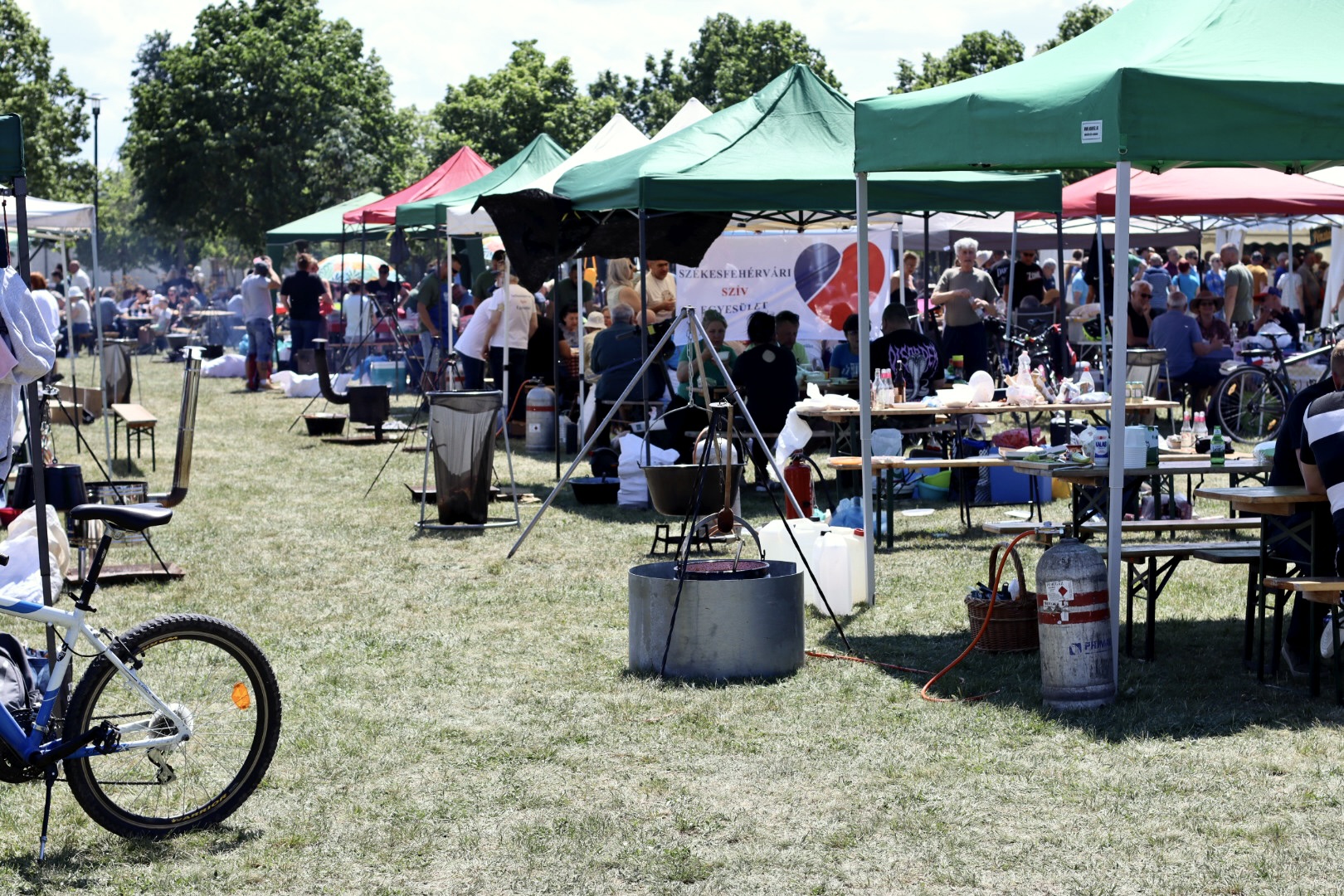
The bogrács hung over the flames on iron chains, the same wide, blackened pots that appear at every outdoor Hungarian gathering. Inside them, halászlé. The fish simmered for a long time, then someone sieved the meat back into the broth to thicken it, the bones and heads doing their quiet work. On a flat pan nearby, ponty chips (fried carp) turned golden in oil. A man walked past with a pálinka shot glass hanging from a rope around his neck, ready for the occasion.
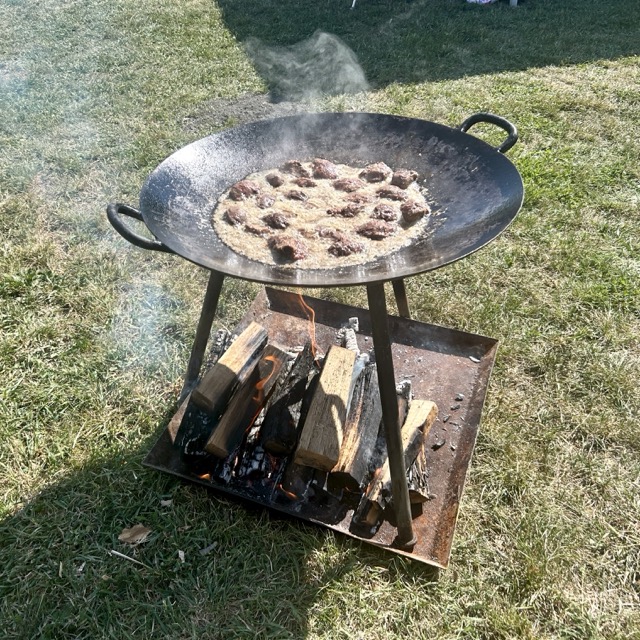

Watching the bogrács, I thought of something from a long time ago. My parents, my father's colleagues, a day trip somewhere near water. They had brought a gamasot (가마솥), a large iron pot, heavy enough that carrying it was already a commitment, and made dak-baeksuk (닭백숙) over a fire outdoors. Whole chicken, water, slow heat, time. Not a quick meal. Not convenient. I could not remember exactly why they went to such effort. But I still remember it. Maybe that is the answer: the effort is what makes it worth remembering.
The smoke from the bogrács drifted across the field. Kids ran between the tents. Fishermen sat along the edge of the lake. The soup had been cooking for hours. People stood around, talking, drinking, waiting. Not for the fish exactly. For the thing that happens when you cook something slowly together outdoors, the part that has no name but that everyone at the table already knows.