From Chilean completos to Dutch fries and Korean sarada, mayonnaise appears in places you might not expect. Following it across borders reveals how a simple sauce travels and adapts.

In Chile, a country known for its beautiful landscapes, vineyards, and seafood, I arrived with certain expectations. I already associated Chile with a few familiar things. I appreciate good, reasonably priced Chilean wine, and in the United States Chilean grapes often appear in winter when domestic fruit is scarce. As a Korean, I also knew Chile through pork imports, especially the frozen pork belly used for samgyupsal (삼겹살).
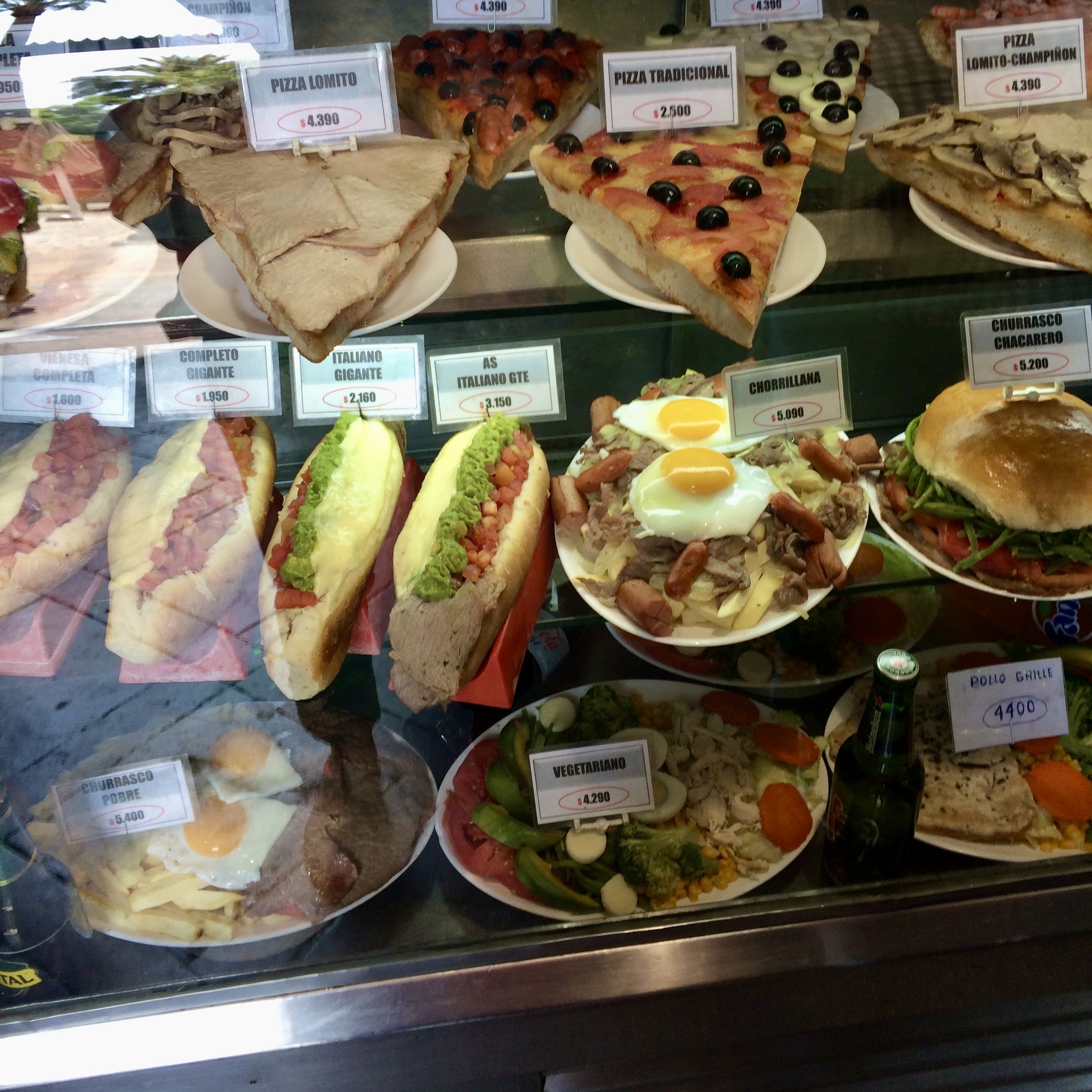
What struck me most about Chile’s food scene, however, was none of these things. It was a hot dog sandwich known as a completo. You see them everywhere, displayed in shop windows as you walk through the streets. They look almost decorative, topped with layers of tomato, avocado, and what appears to be a generous spread of white cream. At first I assumed it was cream cheese. Only after taking a large bite did I realize it was mayonnaise, applied in a thick layer across the sandwich. I had never seen that much mayonnaise on a single piece of food before. At the time, it felt excessive.
Only later did I realize that both Chile and the Netherlands are places where mayonnaise plays a surprisingly central role.
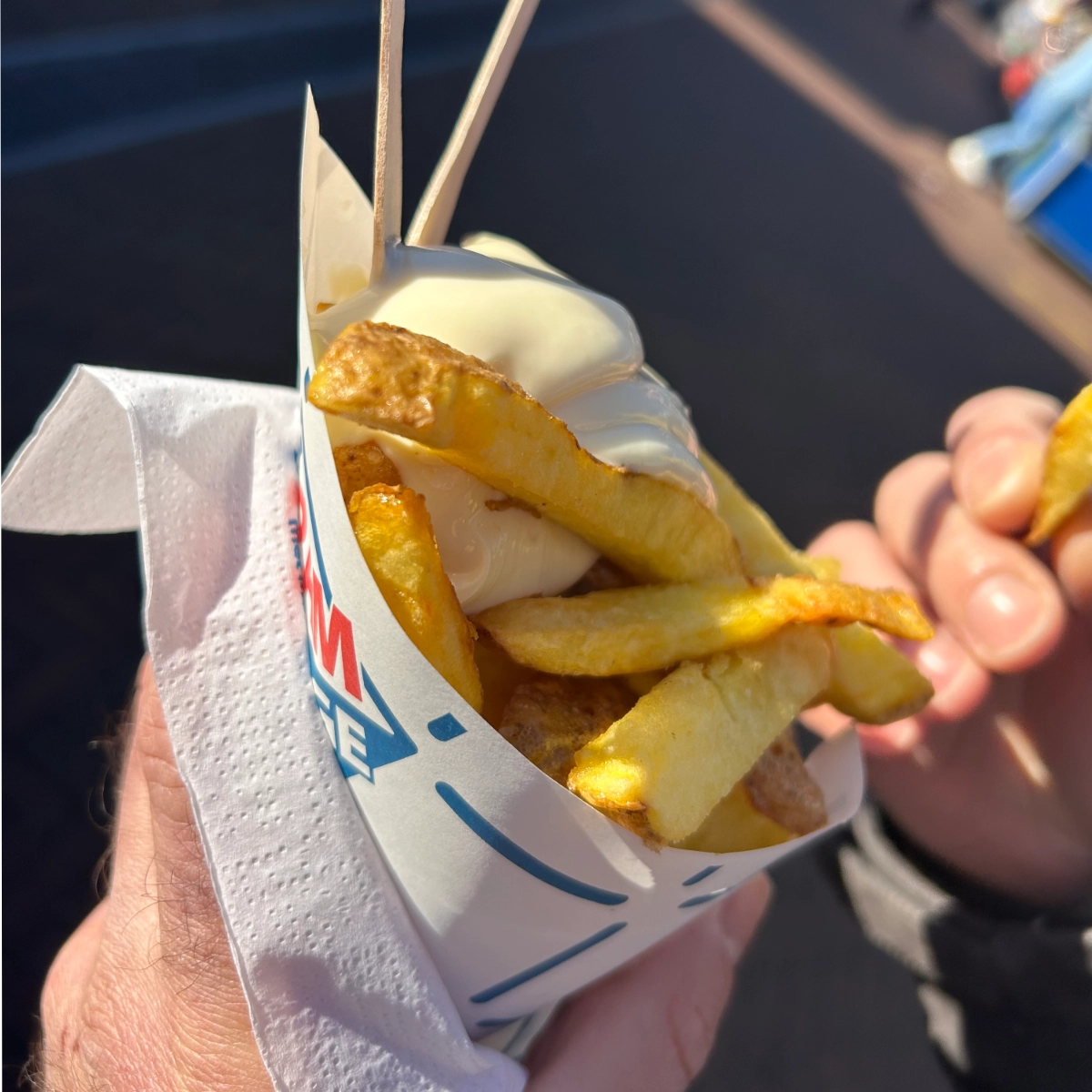
After moving to the Netherlands, I began noticing mayonnaise in places where I had not expected it. When I first saw patatje — not quite the thin “French fries” I was used to — served with mayonnaise instead of ketchup, the pairing seemed strange. What surprised me even more was not just the unusual combination, but the sheer amount of mayonnaise. It reminded me of what I had seen in Chile. The fries, or patatje, often arrive in a paper cone with a generous pile of mayonnaise sitting on top, far more than the small packets you might get at fast food chains like McDonald’s or Burger King.
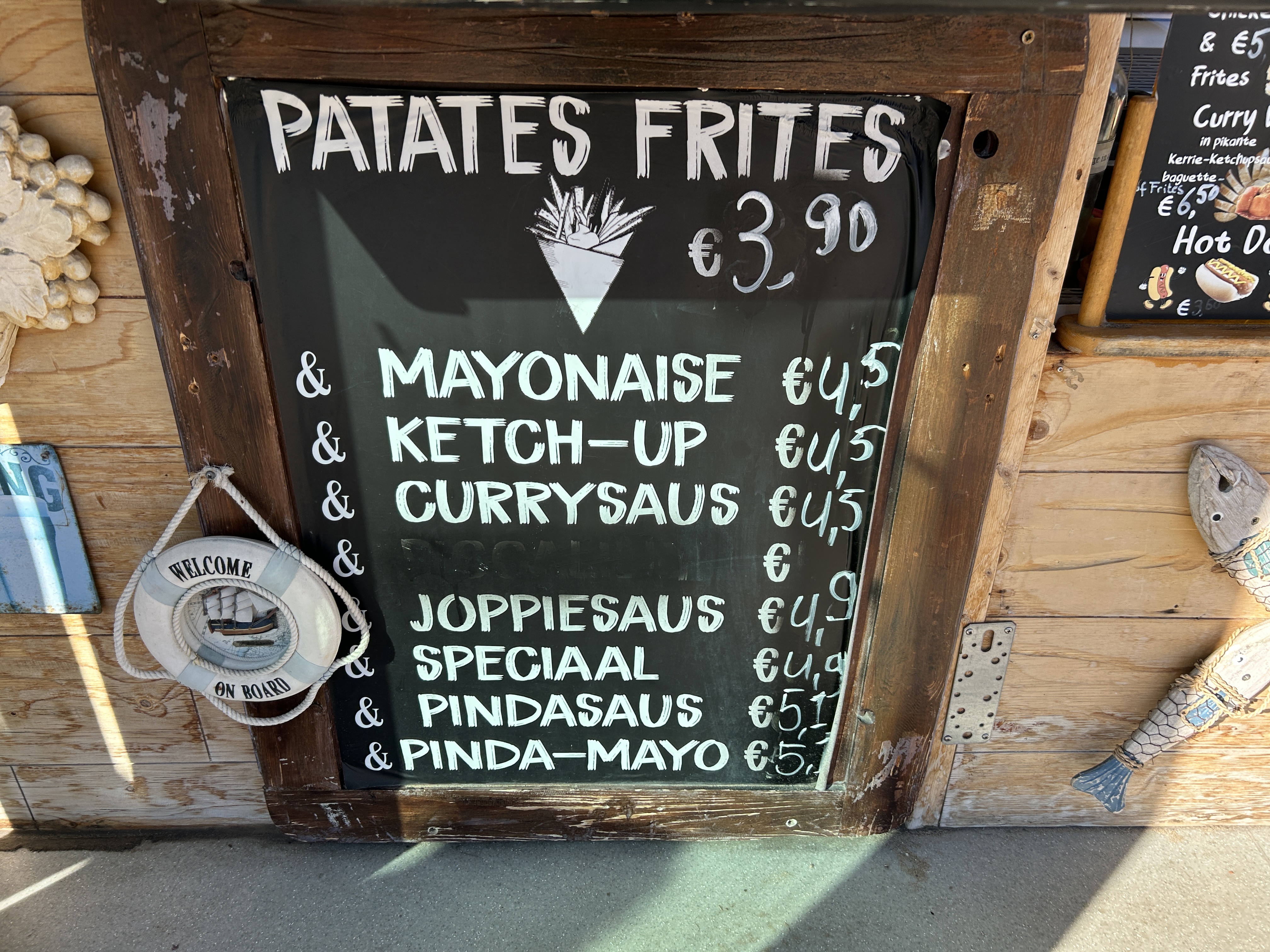
To me, fried potatoes already contain plenty of oil, so adding a thick oil-based sauce on top seemed redundant. Yet it quickly became clear that Dutch people love mayonnaise with their fries. When you order patatje, the toppings almost always begin with it. The simplest version comes with just mayonnaise. Another option combines mayonnaise with peanut sauce, and when chopped onions are added it becomes patatje oorlog. There is also Joppie sauce, a Dutch invention made from mayonnaise mixed with mild curry spices. Even fritessaus, the sauce specifically marketed for fries, is essentially a sweeter, lighter mayonnaise-based dressing. In one form or another, nearly all of these variations begin with mayonnaise.
When I think of mayonnaise, however, I am reminded of sarada (사라다), a mayonnaise-based salad, often appears at gatherings or holiday meals. It usually contains a mixture of ingredients such as apples, persimmons, ham, peanuts, raisins, or potatoes folded together with mayonnaise. I never really liked it growing up. The only part I enjoyed was the ham, so I would pick out the pieces of ham and leave the rest for my family to finish.
I did not think much about it when I was a kid. I assumed the word sarada simply came from “salad,” filtered through Japanese pronunciation as sarada (サラダ), though that was confusing in itself. Wasn’t salad supposed to be green, crunchy, and healthy? The version I knew was none of those things. It was creamy, heavy, and filled with ingredients that did not seem particularly light — fruit, ham, peanuts, raisins, sometimes potatoes, all folded together with mayonnaise.
Only much later did I start noticing that similar versions exist around the world. Many of them follow the same pattern: chopped ingredients, often starchy, bound together with a generous amount of mayonnaise, as if the calories were not already high enough. But that, I eventually realized, is partly the point. These dishes are filling, inexpensive, and easy to prepare in large quantities. Macaroni salad, for example, is a standard component of the Hawaiian plate lunch. It originated as a worker’s food — cheap, practical, and rich in calories.
The connection became clearer when I encountered something similar again in Europe. In Hungary, I once ordered a dish called franciasaláta, or French salad. It wasn’t quite the type of salad I was expecting. What arrived was a bowl of diced potatoes, carrots, peas, and pickles bound together with mayonnaise. The dish looked immediately familiar. It reminded me of the sarada I had grown up with, a dish I never particularly liked.
But why call it French salad? I realized I had seen the same dish elsewhere in Europe under different names. In many places it became known as Russian salad: ensaladilla rusa in Spain, insalata russa in Italy. In Russia itself, however, it is simply called Olivier salad. The ingredients barely change from place to place. Only the nationality does. How could one salad be French in one country and Russian in another?
The explanation goes back to nineteenth-century Moscow, where a Belgian chef named Lucien Olivier created a luxurious salad at the Hermitage Restaurant. His original version included grouse, crayfish, caviar, and potatoes dressed with a mayonnaise-based sauce. The recipe became popular and spread widely, but as it traveled the expensive ingredients gradually disappeared.
Over time the dish simplified into the diced vegetable salad now served across Europe. In places where French cuisine represented sophistication, it became known as French salad, as in Hungary. In other places, it takes the name of its birthplace as Russian salad, or of the chef who created it as Olivier salad. To Koreans like me, it is known as sarada, a word borrowed from “salad,” pronounced with a slightly different accent and prepared with a slightly different set of ingredients. The same bowl of vegetables and mayonnaise moves across borders under different identities.
Still, I find myself wondering how this simple ingredient — mostly oil held together by egg and acid — became so essential in so many cuisines around the world.
At its simplest, mayonnaise is a mixture of egg yolk, oil, and acid emulsified into a thick sauce. The texture allows it to coat ingredients evenly, add moisture, and carry flavor through fat. That is what fat does. Boiled eggs or potatoes alone can feel dry, and oil alone will not hold ingredients together. Mayonnaise works as a binder.
Unlike older emulsified sauces such as aioli or hollandaise, mayonnaise is stable, inexpensive, and easy to keep at home. When mayonnaise started appearing in jars in the late nineteenth and early twentieth centuries, dishes built around this creamy base began appearing in many cuisines. People began using it to bind chopped ingredients and enrich otherwise simple foods. It provided calories when food was scarce, helped ingredients hold together, and made it easier to assemble sandwiches and deli-style dishes, which is how it first became widely used in delicatessens in the United States.
At first it still seems excessive to add more fat on top of already fried foods, like fried fish served with tartar sauce, or even healthy greens dressed with mayonnaise-heavy sauces such as Thousand Island or Caesar dressing. Yet mayonnaise appears in places you might not expect, sometimes with a surprisingly pleasant effect, as I later discovered when it showed up as a secret ingredient in dishes like ojingeochae muchim (오징어채 무침) in Korean cooking. The mayonnaise softens the texture of the dried squid and helps balance the salty, spicy, and slightly sweet flavors of the gochujang seasoning. It may seem like an unlikely addition, but once you know it is there, you notice when it is missing.
I am still not a big fan of mayonnaise. Yet after living in the Netherlands for a while, even though I do not particularly like it, the combination slowly began to make sense. Mayonnaise is everywhere, and over time the taste begins to grow on you. In small amounts it can bring ingredients together that might not seem to match at first. Mixed and mingled, it works quietly as a binder — a role mayonnaise now plays in modern food culture.