Shared Flavors , Shared Memories
When It Rains
In Korea, when it rains, someone makes buchimgae. My Pakistani neighbor described paratha the same way, gathered around the pan, waiting for the next one.
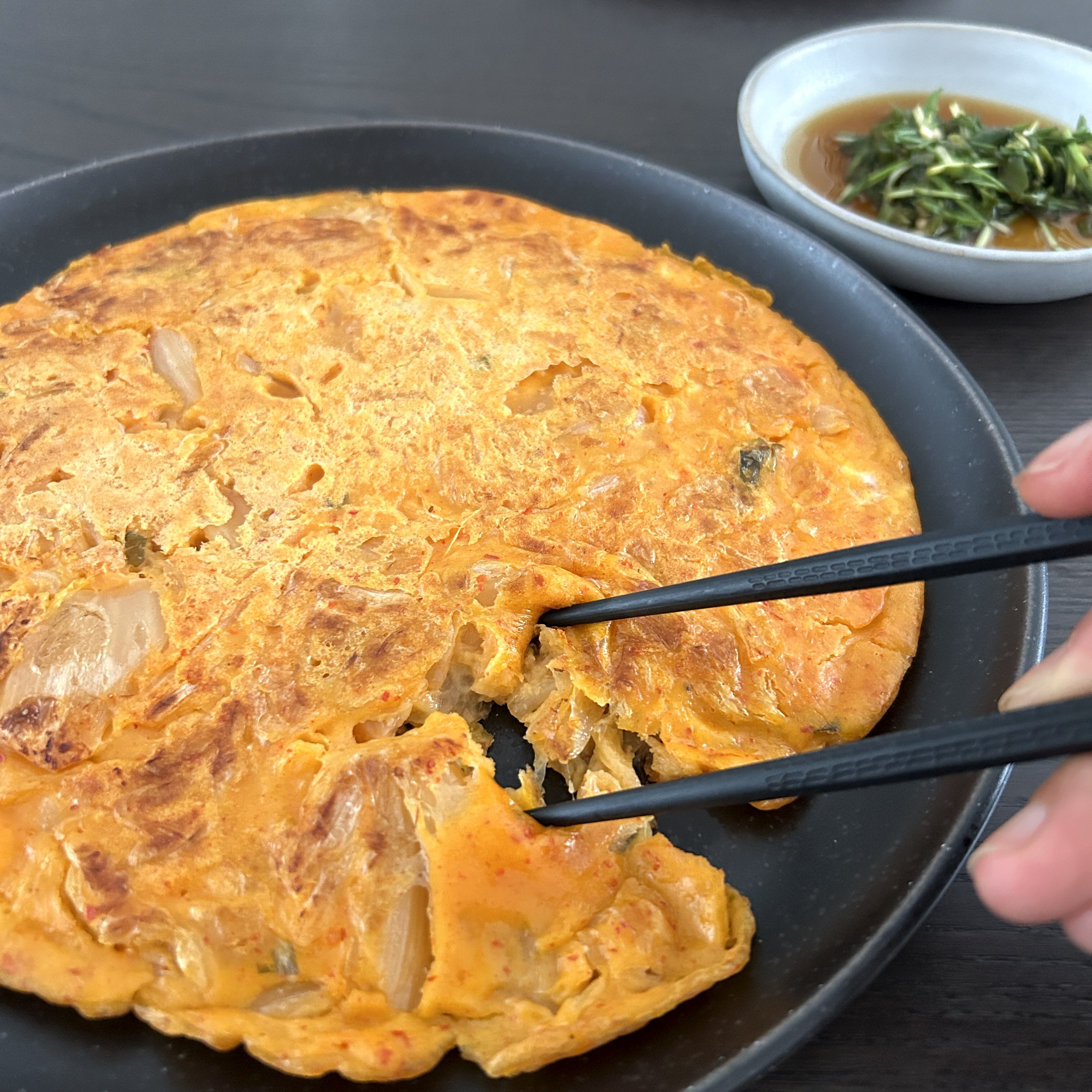
In Korea, when it rains, someone makes buchimgae. My Pakistani neighbor described paratha the same way, gathered around the pan, waiting for the next one.

I used to think buchimgae (부침개) was its own category, and not a pancake. Calling it a Korean pancake felt wrong, like a translation that flattened something. I associated pancakes with sweetness, with maple syrup and weekend breakfasts. Buchimgae was savory, something you made when it rained, something that arrived with a small bowl of yangnyeom ganjang (양념간장) rather than syrup.
Then I started encountering savory pancakes everywhere. In France I always chose the savory crêpe: ham, cheese, egg, the batter thin enough to see light through. In the Netherlands, near the dunes in Wassenaar, I had my first Dutch pannenkoek, a wide, golden disc with bacon and cheese baked into the batter itself, not as a topping. It wasn't sweet. It was substantial, slightly crisp at the edges, the kind of thing you ate slowly.
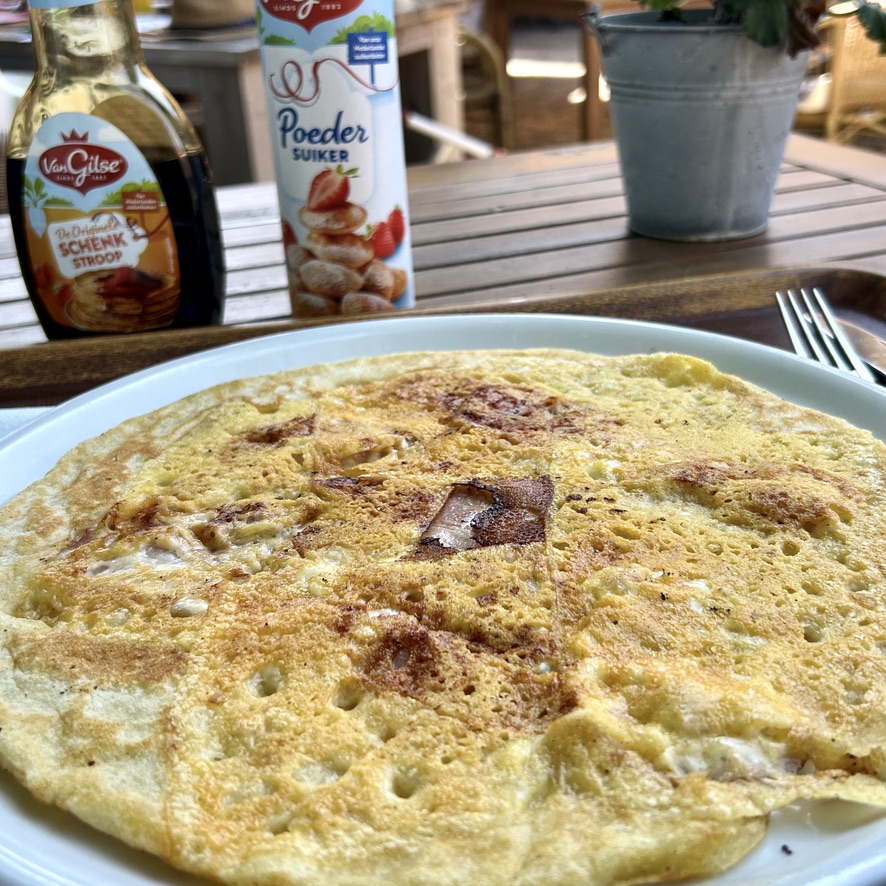
The category I thought was Korean turned out to be much older and much wider than I had assumed.
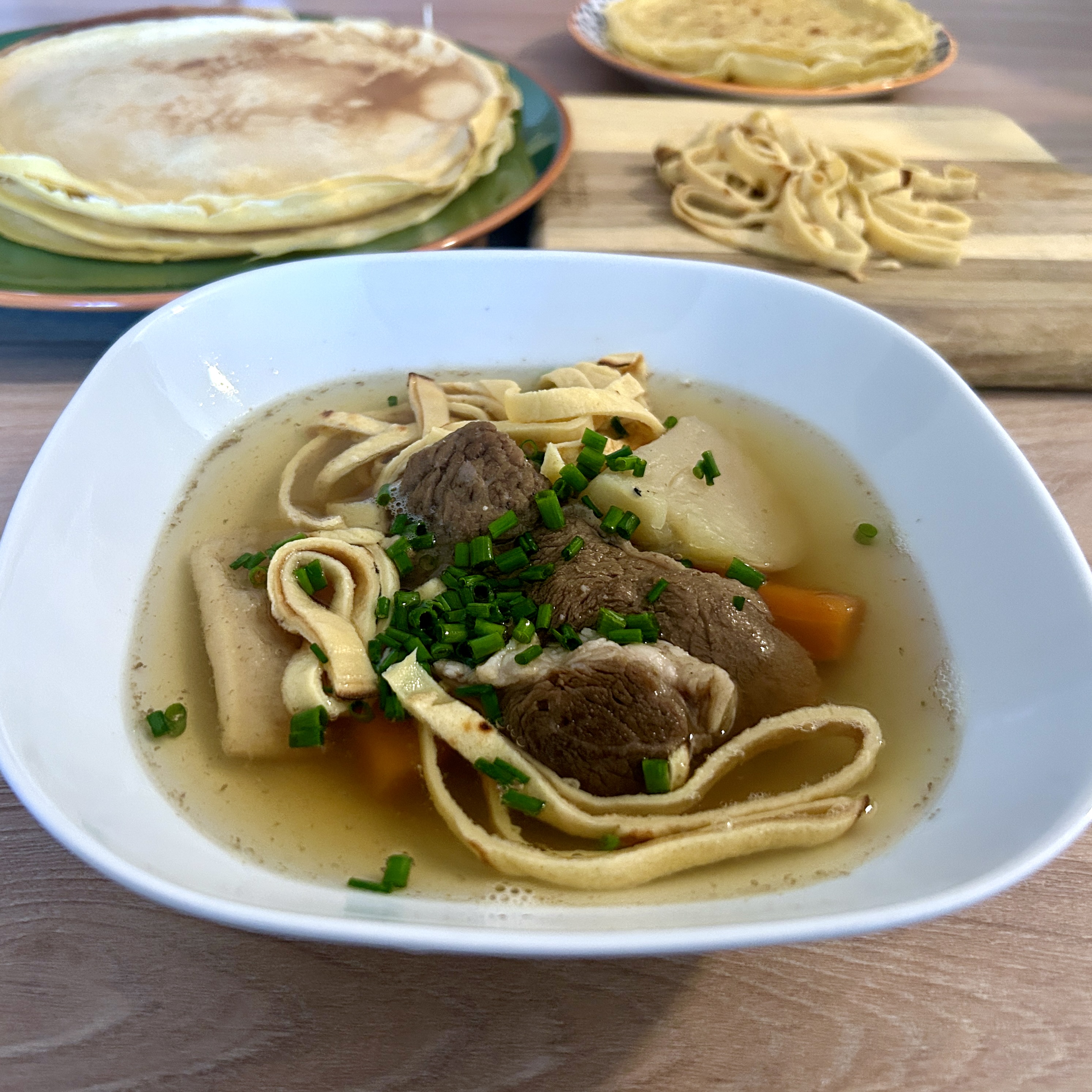
The most unexpected discovery came on a hiking trip in Styria, Austria. My husband and I were walking with our dog somewhere in the mountains, and we came across a garden restaurant tucked into the hillside. Red-checked tablecloths, cold beer, the kind of place that appears when you need it most. I ordered a soup and something unfamiliar arrived: clear golden broth with what looked like noodles cut from a sponge. Sliced into strips the shape of kalguksu, pale and soft. I thought it was fish cake.
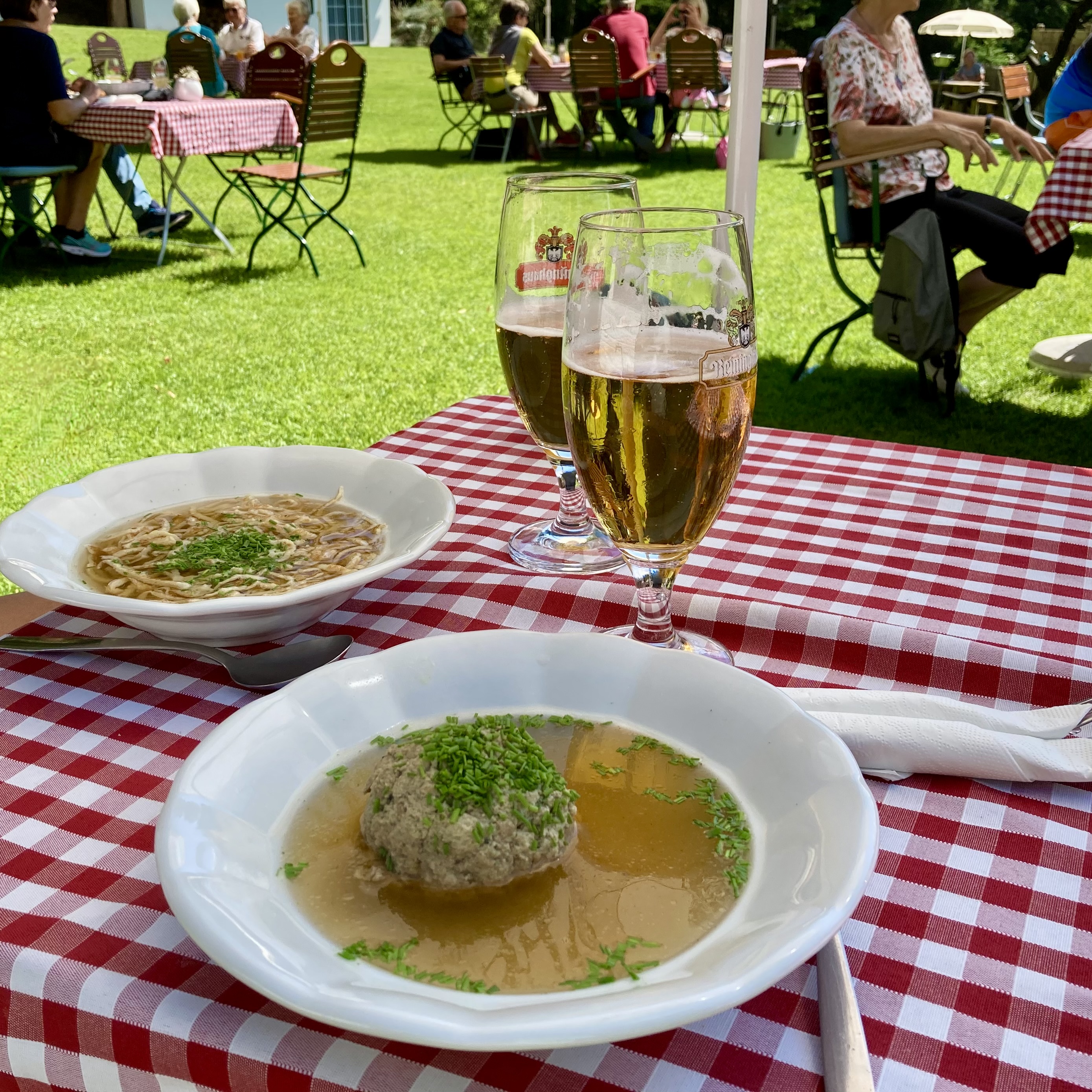
It was Frittatensuppe, pancake soup. The cook had made thin pancakes, rolled them up, sliced them into strips, and dropped them into the broth. The texture was unlike anything I had encountered in a European soup. It reminded me of the noodle soups I missed.
I stop at Landzeit now every time we drive the A2 between Hungary and the Netherlands, which is one of the rare motorway rest stops worth stopping for, the Austrian equivalent of a Korean hyugeso (휴게소). They always have Frittatensuppe.
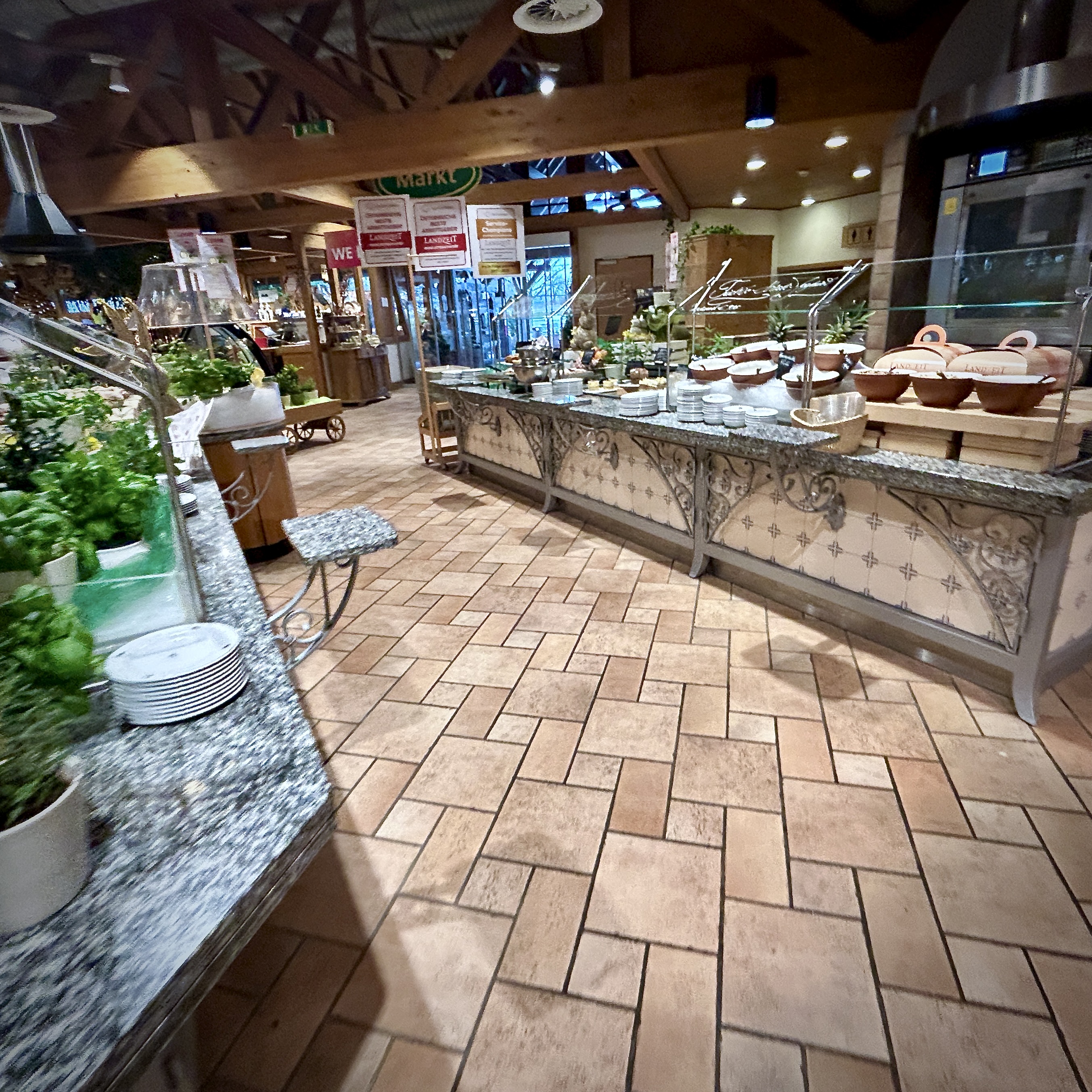
I told my mother-in-law about the soup when I got back. She suggested we make it. She happened to be making húsleves that day, and we could drop the pancake strips in. She taught me a small trick: add sparkling water to the batter for a little lift. And a different method: instead of bringing the batter to a hot pan, she brings the heated pan to the batter and rolls it. A small thing, but the kind of detail that makes a difference. We ended up with a stack of pancakes that afternoon, which felt right.
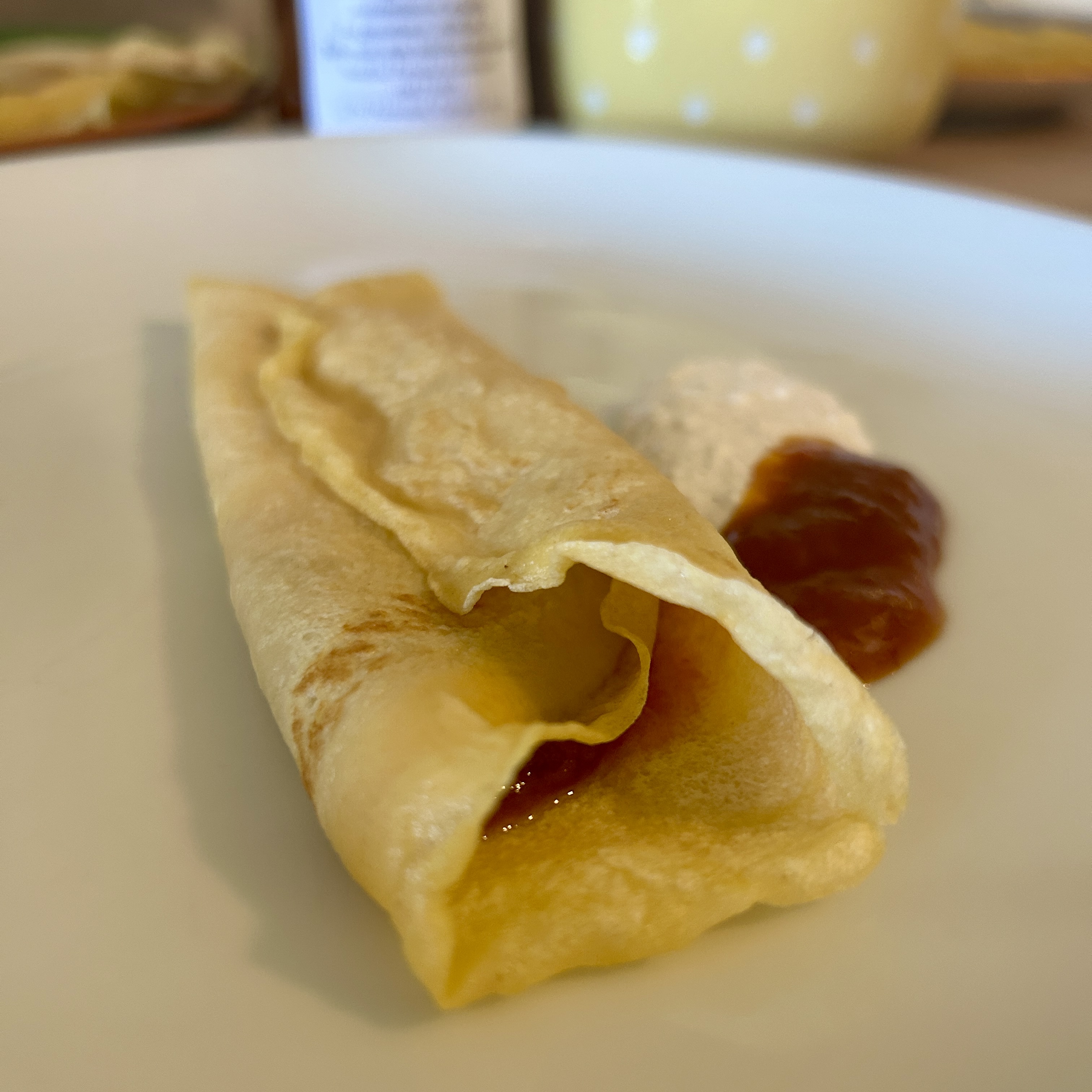
Hungarians don't usually eat palacsinta this way. The more common version is rolled with apricot lekvár, the preserve made in summer when fresh apricots arrive. At Balaton, when a new batch of lekvár is ready, palacsinta has to follow. Or túró, the fresh curd cheese. Different occasions, different fillings, the same pan.
In Korea, the tradition is specific: when it rains, someone makes buchimgae. People give different reasons. Some say the sizzle of batter in the pan sounds like rain falling on a roof. Others say the moisture in the air carries the smell of cooking from one kitchen to the next, and once it reaches you, the decision is already made. Nobody agrees. It happens anyway.
I once told a Sri Lankan colleague about this tradition. He and his wife laughed. It rains every day where they are from, he said. We would have to make buchimgae every day.
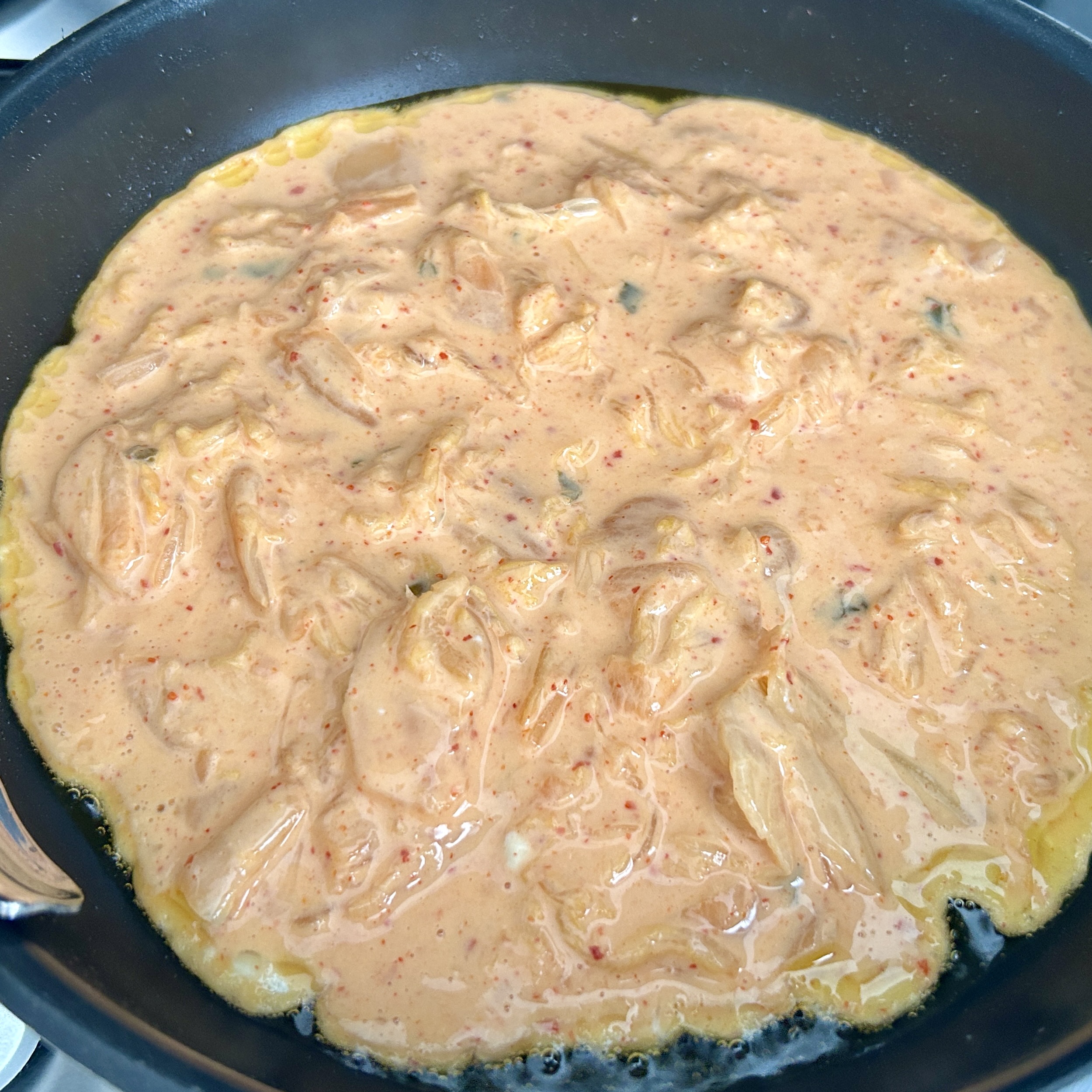
Kimchi buchimgae is the version that never goes wrong. Kimchi is always a good choice. Green onions, zucchini, potato... the versions multiply depending on what is in the fridge and what the weather is doing. If a neighbor starts cooking, you want some too. The smell travels.
When the decision is made, everyone gathers around. As each one comes off the pan, you eat it immediately, while it is still warm and crisp. And that is the point. Standing there, reaching over, not waiting for a plate. The yangnyeom ganjang appears without anyone asking. The buchimgae becomes anju. Makgeolli follows. Nobody leaves until the pan stops.
During one of our potluck nights, we were talking about the smell of home, and my Pakistani neighbor described her mother making paratha. Everyone gathered around the pan, eating each one while it was still warm, waiting for the next.
"We are gathered waiting for the next batch to arrive," she said.
I knew exactly what she meant. I had been there before. In a different kitchen, in front of a different pan, waiting for the same thing.