Shared Flavors , Shared Memories
The Neighbor Who Rang the Doorbell
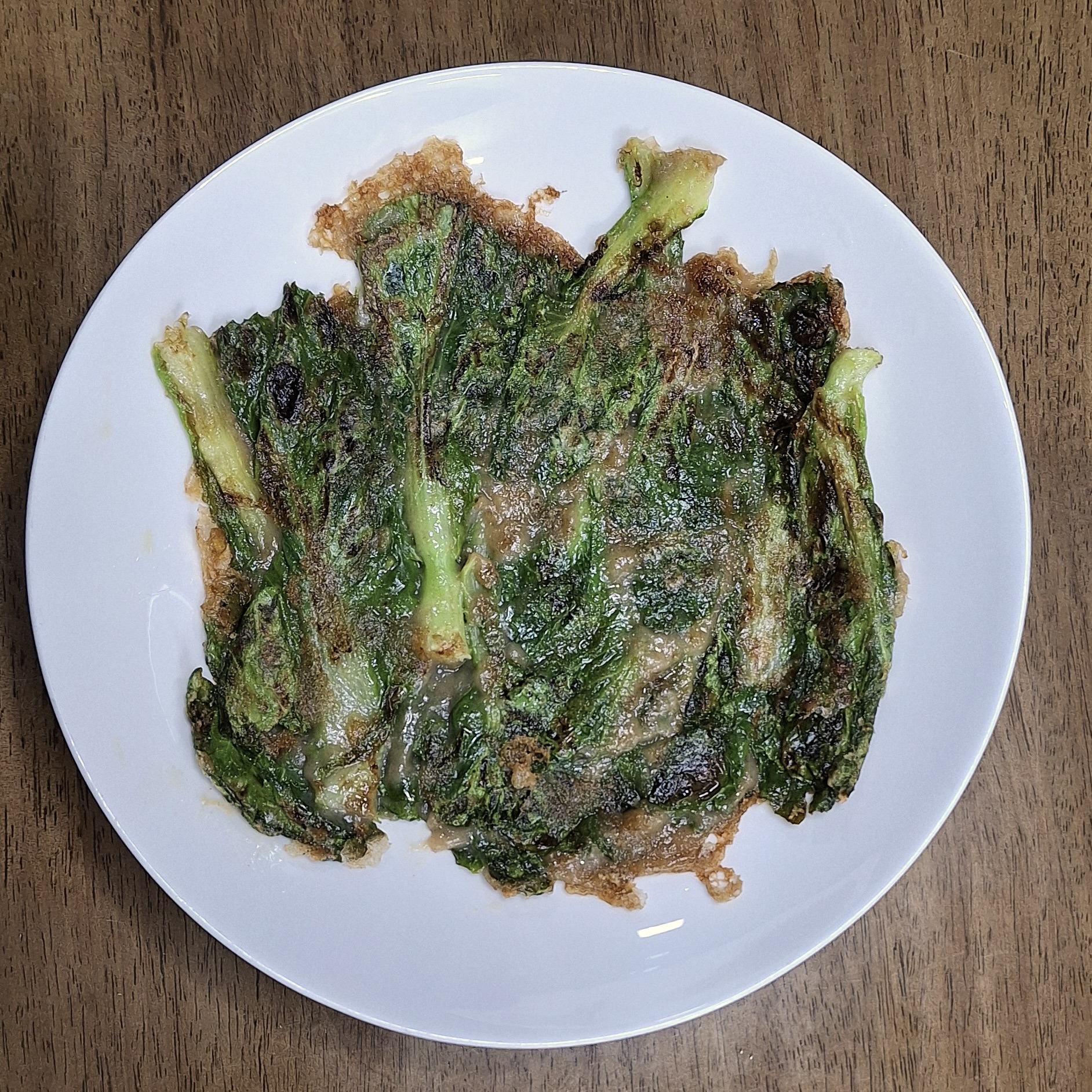
My mother sent me a picture of spring greens from a neighbor. In Korea, spring used to arrive that way, through someone else's hands.
My mother sent me a picture of spring greens from a neighbor. In Korea, spring used to arrive that way, through someone else's hands.

My mother sent me a picture: memiljeon (메밀전) made with bomdong (봄동), from a neighbor who had shared some. She also mentioned that dalrae (달래) had come with it, so she made it into a muchim (무침). Spring must have arrived in Korea too.
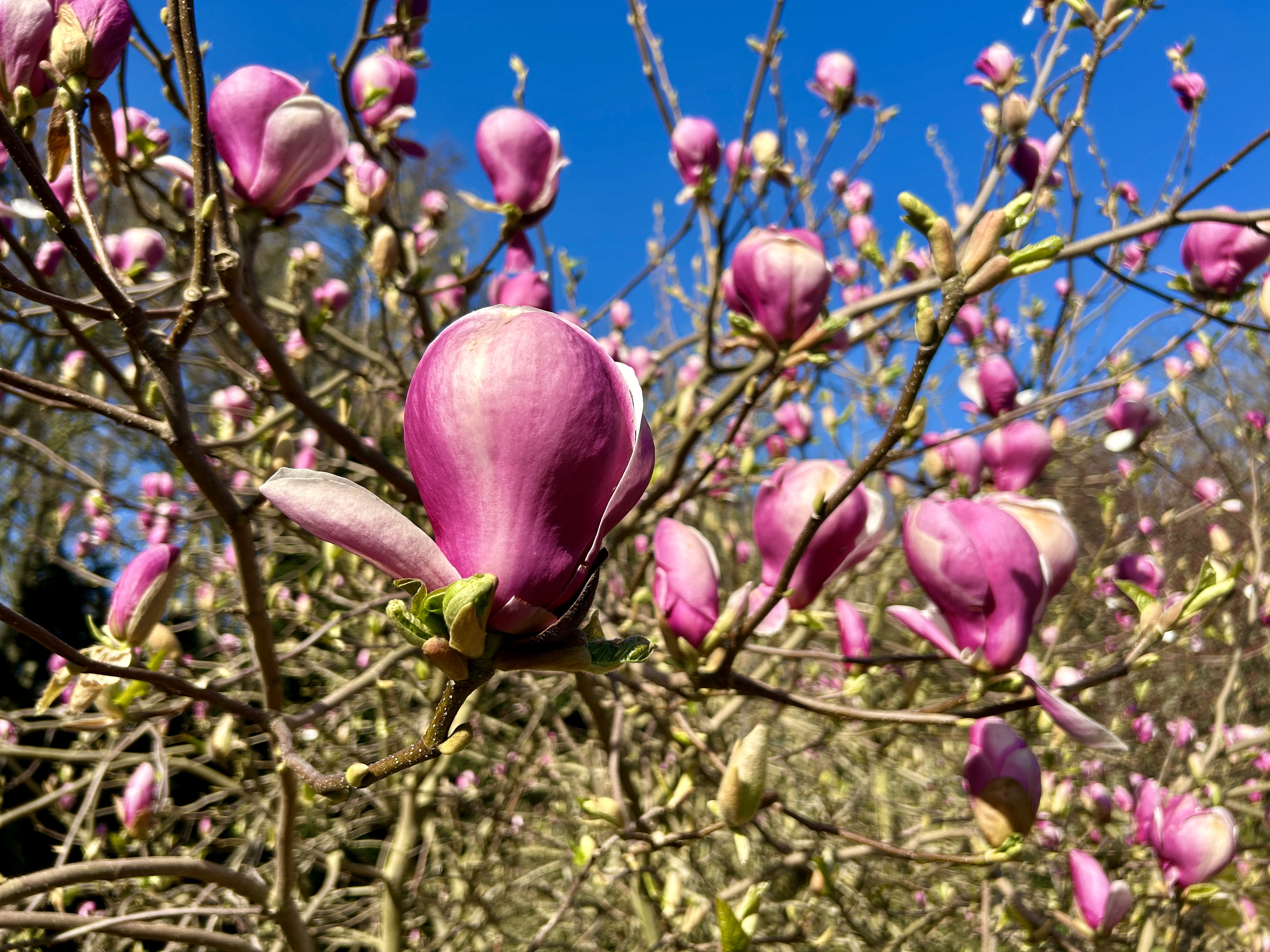
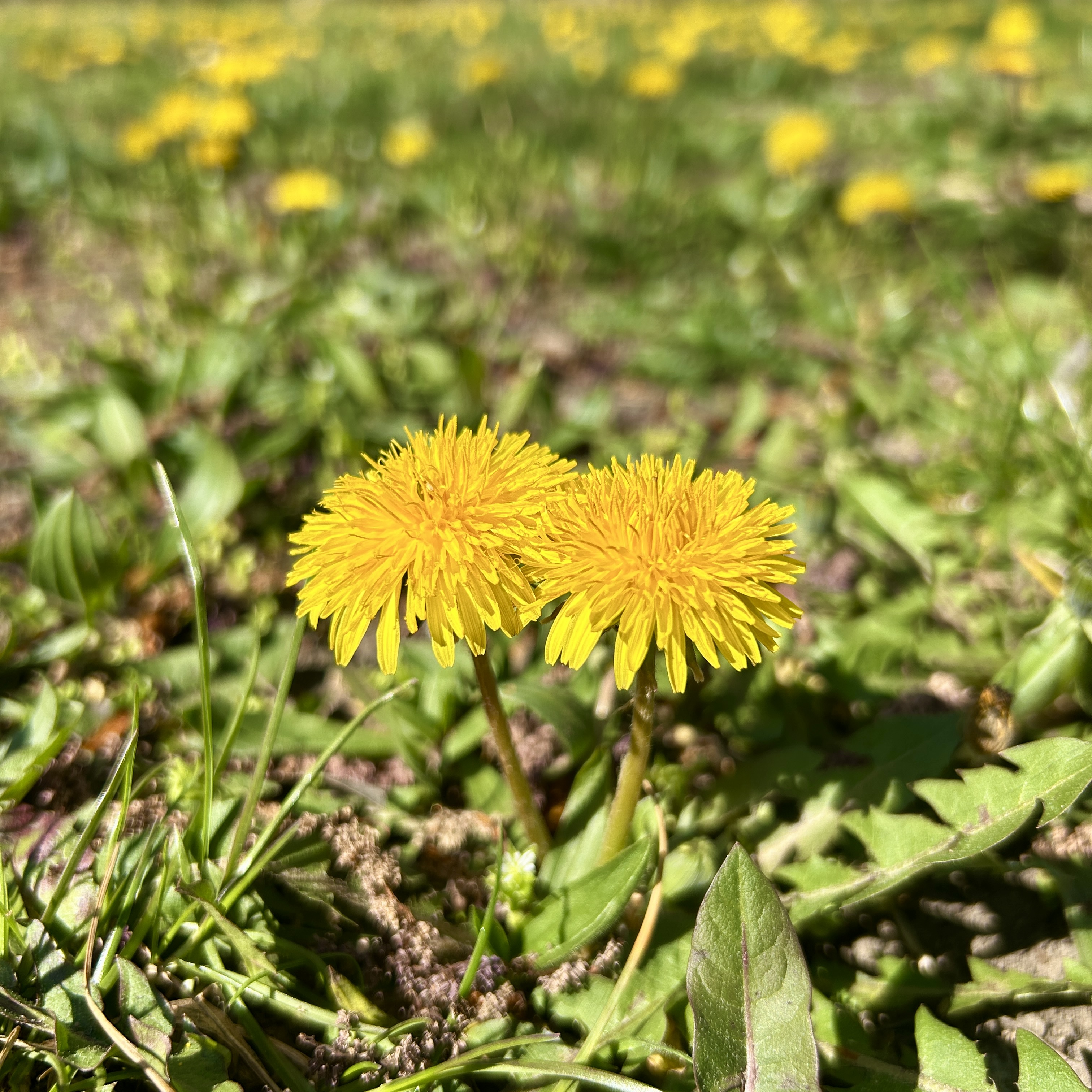
I see signs of it here as well. Yellow dandelions are starting to appear everywhere, low to the ground, the kind that would soon turn white and spread across the whole neighborhood. We were walking when my husband mentioned that you can pickle magnolia flowers. I had no idea. It stopped me for a moment. Something that grows everywhere, something you walk past without thinking, and it turns out people have been eating it all along.
I thought: I have one of those too.
I told him: actually, did you know you can eat dandelion leaves?
We used to, in Korea. I wasn't even sure if people still do. But I remember eating them as ssam (쌈), when I was young.
I still remember the bitterness of the leaves, the kind that feels a little too strong at first, but draws you back in the aftertaste. With rice and ssamjang (쌈장), they became deeply satisfying. There was not much on the table, just those three things, but I remember it vividly. The leaves were thin and narrow, so you had to layer several together before adding the rice. What is ordinary in one place is invisible in another.
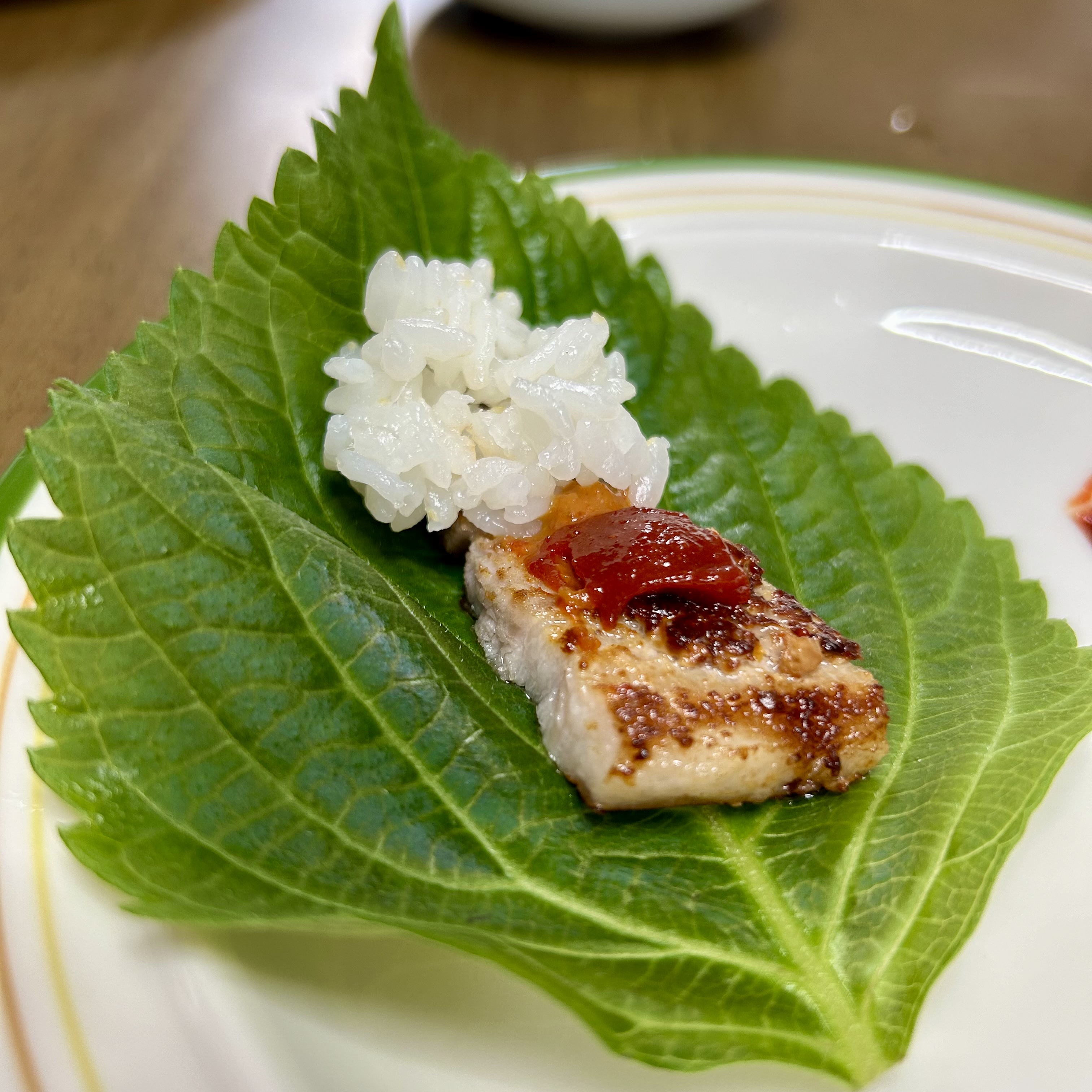
That lunch came from a neighbor. One spring day she had gathered more than enough and invited us over. It was spontaneous and warm and completely ordinary, the kind of meal that happens because someone had too much of something and knew who to call.
That same neighbor had a habit of turning small moments into meals.
She would come by and tell my mother she had just picked a fresh zucchini from the backyard, then suggest they get together for lunch and make sujebi (수제비). I can still remember how she described the process: letting the dough rest so it would become chewy and springy, making the anchovy broth, preparing yangnyeom ganjang (양념간장) with cheongyang-gochu (청양고추), garlic, and a touch of sweetness. Just thinking about it still makes my mouth water. The meal came together because of one zucchini and the kind of closeness that makes such a suggestion feel natural.

What I miss now is not only that food, but the ease of it. The way a vegetable from a backyard could become lunch for two families by noon.
Part of the reason I was drawn to my current neighborhood is that it still has something of that quality. There is a neighborhood day each year when everyone on the block gets together. Some neighbors ring the doorbell. Not a text, not a message. An actual doorbell. Because they made too much food and wanted to share. It took me a while to readjust to that. Now I love it.
So we started a potluck. A monthly one, planned rather than spontaneous. In Korea, when everyone around the table was Korean, you already knew roughly what was coming: the dishes, the flavors, the logic of the meal. Here it is entirely different. Our neighborhood is international, and the table reflects that. There are things to pay attention to: who eats halal, what Ramadan means for the timing of the gathering, how to be thoughtful without making it awkward. I am still learning.
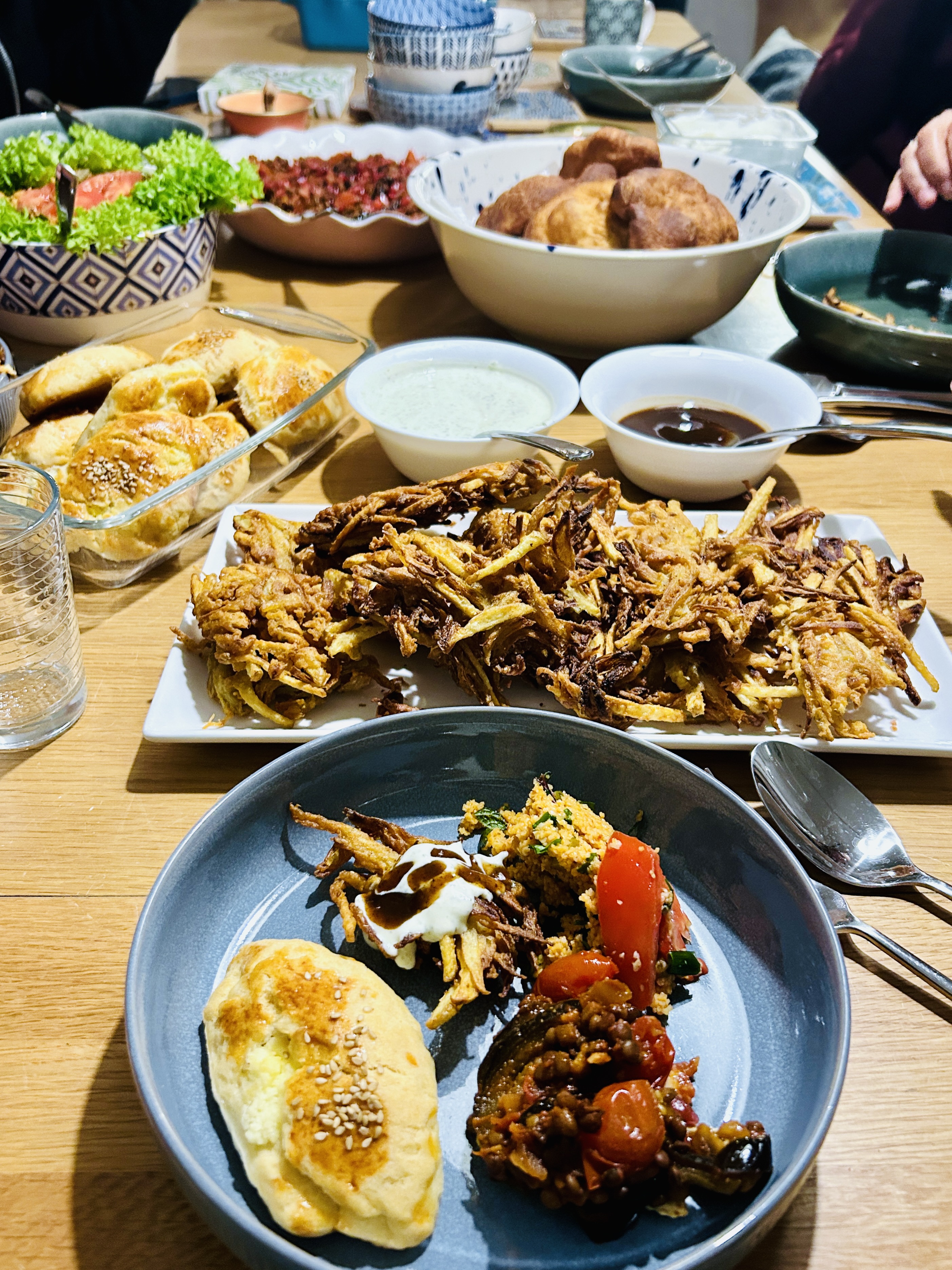
What I love most is what people bring and the stories behind the dishes.
Food from Iftar, eaten to break the fast after a long day. A tea tradition with particular sweets alongside it. A paratha a Pakistani neighbor described the way I might describe the smell of freshly cooked rice and doenjang-jjigae (된장찌개) in the morning, that smell that tells you before anything else that you are home. We are not eating the same food. We are feeling the same thing.
Last month someone brought more than enough and left the rest at the door on their way home. No text, no announcement. Just a container on the doorstep.
Welcome home.