Shared Flavors , Shared Memories
The Fish My Grandfather Knew
My first Christmas in the Netherlands, the fish inside the temaki roll was smoked herring. I didn't expect that combination, and I didn't expect what it would remind me of either.
My first Christmas in the Netherlands, the fish inside the temaki roll was smoked herring. I didn't expect that combination, and I didn't expect what it would remind me of either.

We moved to the Netherlands in October 2020. Public gatherings were banned shortly after we arrived. December came: dark, cold, windy, fireworks going off in every direction. It was Christmas Eve. We didn't know anyone. Through a language school I had found a friend, Japanese, also new to the country, also without many people around her. She had ended up here for a boyfriend who wasn't from here either. We were glad to have somewhere to go.
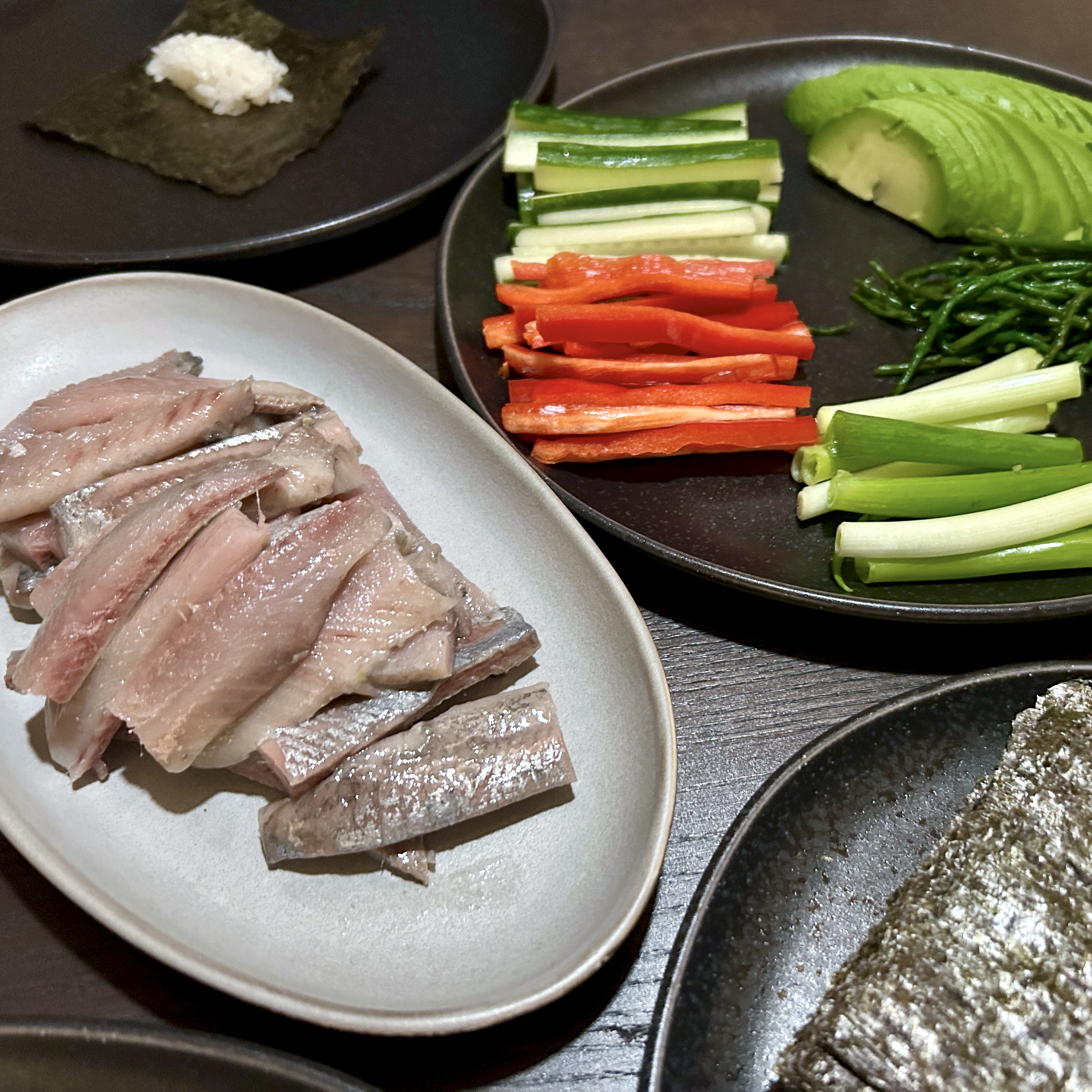
She laid out the table for temaki (手巻き): rice, fish, vegetables, nori, wasabi. Everyone rolls their own. I looked more closely at the fish: gerookte haringfilet, smoked herring. Not quite Japanese-style, but it didn’t matter. It was tasty. The fish is nothing extraordinary. It is common and easily available at the local supermarket, Albert Heijn, on almost every corner in the Netherlands. I had walked past the same aisle and never thought to make it into a hand roll. It was brilliant.
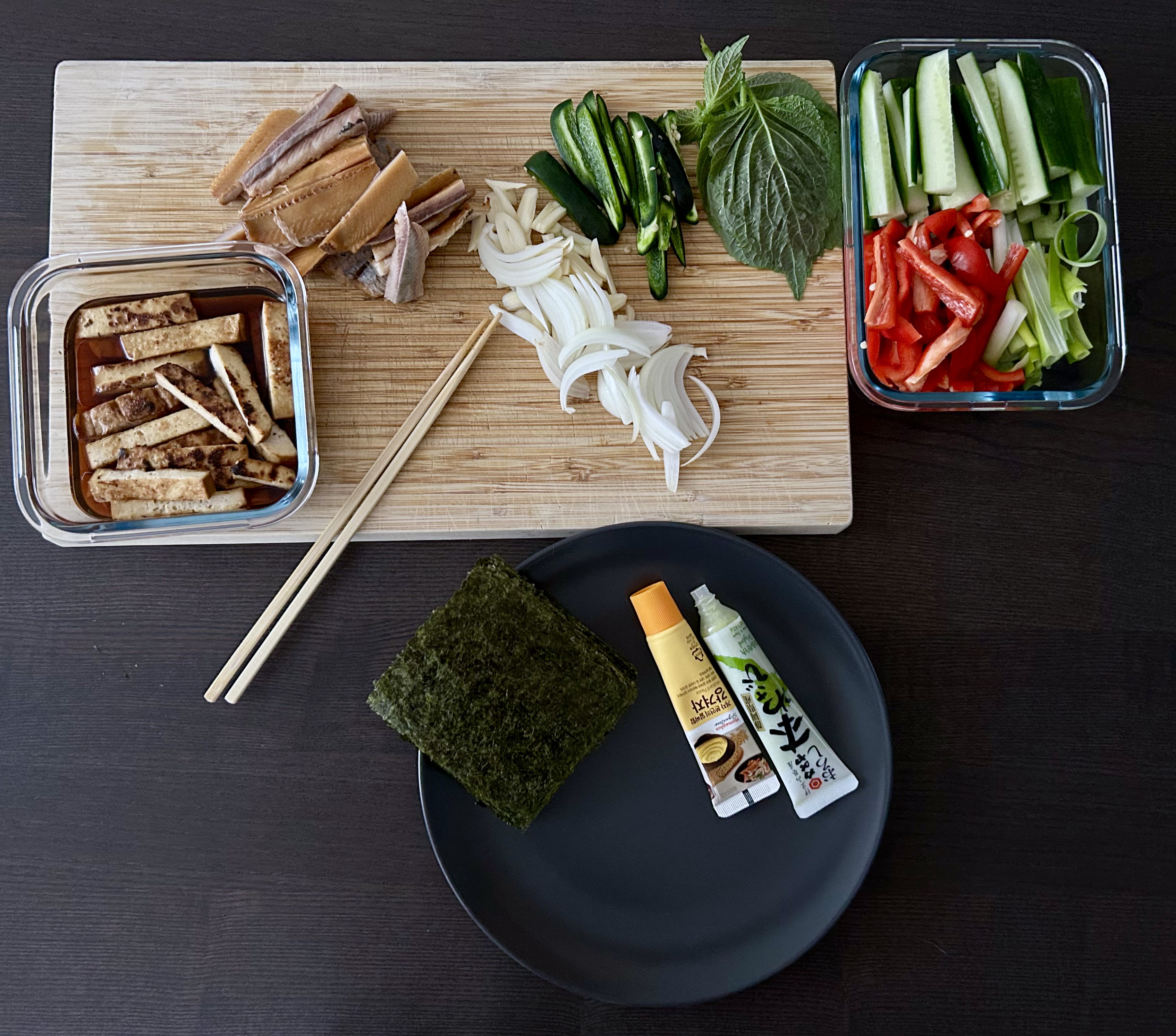
The temaki with the smoked herring, the texture of half-dried, dark red flesh, its skin still intact, and the whole ritual of building your own bite felt, strangely familiar. I had seen it before. It unlocked something I hadn't thought about in years: gwamegi (과메기), semi-dried Pacific saury or herring, eaten wrapped in gim with garlic stems, green onions, and cho-gochujang. It was not everyday food, only available for a short time each winter, a regional specialty from Pohang and the surrounding area.
I did not particularly love the taste. It was a little too fishy for me, years before I developed a taste for food like that. But I liked hanging around. I loved the ritual. When the fish arrived, my mom and dad moved quickly, each taking on their role and turning the living room into a little bar in no time. We gathered around a sang, the small low table crowded with dishes of fish and everything else. Everyone got busy building their own ssam: gim in the palm, a piece of fish, then whatever else we wanted, all folded into a small wrap and eaten in one go. My parents ate it as anju, the kind of food that calls for soju, or perhaps the other way around. For my brother and me, it was a late-night ritual. A fun one. A reason to stay up, sit close, listen to our parents talk, join in now and then, and eat something we were not quite sure about yet.
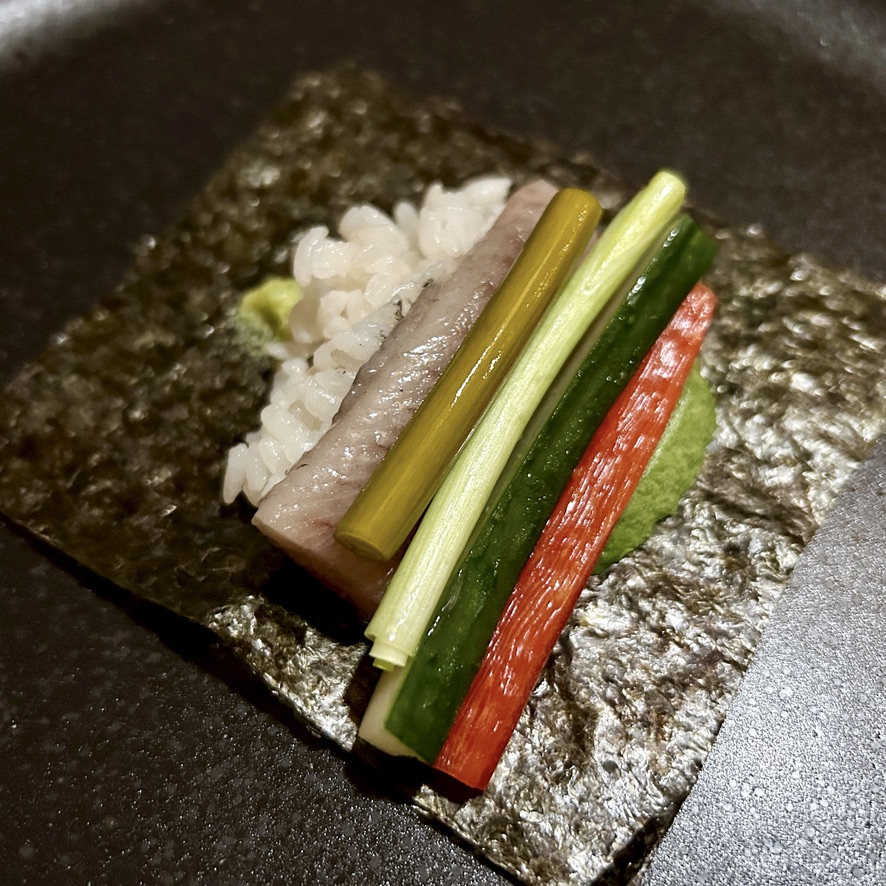
After that first Christmas Eve temaki dinner, with gwamegi gim-ssam in mind, I began making my own versions at home. I experimented with whatever ingredients I could find. My favourite now uses nieuwe haring, with garlic stems, borrowed from gwamegi, tucked inside. Though it is cured, its texture comes closest to raw fish: lightly salted, soft, and fresh-tasting.
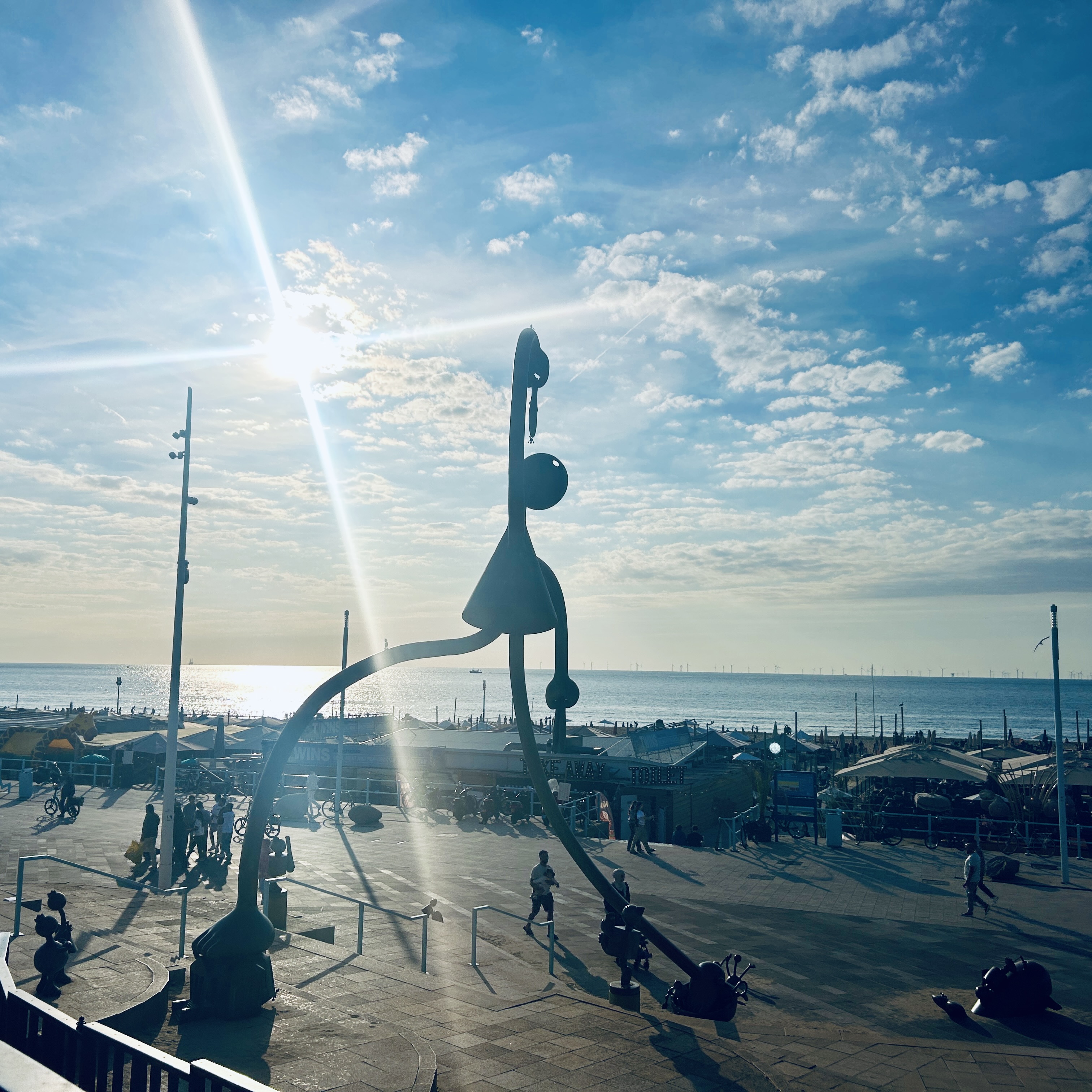
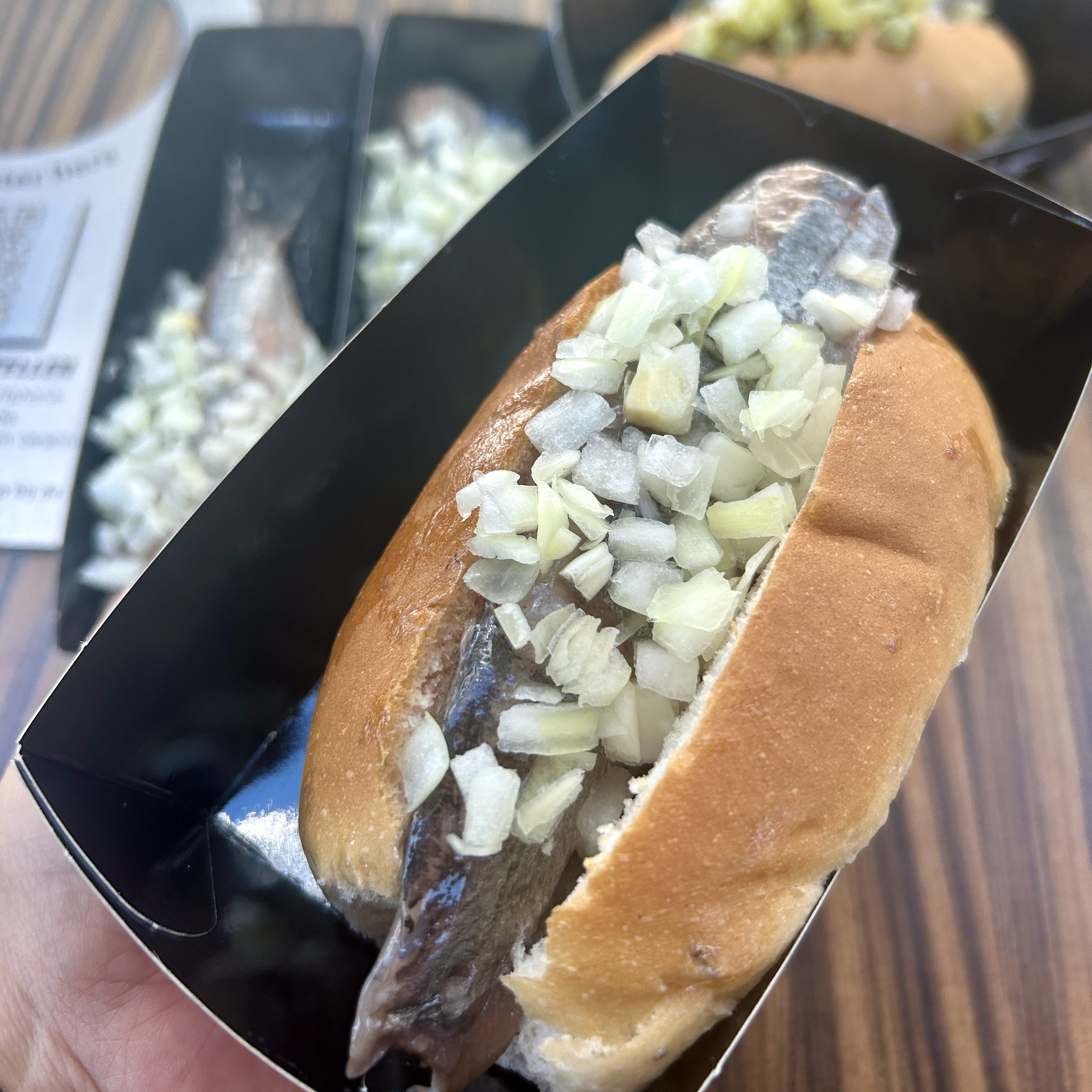
Somewhere along the way, it became the first thing I craved when I came home after being away for a while. But I did not love it at first. The first time I tried it at a viskraam, a small fish stall, it came with chopped onions, its tail still intact, and a tiny Dutch flag standing upright on a toothpick stuck into the fish. You are meant to hold it by the tail, tilt your head back, and lower the whole fish into your mouth. You have to be quick, though. I have seen videos of seagulls snatching a herring straight from someone’s hand.
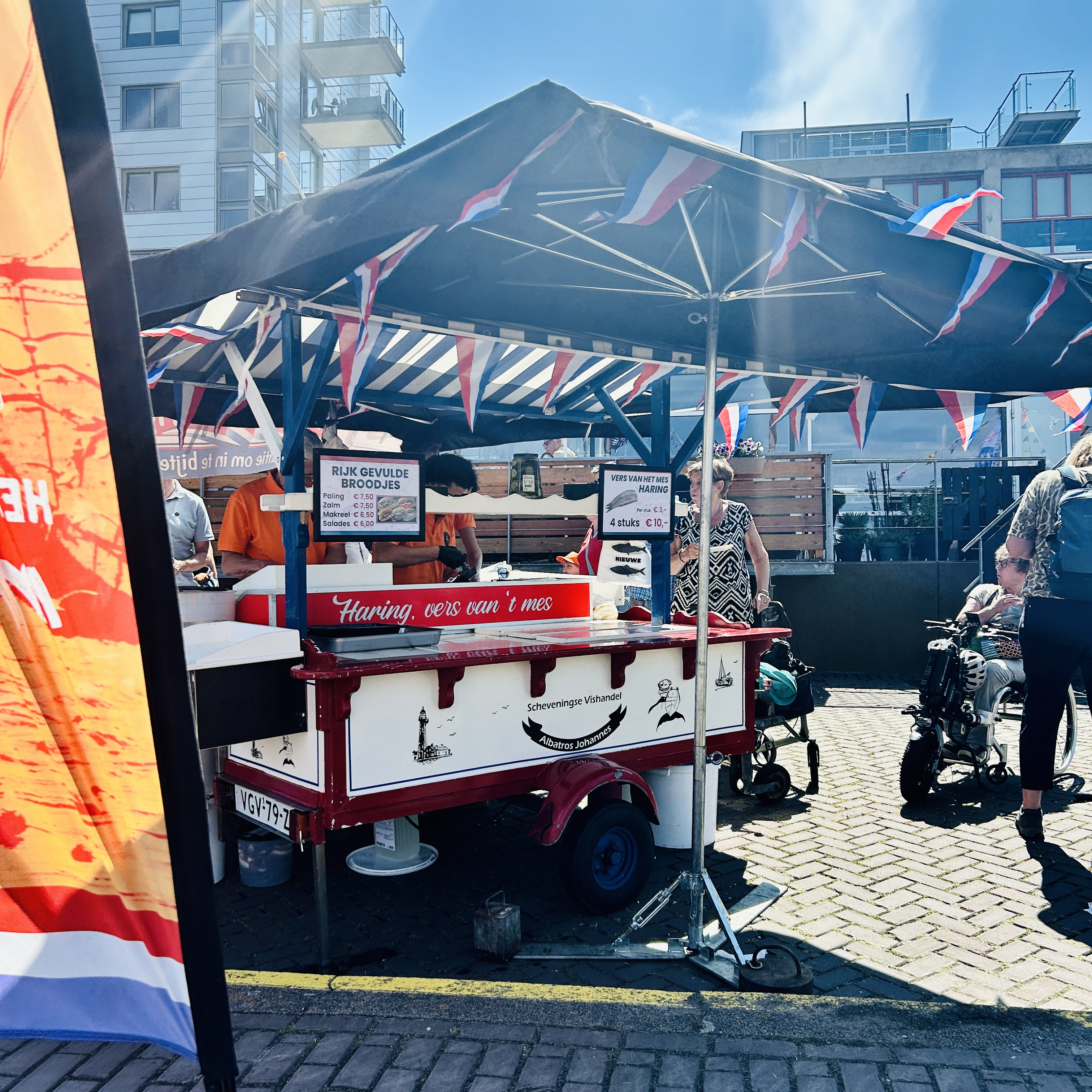
At first, I thought it was one of those tourist things, something you try when you visit Holland. But I see herring everywhere: in grocery stores, at small fish stalls on every corner. Dutch people love herring. There is even a festival devoted to this single fish: Vlaggetjesdag, which celebrates the arrival of nieuwe haring. The ships are decorated with small flags for the celebration, hence the name.
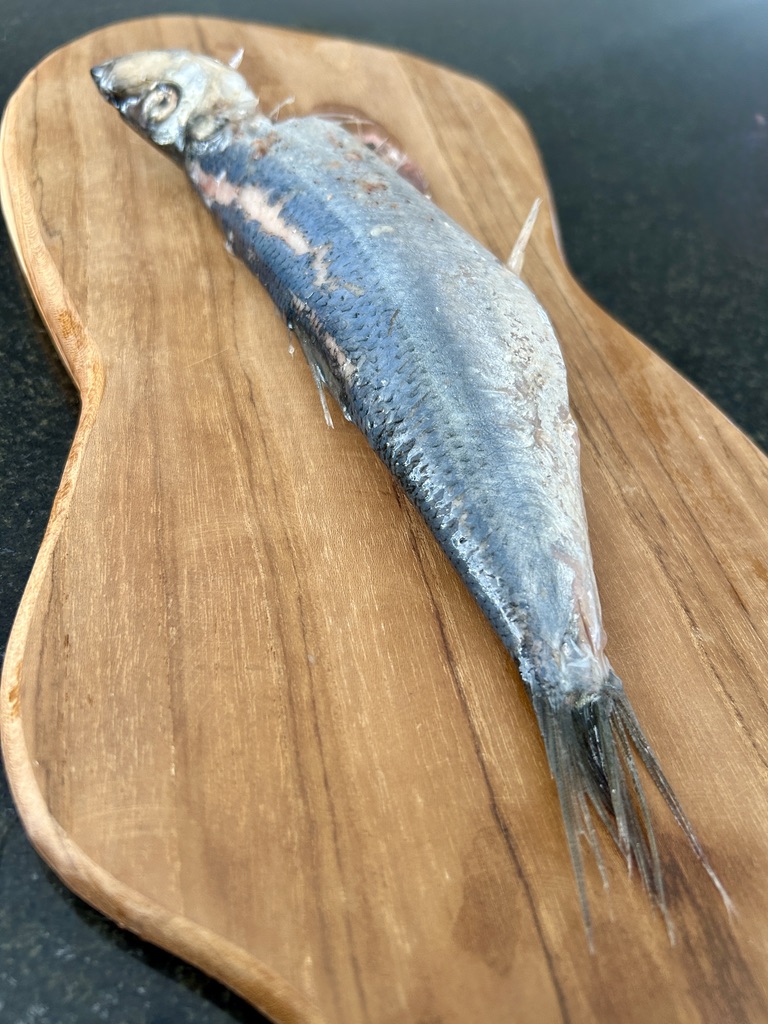
At one of the herring stalls at the festival, I watched someone clean a whole herring, a small knife in one hand and the fish held by its tail in the other. It was a fish, with its head and some of its insides still attached. I had read that the pancreas was left inside on purpose. It was real. I saw it with my own eyes. They kept the fish whole until just before it was cleaned and ready to eat. It is supposed to give herring that distinctly soft, juicy taste. Inside a stainless-steel container, the cleaned fish were stacked neatly in rows, their tails still attached. The person at the front took orders, asking bread or no bread, onions or pickles. You paid by pin, and they put the order together. If you had it with bread, they cut off the tail. Without bread, the tail stayed on.
This year, I finally tried it in a bun. It was actually good. Another way to wrap the same fish. At home, I do it with gim, garlic stems, and wasabi, sometimes with rice, sometimes without. I do not think they know that their herring has ended up on my table this way. I love it. Our guests do too. It is easy to prepare, just right for a weekday dinner or a dinner party.
Now that I had seen the whole fish, I was curious what it was called in Korean and whether people in Korea ate it. I looked it up and found its Korean name: cheongeo (청어). I had heard the name before. I knew the fish by name, but I had never seen it myself growing up, or perhaps I had seen it but was too young to remember. My father had mentioned it more than once, maybe at the dinner table or at a jesasang, the ancestral memorial table. His father had loved cheongeo. The only complaint was the bones. I have the same trouble with those fine bones sometimes.
Every time I eat this fish now, I think of my father thinking of his father. I cannot wait to share with my dad what I have discovered and let him taste the fish I fell in love with, the fish I did not know that I knew all along. I will set out the same spread for gim-ssam: garlic stems, wasabi, and maybe rice, this time with nieuwe haring. My father loved gwamegi. I think he would love herring too.