Shared Flavors , Shared Memories
Dubu Han Mo
My mother would call out with a little urgency: can you go to the store and get dubu han mo? I always knew what dinner was going to be.
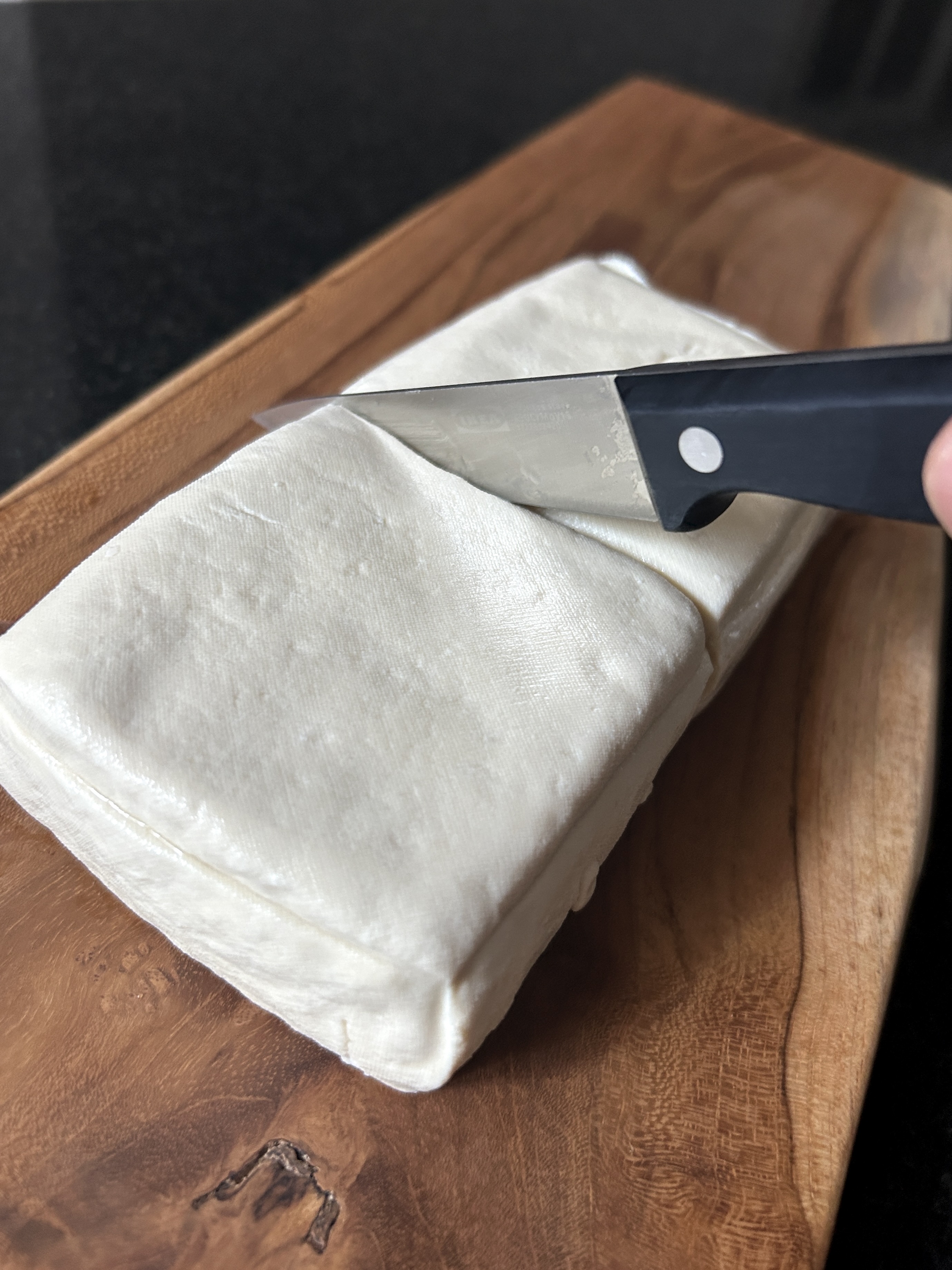
My mother would call out with a little urgency: can you go to the store and get dubu han mo? I always knew what dinner was going to be.

Late in the afternoon, after a rain shower had cooled Hanoi, we sat in a café watching people pass by. I heard a man shouting, a bell jingling alongside his voice.
"Tàu hũ,"
At first I wasn't sure what I was hearing. Then suddenly it clicked: the bell, the rhythm of the call, the way it moved through the street. I had heard this before. Not here, not this voice, not this city. Strangely familiar, in a city I had never been to before.
Across the street he stood beside a bicycle with a small trailer, stopped to serve a customer. Soft tofu, so delicate it could only be eaten with a spoon.
The options were salty or sweet. The salty version was familiar. In Korea we have sundubu (순두부), and it is always savory. Once a sweet topping is added, it becomes dessert. That logic I understood. But sweetness has never really been my thing, so I stayed with what I knew.
The version I love most comes from a seaside village in Gangneung, where seawater is used to curdle it. Slightly soupy, with soft curds rather than a smooth silken block. I like it plain, with just a pinch of salt. In English people might call it bland. But plain sundubu is really about gosoham (고소함) and dambaekham (담백함), a gentle nuttiness and a clean simplicity that needs nothing added to justify it.

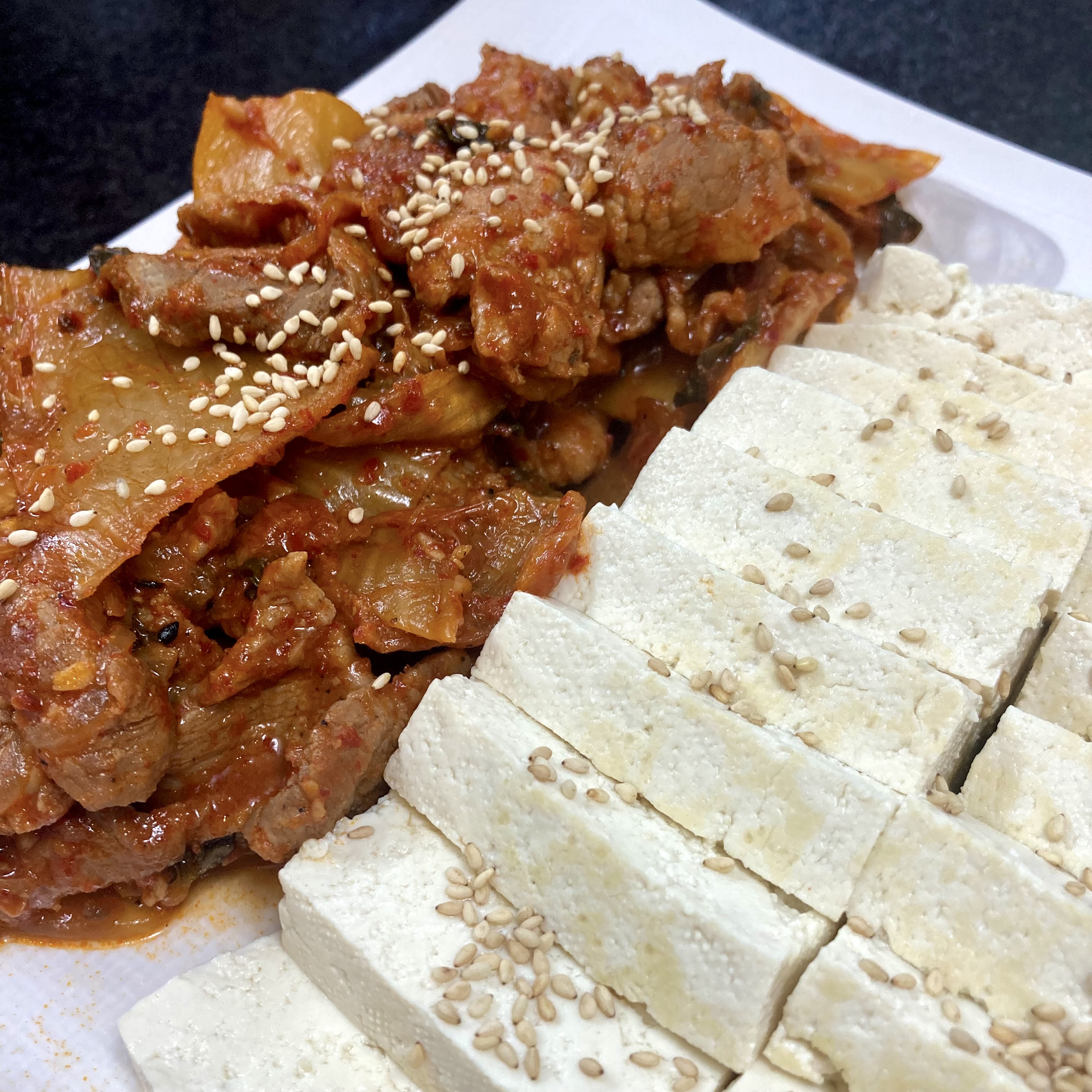
For my husband, who came to tofu through mapo tofu, plain tofu on its own still seems to have no particular taste, which is fair. Gosoham and dambaekham are not easy concepts if you didn't grow up eating tofu this way. Many tofu dishes depend on strong companion flavors, and that logic he understands well. In dubu-kimchi (두부김치), one of my favorites, the balance is exactly right: dubu on its own can feel plain, kimchi on its own can be too intense, but together they make complete sense. That one we both love.
Growing up, I earned pocket money running small errands: shining my father's shoes before he left for work, watering the plants, feeding the fish. And often in the morning my mother would call out with a little urgency: "Can you go to the store and get dubu han mo?"
Mo is the counter for a block of tofu. You don't hear it much now, though it still appears for things like dotori-muk (도토리묵) or cheongpo-muk (청포묵), those jelly-like blocks that today usually come packed in plastic, just like tofu. But there was a time when tofu came in a whole tray, already pressed and molded. The store owner would cut along the lines left by the mold, and each square became dubu han mo. One block, ready to carry home.

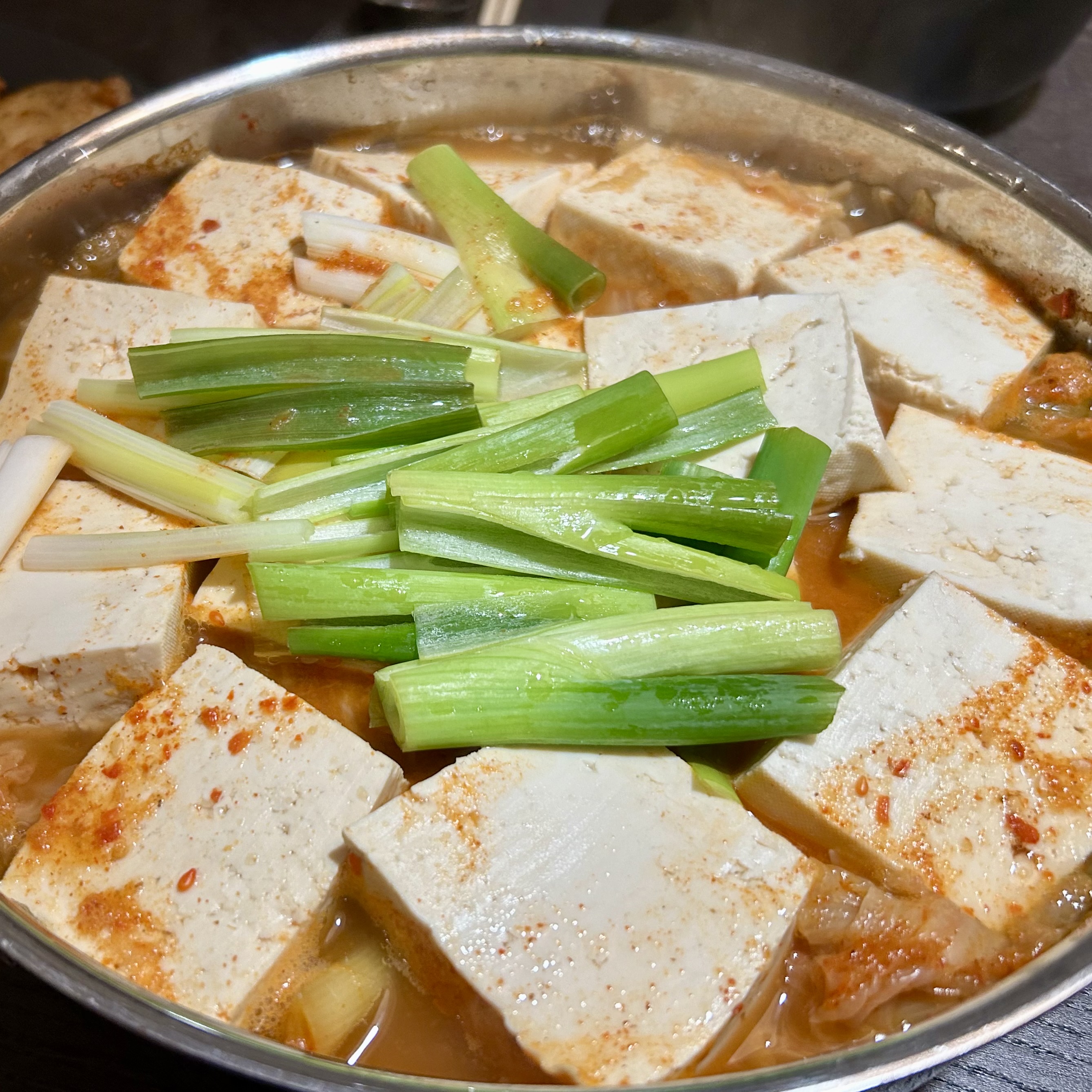
The moment my mother asked for tofu, I usually knew what breakfast was going to be. And if the smell in the kitchen had already started to deepen by the time I returned, I could be sure: doenjang-jjigae (된장찌개).
Tofu only had to be added at the end. It was already cooked, and so delicate that you didn't want to disturb it too much. Everything else, the meat, the vegetables, the broth, had to wait for the tofu to arrive before the dish could be finished.
Tofu has always just been there for me. In soup, as a side, with rice or without, sometimes as anju. It moves quietly through Korean meals without announcing itself. It doesn't have a loud flavor. But I know the taste of good tofu, a fresh one. I can appreciate it as it is, without anything added, in a way that is hard to explain to someone who didn't grow up eating it.
Tofu has always just been in my fridge the way rice has always been in my pot. Assumed, unremarkable, simply there. I don't think about which origin it comes from. Once it is in the soup, it is just dubu (두부).
Lately tofu has become a statement. A product. Grocery stores now carry it in all kinds of forms: tofu burgers, crispy tofu, smoked tofu, spiced and marinated and pressed into shapes. The reason people reach for it has changed. It is protein first, taste and texture somewhere after. These are their own things. But they are not really tofu to me.
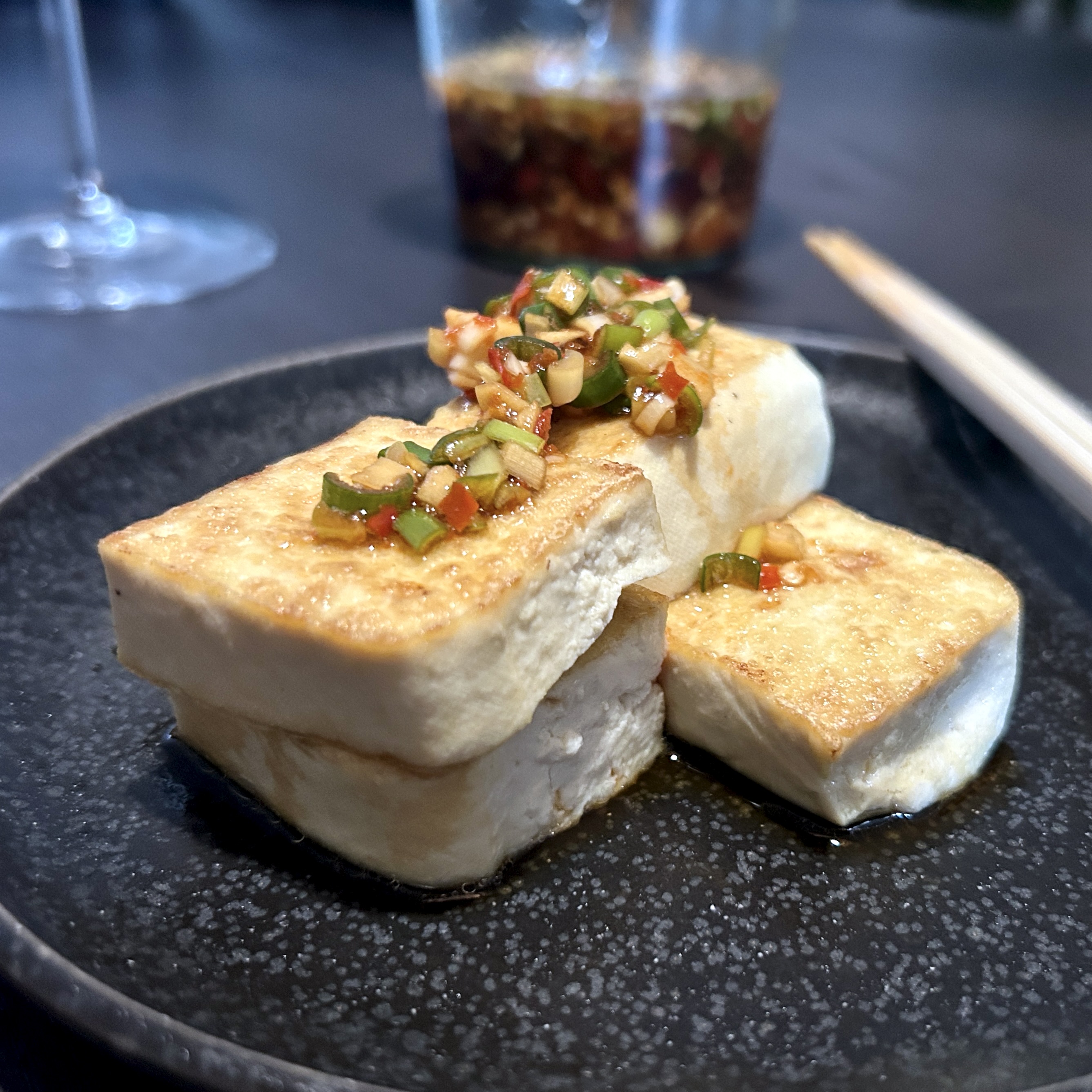
Still, to me, the best tofu is dubu han mo from the neighborhood store. Carefully cut and carried home. In winter, if you are lucky enough to get there early, you can see the steam rising from the freshly cut block. That means it is new. That's the one you want. Still warm, carried home, ready to be placed gently into a boiling pot of doenjang-jjigae at the very end. Plain, with nothing added, it already has its own warmth. And if yangnyeom ganjang (양념간장) comes alongside, as it naturally does, that is welcome too. But the warmth was already there before it arrived.
We no longer hear it now, but I still vaguely remember the sound of a tofu seller on a bicycle in Korea around dinnertime. In a Western context, it was a little like hearing an ice cream truck, the moment you heard it, you knew it was time for dinner.