Shared Flavors , Shared Memories
Husik: What Comes After
My sister-in-law pointed at the menu. Noodle soup, listed under dessert. I laughed, then realized I'd never once questioned why.
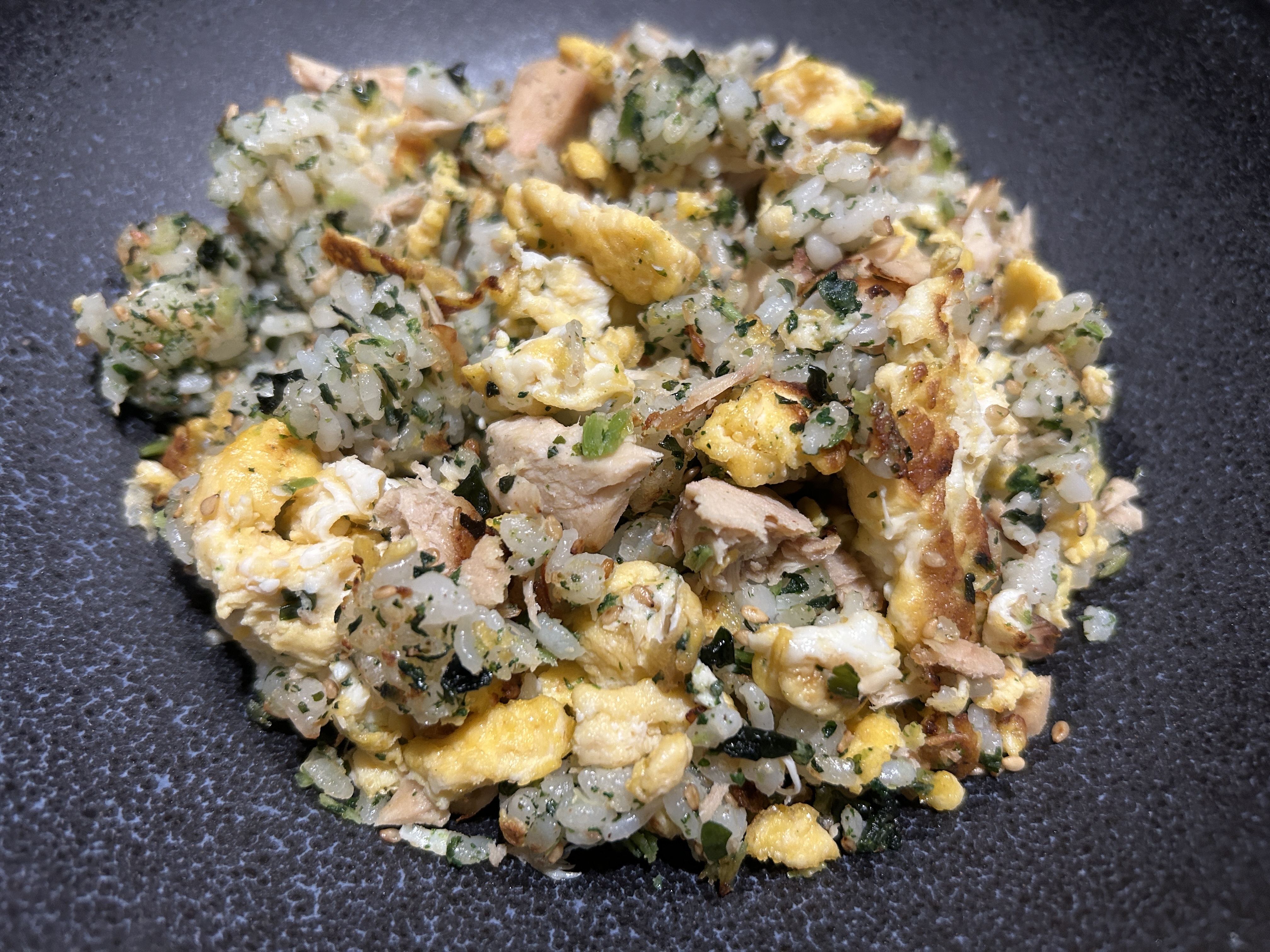
My sister-in-law pointed at the menu. Noodle soup, listed under dessert. I laughed, then realized I'd never once questioned why.

Korean restaurants have been appearing throughout Budapest over the past few years. Even hoetjip (횟집), raw fish restaurants, have started showing up, which is no small thing in a landlocked country. My sister-in-law told me she had spotted one around the corner from her apartment. Perfect! A new place to try. I was craving it myself, but mostly I was glad she wanted to go. Maybe this time I could show her how we drink soju at the table, how even the pouring is something you do for each other.
As we sat down, we looked over the menu. I already knew what I wanted to order for us, but she was reading carefully when she pointed at something. “Why is this red spicy cold noodle soup listed under the dessert section?” Maybe she thought it was an error. It was clearly not dessert, in any sense. I could see the question marks written all over her face. She was careful, though, trying not to sound judgmental.
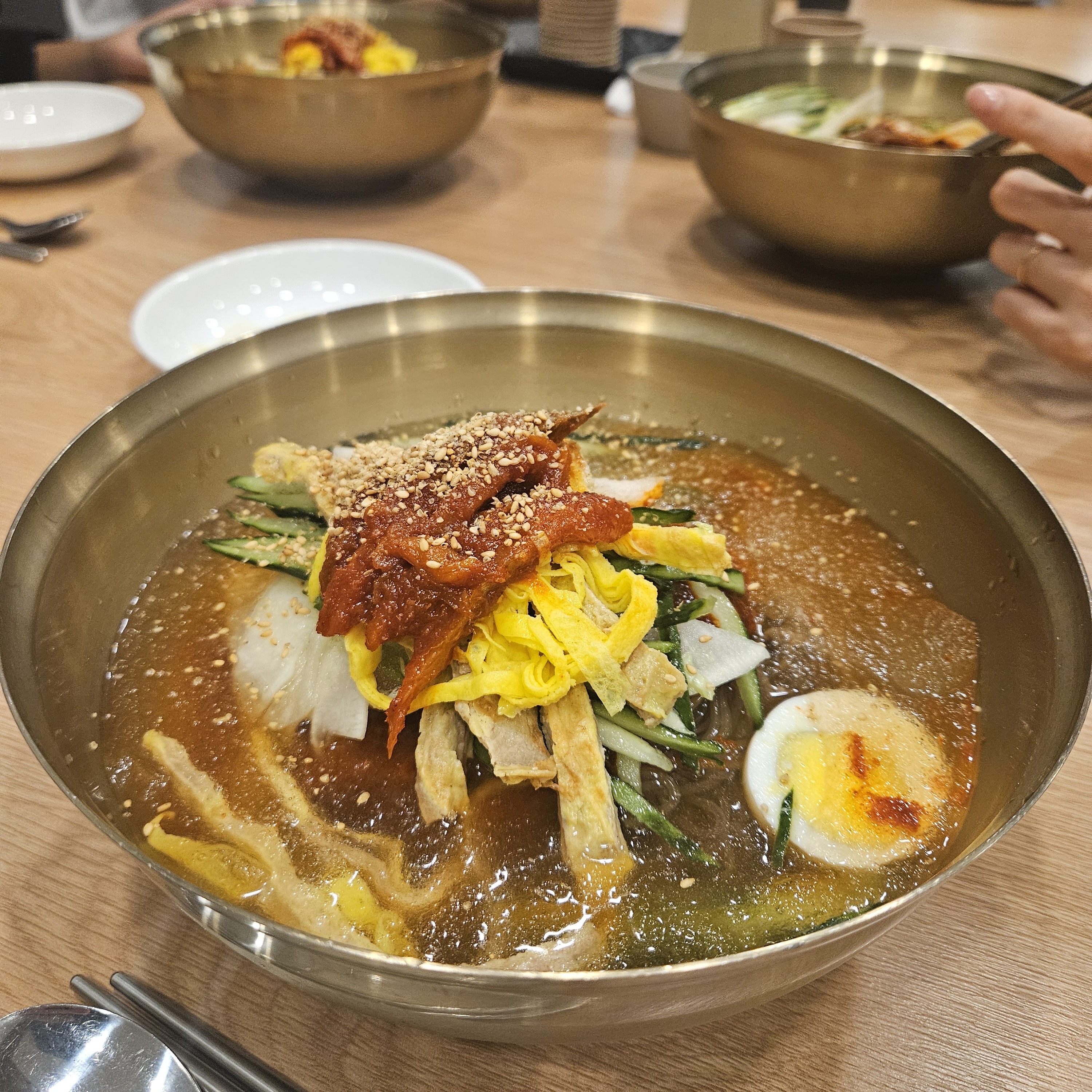
Funny, I thought. I might have even laughed out loud, thinking: why have I never found that strange? I was already trying to figure out how to explain it to her. Ending the meal with cold noodle soup after grilled meat is what people do in Korea. It was natural to me. It made sense to me. That is why they call it husik (후식), literally food that comes at the end of the meal. It often gets loosely translated as dessert, but it has nothing to do with sweetness, especially at a gogijib (고기집). I could see how it would be confusing to her. I had never thought to question it until she looked at the menu that way.
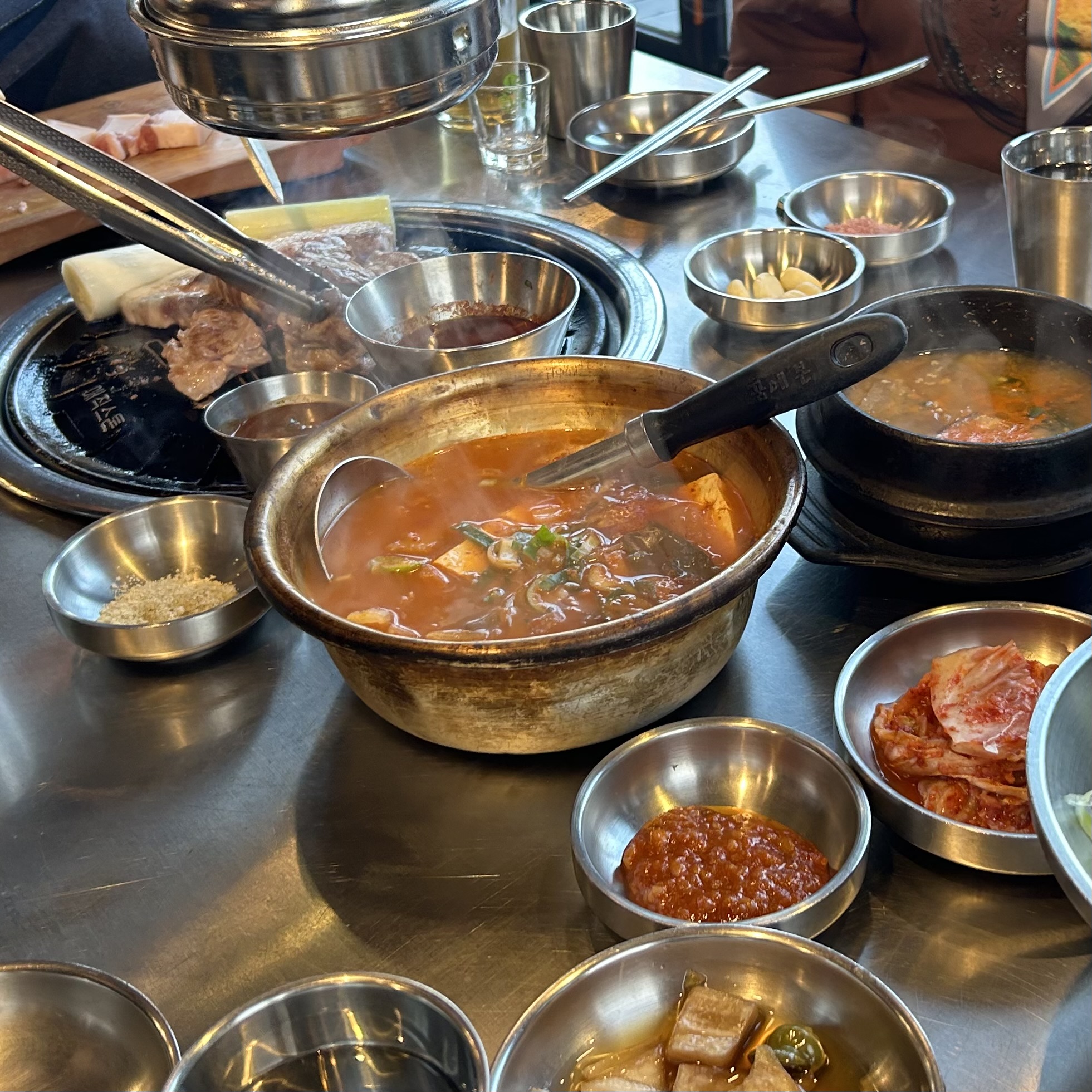
Maybe I had that same puzzled look as a child eating out at a gogijib. It almost always started with meat, grilled at the table. My mom and dad were busy putting raw meat onto the hot grill or pan, flipping it at the right moment, when one side was perfectly done and ready for the next. Thick-cut onions went on too, so they could serve as little resting places if the meat was cooking faster than we could eat. They gave us cooked pieces as they were ready, like mother birds feeding their children. We picked them up as they landed in our sauce bowls. They ate in between flipping and cutting with scissors, until it seemed we were nearing the end and there was no more meat to grill.
As we were all getting full on meat, someone would come around and ask, “What would you like for siksa (식사)?” Siksa is a formal word that simply means “meal” or “to eat.” It was like asking what we would like to eat, as if the meat we had been eating did not count, in the middle of a meal we were already eating. What they really meant was whether we wanted rice or noodles to finish off. The choices were usually doenjang jjigae or kimchi jjigae, both with rice included, or naengmyeon if you wanted to make a different deal. I remember asking the question then. Why do they even call it siksa? I am not sure anyone had an answer for it, but at some point, I stopped questioning it.
As I got older, old enough to go out with friends to a gogijib without my parents, I began asking for bokkeumbap (볶음밥). By then, it had become my favorite choice for siksa. Whatever fat and scraps are left on the grill get pushed together to mix in. That's the whole point. That’s what makes it so good.
When the decision is made, they bring out a bowl of rice, some gimgaru, maybe diced kimchi. Too much leftover meat, actually, is a problem. They'll take some of it off the grill and set it aside first because it has to be balanced, the perfect ratio. They turn the grill back on, then the rice goes in, the kimchi, the gim, all stir-fried together. Then they push it down flat and ask you to wait. It’s tempting, but you're not allowed to touch it yet, not until the crispy crust forms at the bottom. That’s the best part. That crispy layer of rice holding all that fat and juices. Usually, this is the ending people are waiting for most. At least, it is for me. If bokkeumbap is an option at a gogijib, it is non-negotiable.

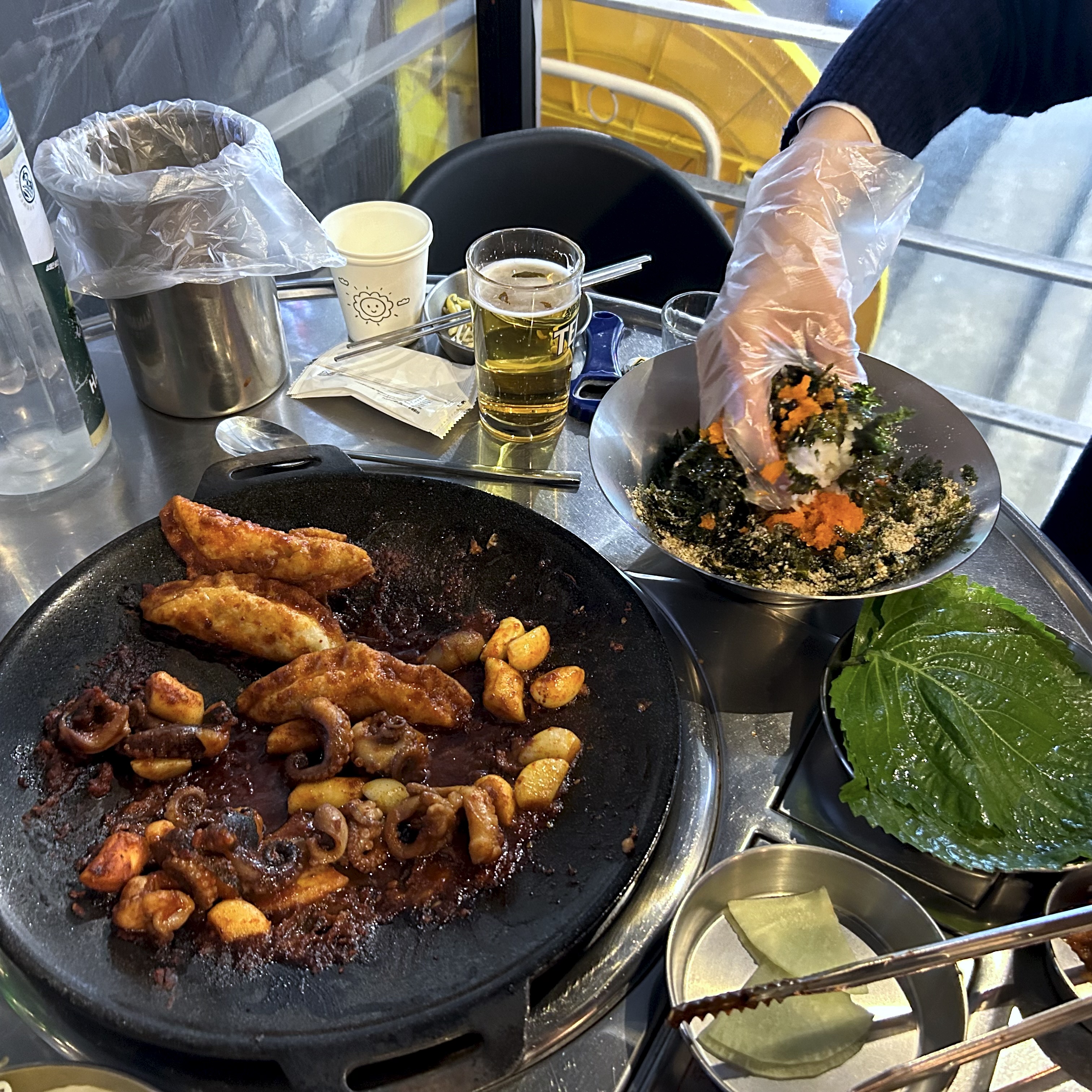
There is always something that comes before husik. The thing that comes after only exists because of whatever is still sitting in front of you. It is too good to be wasted. The saucy bits left in the pan after jukkumi-bokkeum or dakgalbi. The meat and vegetables boiled down into the broth of a jeongol pot. If there is something left in the pan or pot, rice or noodles have to join in and absorb all of it, almost like bread soaking up the juices left on a plate. And so it naturally closes the meal. Sometimes I wonder if it used to run the other way. Maybe it used to be just rice, and that alone was satisfying enough. Now people can afford more, and meat takes center stage. Pushed aside a little, maybe, but still required to finish things. If not rice, then noodles have to follow. Without it, the meal does not feel complete.
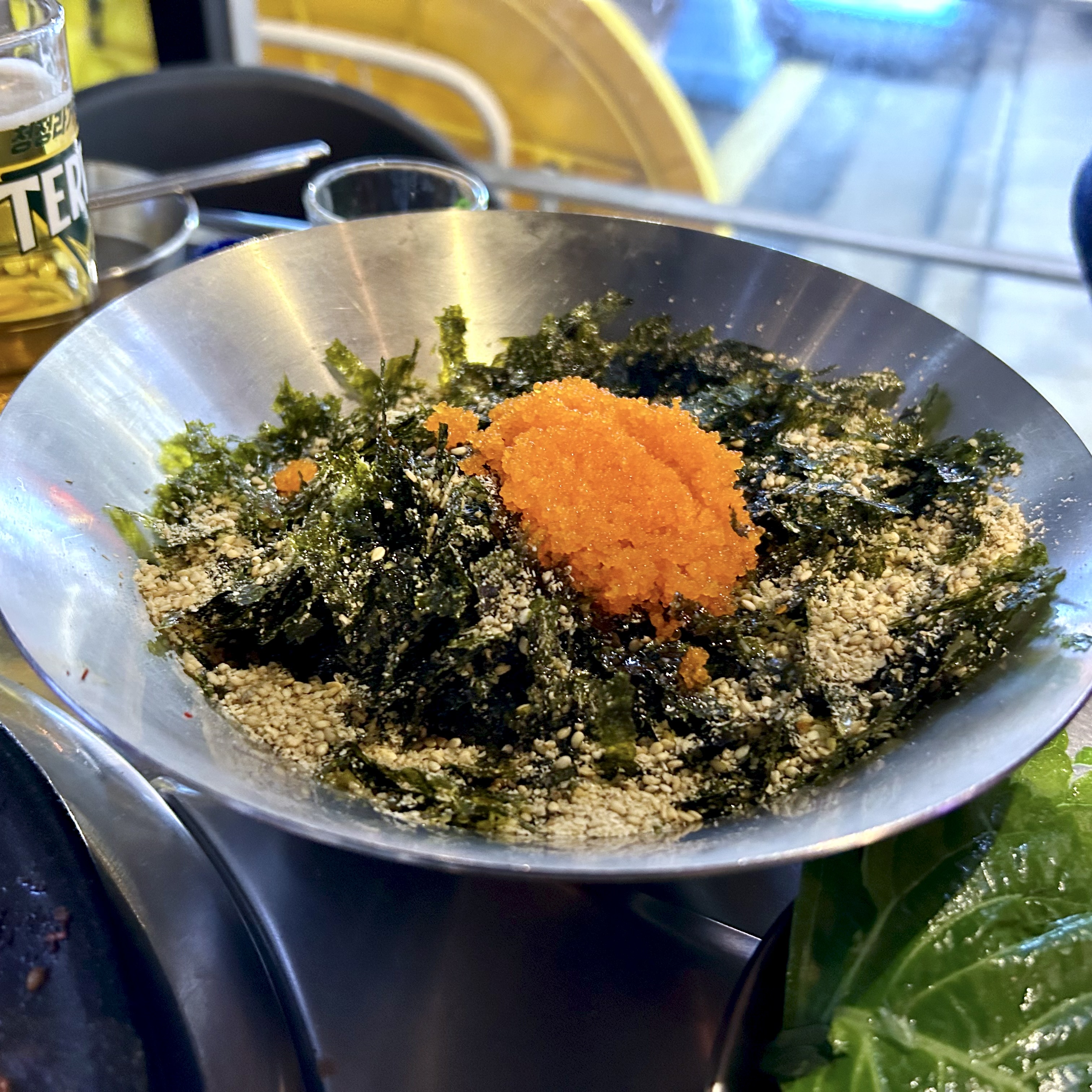
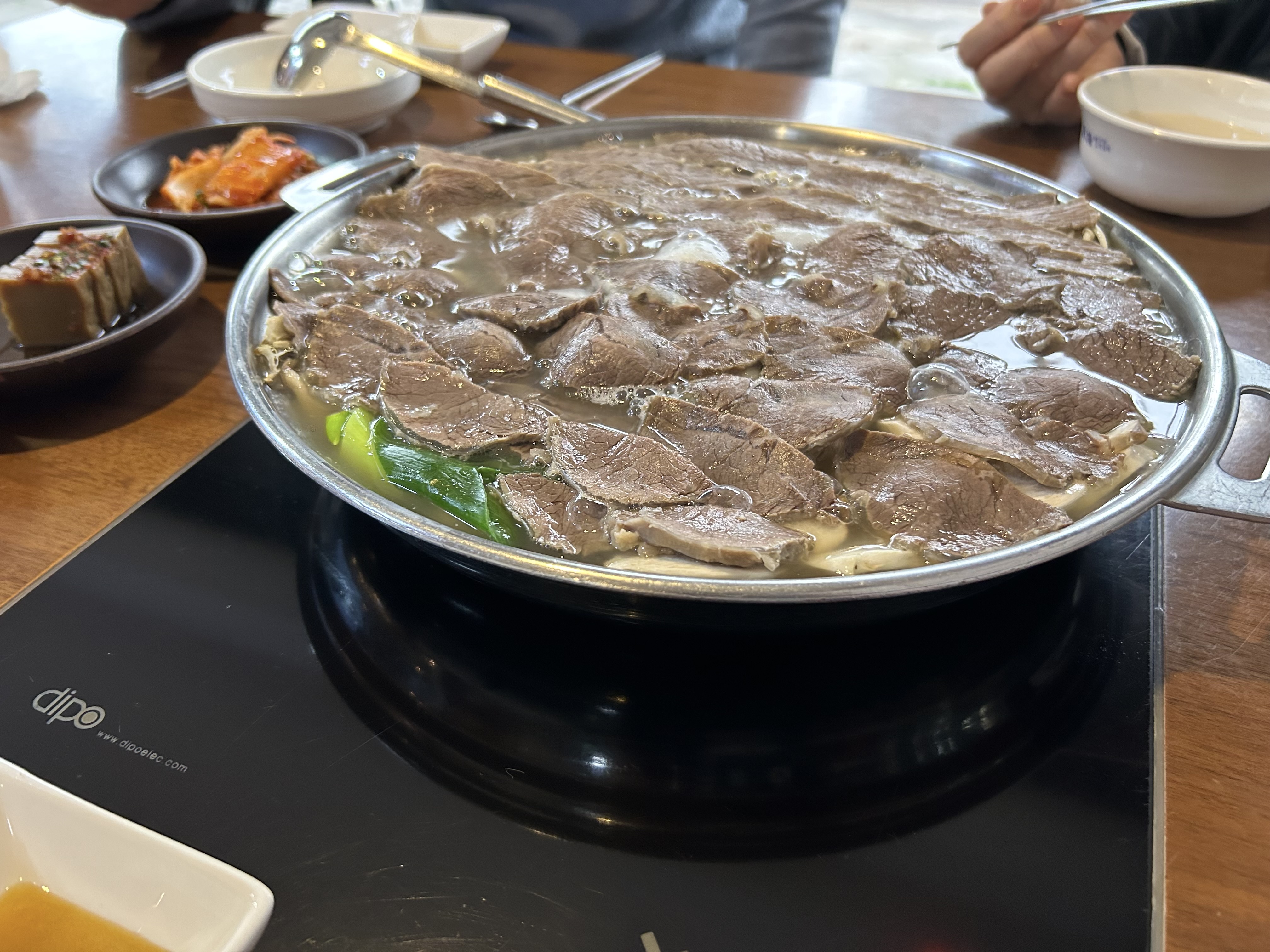
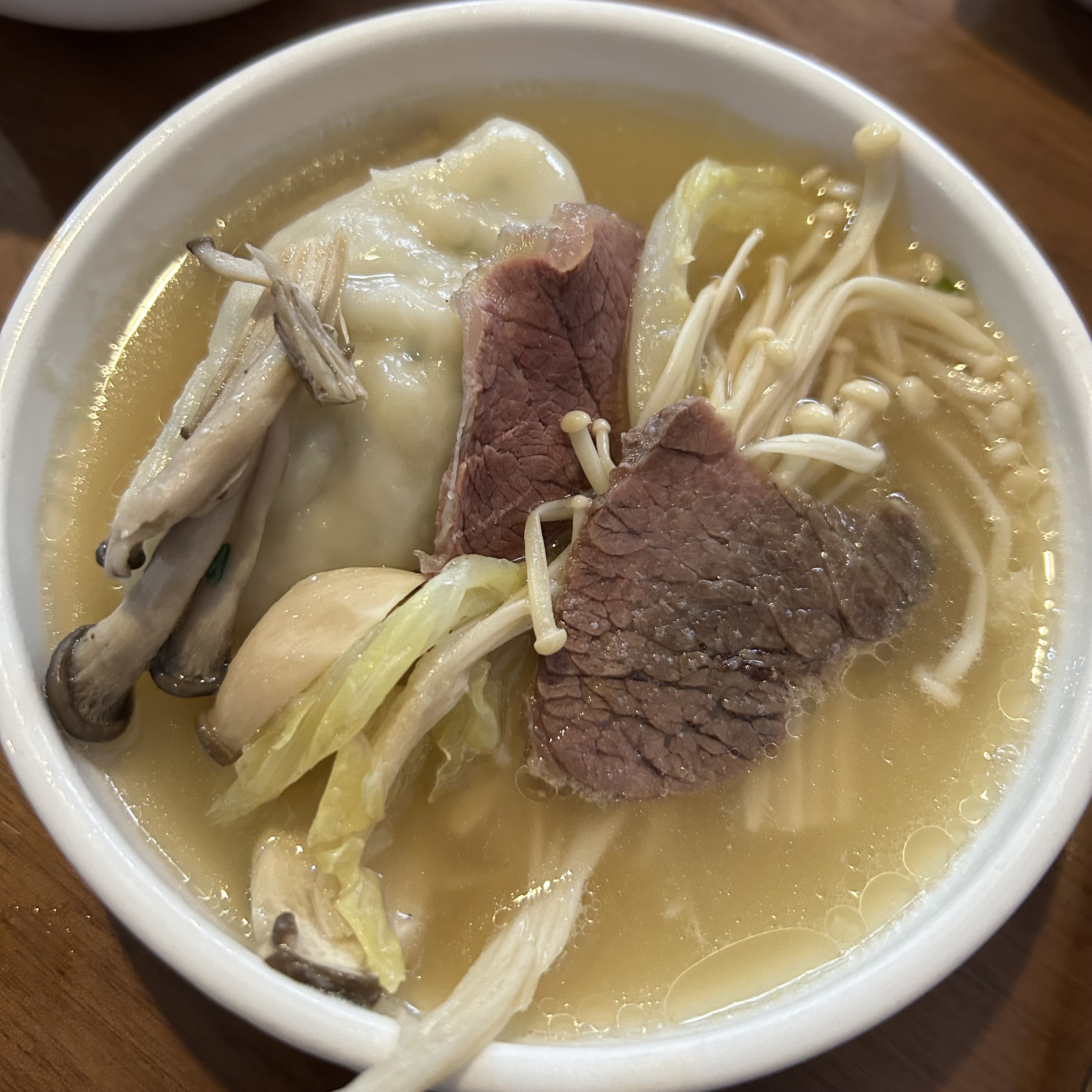
I love my bokkeumbap at the end of a meal at a gogijib. Sweetness simply cannot take that spot for me. I may go for another bite of pizza when my husband leaves room for tiramisu. I never developed that kind of sweet tooth. His whole family loves sweet things. They bake for holidays, look up recipes, discuss them. Dessert quickly becomes the center of the conversation, everyone finishing the main meal early so they can leave room. I find it so adorable. They quit on savory because they get excited about the sweet that comes after. I am the only one excused from the excitement when dessert finally appears. Everyone knows it by now, and most of the time, I won’t even take a bite. Still, there is always a plate set aside for me anyway, just in case, and sometimes I pick at a few bites. I think it is the sweetest thing one can do.
I told my sister-in-law all of this, or most of it, over the noodle soup in the dessert section that had sparked it all. She liked the meat, ate more of it than I expected, although husik wasn't part of the meal this time; soju made it to the table. She nodded in between, then gave a small, quiet oh, really. And that was it.