Shared Flavors , Shared Memories
Hot When It's Hot
In Korea, you eat scalding soup on the hottest day of the year and call it refreshing. It makes no sense. Until, somehow, it does.
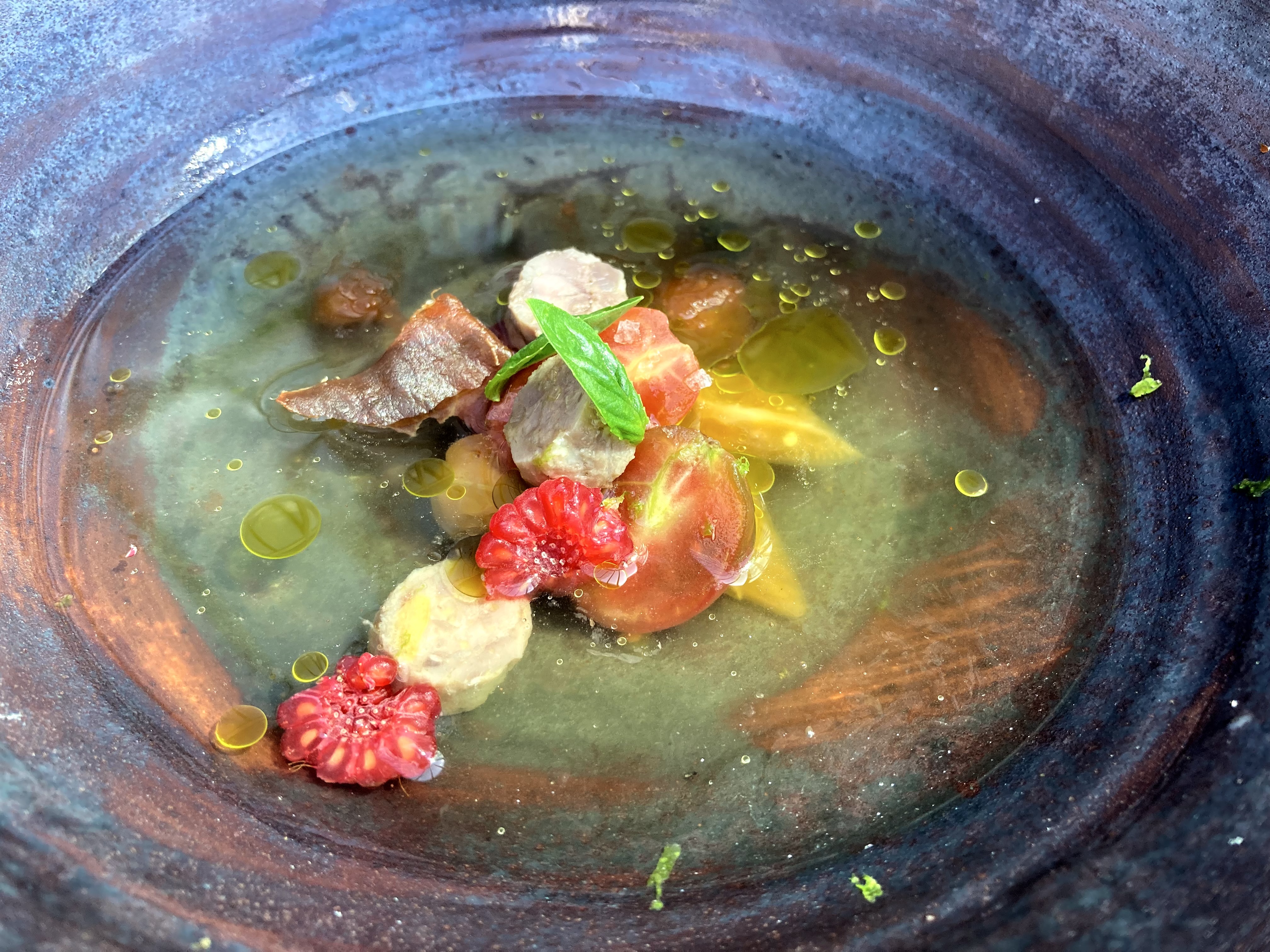
In Korea, you eat scalding soup on the hottest day of the year and call it refreshing. It makes no sense. Until, somehow, it does.

The backyard had been occupied by workers for weeks. Scaffolding was so close to the door we could barely open it. The days were getting longer, bright until eleven at night. With the doors and windows shut and no air conditioning, the heat just sat there with nowhere to go. Neither did our appetite. My husband mentioned the gazpacho he’d been wanting to make: fresh tomatoes, cucumbers, and peppers, all blended cold. Gazpacho makes obvious sense in summer. When it’s hot outside, you eat something cold. That’s the logic most people start from. But in Korea, the logic runs the other way.
There are three days that mark the hottest stretch of the Korean summer: the first heat, the middle heat, and the last heat. Together, they are called sambok. On days of bok, chickens go into crisis. Lines form outside restaurants. The dish people are waiting for is samgyetang (삼계탕): a whole young chicken stuffed with rice, ginseng, jujube, and garlic, simmered until the broth is rich and thick and the meat falls apart. Steaming hot, it arrives in a ttukbaegi (뚝배기), still bubbling on the table.
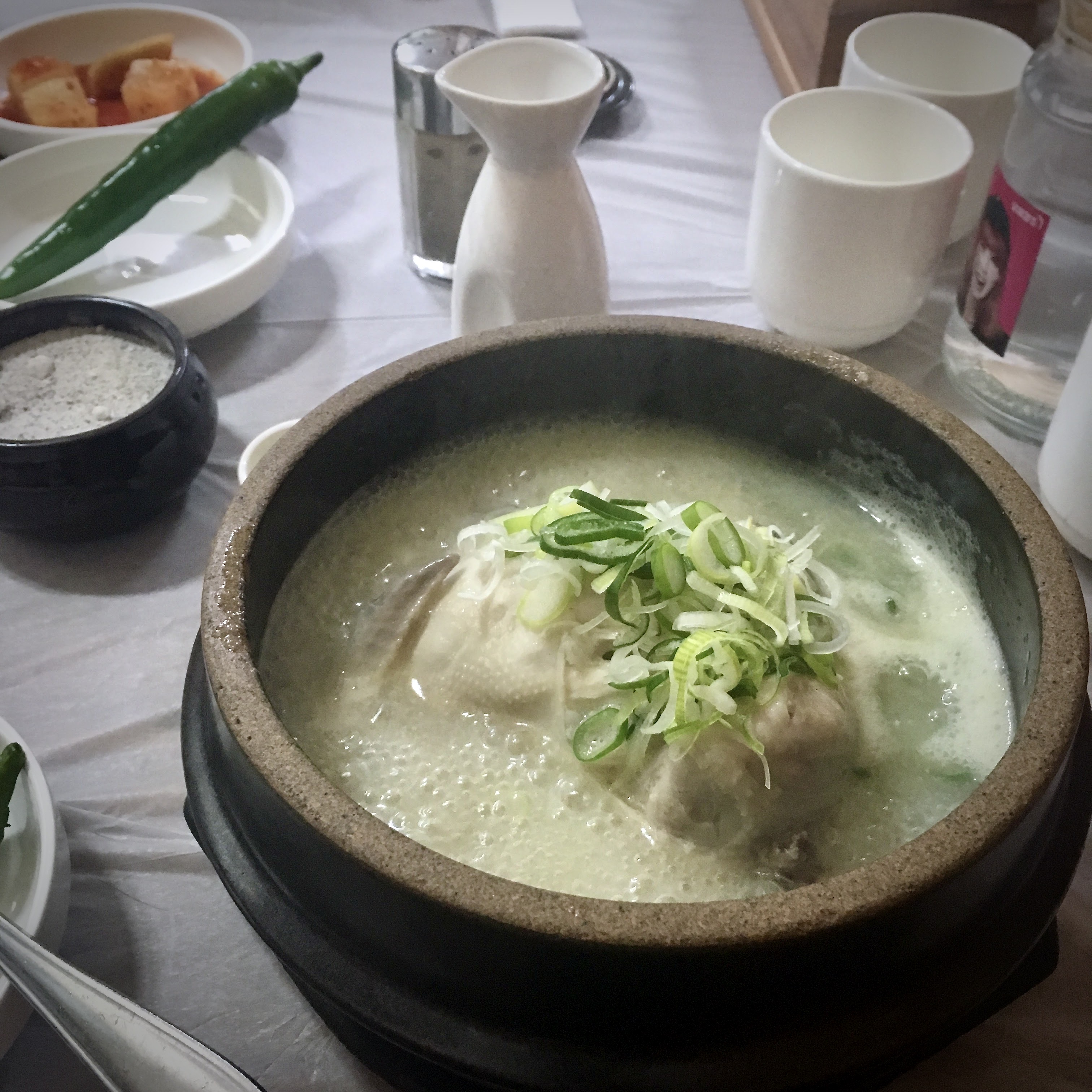
Samgyetang is not meant to be shared. The general rule of sharing food at a Korean table doesn’t apply here. One whole chicken per person (일인일닭). That’s the rule. The whole bird is yours to finish, working your way down to the last gulp of broth. Some try using chopsticks until they realize it’s impossible. Sleeves get rolled up and hands join in, grabbing a drumstick and sucking the tender meat from the bone, cooling each bite as you go so you don’t burn your mouth. Bones pile up, the bottom of the bowl begins to show, your body warms, and you start to sweat.
The logic of eating hot chicken soup on the hottest days of the year was once practical. It used to be a way to replenish protein and energy when meat was scarce, to sweat the heat out. Chicken was a sensible choice at a time when cows were valued as household assets. But even now, when meat is everywhere, the tradition holds. If samgyetang isn’t available, at least fried chikin (치킨) must be delivered. People mark the dates on their calendars. Everyone talks about it. You even hear about it on the news. It’s an annual ritual people genuinely look forward to, not minding a line that stretches through an entire lunch break or having to stand outside in the heat.
That’s the thing about tradition. This is what has been done, so this is what people do. Sweating over hot chicken soup on the hottest days makes sense to me. I have never questioned it. There was, however, one thing I didn’t quite understand as a child. Adults would finish the last hot gulp of broth, still sweating, then exhale with deep satisfaction and say, “Ah, siwonhada!” Literally, ah, it’s cool. I mean, nothing about that moment was cool. Your body was warming up from the soup, the sweat wouldn’t stop, and you might already have a blister or two in your mouth.
In the context of eating hot soup, that word isn’t about temperature. It's about what happens after. The refreshing sensation. The heat meeting the heat. The body sweating, something clearing, an opening from the inside. The word doesn’t describe coldness. It describes release. That’s the same logic behind haejangguk (해장국), hangover soup: sweating out whatever the night before did to you. Pho did that job for me in the US. Scalding broth, made even hotter with red chilies. Sweat breaks out, your nose runs, and you end up with a big pile of napkins beside you. Not comfortable, exactly. But you feel your body shifting. Then I hear myself say it: Siwonhada. There it is, that not-so-logical word I only came to understand as an adult.

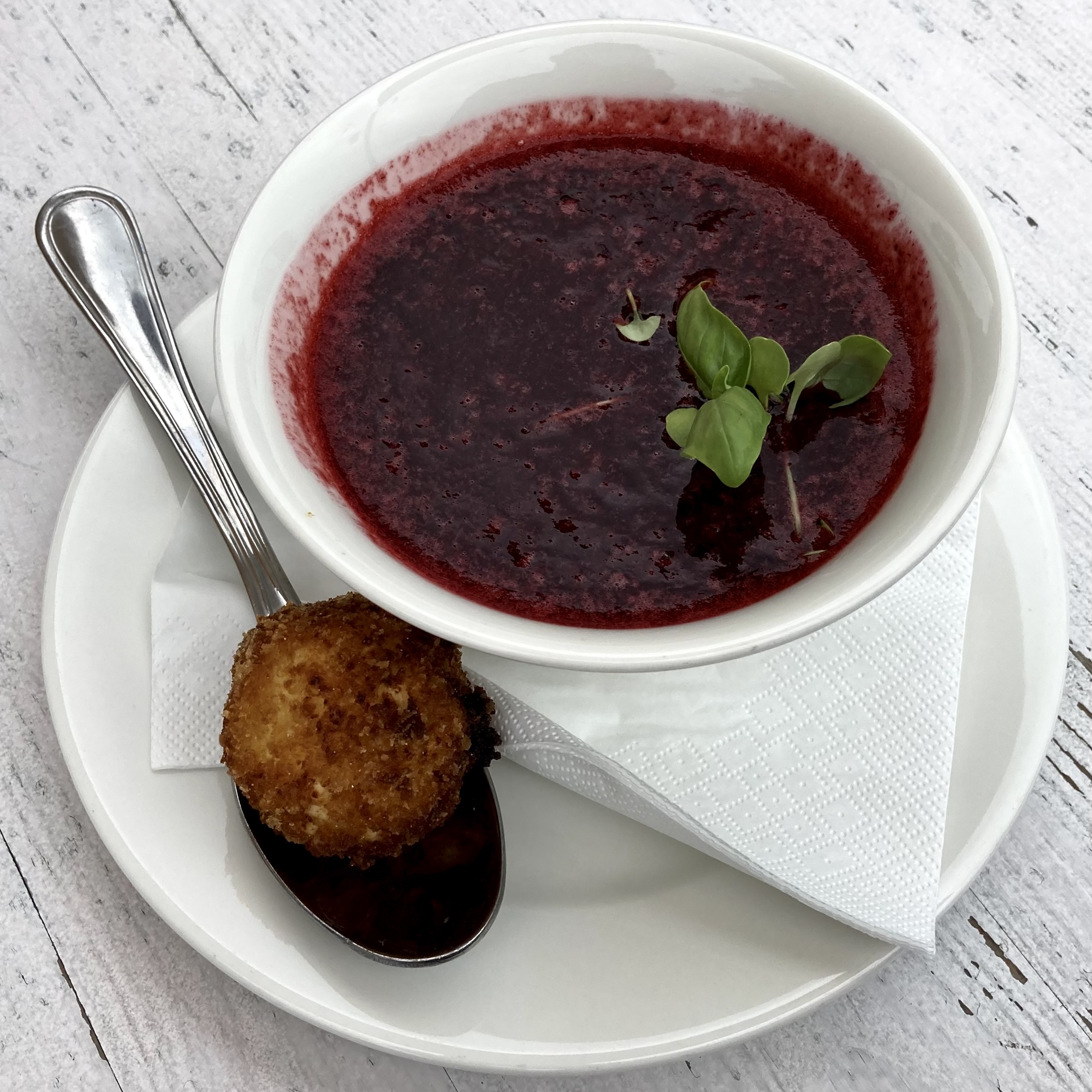
My husband still doesn’t understand the logic of sweating over hot soup on a hot day. He grew up eating meggyleves, cold sour cherry soup, a Hungarian specialty available only in summer, when fresh cherries arrive. When I first saw it, I didn’t know what to think: puréed fruit, a thin liquid, with nothing solid to chew on. Yet it arrived in a wide bowl, just like any other soup. He loves it. He orders it whenever it appears on a menu because it is available for such a short season. Now I know exactly what he’ll order when he sees it, and I’m happy to watch him get excited about his summer special. It took time, but I understand it now. These are the things that only make sense from the inside, if you grew up with the right summer.
During the past few heat waves, I’ve seen a lot of cold soup recipes floating around, their broths filled with ice cubes as if the ice alone proves how cold they are. I have my own version of a cold soup like that: kongguksu (콩국수). Soybeans soaked overnight, boiled, then ground into a pale, milky broth. The noodles are boiled thirty seconds less than usual so they stay alive even after their cold-water bath, then dropped into the milky broth and topped with cucumber. Salt gets added, not sugar, at least not in our household. Apparently, other households add sugar. I learned that later. My mother used to make it on the hottest days of every summer. I never liked it as a child. I never understood the point. It was too bland for a young palate. Then, one hot summer day, I caught myself making a bowl for myself. I kept making it after that. The quiet nuttiness, the clean simplicity. It wasn’t bland after all. I understand now why my mother made it every summer. My husband doesn’t quite get it. Maybe he will one day, like I did.