Shared Flavors , Shared Memories
Are You Sure It Was Cooked?
I grew up eating raw fish. So when ceviche appeared in front of me for the first time, I'm not sure why I hesitated.

I grew up eating raw fish. So when ceviche appeared in front of me for the first time, I'm not sure why I hesitated.

The first time I encountered lime in the United States, I didn't know what to do with it. A green fruit sitting next to lemons in the supermarket. I cut one open and tasted it plain. Sharp, aggressively sour, nothing fragrant or appealing about it. I couldn't understand why anyone would eat it.
I learned soon enough that you don't eat lime as it is. In Texas, it went into everything. The base of pico de gallo, the tomato salsa my mother would have called Mexican kimchi. A garnish alongside bean sprouts at Vietnamese restaurants, squeezed into the broth. And then the taqueria chicken soup: a broth with melted cheese at the bottom, avocado, a wedge of lime to squeeze in at the end. The sourness hitting the salty, hearty broth made complete sense immediately.
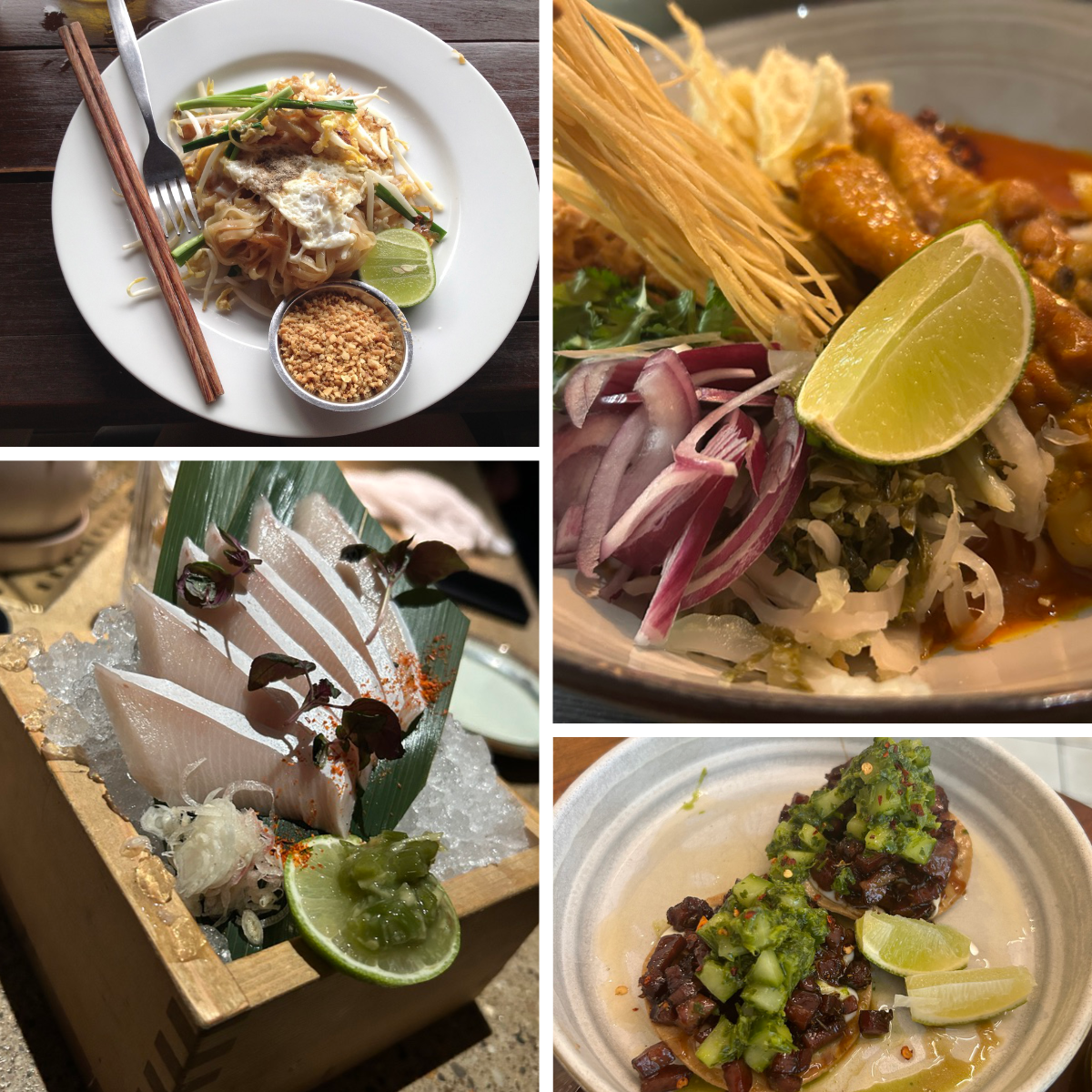
Lemon is fragrant and beautiful, the kind of citrus you notice for how it smells. Lime is sharp and utilitarian, almost aggressive. It became my substitute for vinegar: in pickling, in ramyeon, in meat soups. I reach for it the way I once reached for nothing else.
It was in Key West, Florida that I first understood what lime could do to raw seafood. A Cuban-style ceviche, the concept arriving before I had a name for it. The acid cooks the seafood without heat. I wasn't sure about it at first. Cilantro didn't help. I found it too sharp, too present, no chopsticks to pick it out the way I would at a Vietnamese restaurant. I compromised, some with less cilantro, some with almost none, because I still loved the taste. It grew on me. Now, anywhere warm and near the water, ceviche is what I order, alongside a cold beer, with chips, no hesitation.

I kept encountering different versions and noticing the differences: how it was plated, how it was assembled, what went into it. In Chile, a restaurant served it in the center of the plate, boiled giant corn and a toasted version alongside it, sweet potato arranged around the rest. In Mexico, it came closer to pico de gallo, ceviche with less fish and more of everything else. The same idea of curing seafood at the center, assembled differently each time. South America had made this fruit essential to its food culture.
The most memorable version came at a friend's home in Texas. Her father had moved from Peru decades earlier. One afternoon we were greeted by a huge bowl of ceviche: white fish cut into cubes, red onion, herbs, the whole thing sitting in a pale citrus broth. On the side: roasted sweet potato, golden and soft, and boiled potato slices. A full Peruvian spread in a Texas kitchen. The bowl takes a lot of lime juice, enough to fill it, the acid doing all the work of curing the fish. The fish whitens, the texture changes, the rawness transforms over time without any heat.

What I found out later is that lime itself didn't originate in the Americas. They say it came from Southeast Asia, traveling westward through Arabia and Europe before the Spanish brought it to the Americas in the sixteenth century. The fruit that now feels so essential to South American cooking was itself an ingredient that traveled a very long way from where it began.
I remember hesitating before that first bite in Key West. The thought forming somewhere before I said it out loud: are you sure it was cooked?
This is the part that became funny to me later because I had been eating raw fish my entire life.
Hoe (회), raw fish, is entirely normal in Korea. You eat it at restaurants, at the seaside, at home: plain, as ssam, dipped in wasabi and soy sauce, or with cho-gochujang (초고추장), gochujang mixed with vinegar, bright and acidic. The cho in cho-gochujang means vinegar. It is right there in the name, as in chobap, the Korean word for sushi, meaning vinegared rice. I had never questioned why it was almost always cho-gochujang with hoe and not the plain version. I assume it has something to do with the acid doing something to the fish, making it safer or more balanced. The vinegar was always there. I just hadn't thought about what it was doing.
Hoemuchim (회무침), in that sense, is Korea's equivalent of ceviche. You take raw fish, chop it, toss it with fresh vegetables and cho-gochujang, and it becomes something close to that same idea. Except it's bright red. Sweet, garlicky, pungent. Unlike ceviche it doesn't require time to marinate. You assemble it fresh and eat it immediately. Usually eaten as anju, or sometimes served with rice.

I've seen many different versions of ceviche, each one paired with whatever makes sense wherever it's served. In Texas, ceviche comes with tortilla chips. In Peru, with sweet potato and corn. Each version finds something to soften and balance the sourness.
They may look different, dressed differently, but that logic, acid next to fish, was the baseline all along. I had been eating acid-dressed raw seafood my whole life. I just hadn't recognized it as the same instinct when it arrived in a different form.
The acid had always been there. I just never thought to question it.
Here's the kicker: while I was writing this, I grabbed the cho-gochujang bottle from the fridge, actually read the label for once, and there it was: "Spicy Cocktail Sauce," sweet and sour, made with lime. I'd just spent an entire article figuring that out the hard way.