Shared Flavors , Shared Memories
The Crab Who Stole Rice
My Korean aunt had the soy sauce marinade already cooling when we arrived with the crabs. No question about what would happen next.

My Korean aunt had the soy sauce marinade already cooling when we arrived with the crabs. No question about what would happen next.

When we arrived with the crabs, my Korean aunt already had the soy base boiled and cooling on the counter. No discussion. No debate about what to do with them. That's what you do with a fresh crab in a Korean household: you pour the dark marinade over it, add garlic and dried chili, and you wait.
Ganjang gejang (간장게장) takes one to two days. No heat, not unlike ceviche. The crab sits whole in the soy liquid, the shell intact, the soft meat inside slowly absorbing everything. The color deepens. The texture shifts. What comes out is nothing like the crab that went in.
I thought this was entirely Korean. Then I watched a documentary episode called "Marinated Crab" (Yan Xie, 腌蟹) and learned that China has its own version of soy-marinated crab. I had no idea. It is always exciting to discover that others have been eating the same thing all along.
The crabs we brought home were blue crabs, caught at Virginia Beach with a method my cousin had figured out: tie a chicken leg to a thread, lower it near the pier, and wait. They come up holding the bait. You scoop them out before they let go. It was around sunset. There was a tent. Stars came out while we were still there. The catching was the fun part.

The same species gets treated very differently at an American crab house. I remember visiting one near Washington DC: the table covered with a thick paper sheet, stacks of steamed crabs piled high, seasoned with Old Bay seasoning, wooden mallets for everyone. No one really talked. Everyone was just cracking. It was a lot of work for the meat you got out. I preferred the crab cakes, the meat already gathered, shaped, easy to eat. Much less work involved.
Back in my aunt's kitchen, the gejang was ready. You open the shell, and the meat is soft and silky, almost jellylike. You coax it out carefully with the tip of a spoon or chopsticks, not the mallet approach. The soy broth that forms during the marinating is as important as the meat itself. What builds inside the liquid is gamchilmat (감칠맛), that deep savory quality, the amino compounds drawn out of the crab meat into the sauce over those two days. Restaurants sell the soy broth in bottles. You scrape the meat and lay it over freshly cooked rice, then pour the sauce over the grains. The sauce soaks in. That is the very essence of why you go to all the trouble to make these things.
Bap doduk (밥도둑) is the nickname for gejang. The rice thief. The sauce makes you reach for more rice than you planned. You sit down with one bowl. The gejang pulls you back. The name is the most accurate description of the experience I know. The Chinese call theirs Chaoshan Poison, for the same reason. In the end, we all speak the same language at the table.
My favorite version is when the restaurant does the work for you: the crab meat already scraped and arranged back in the shell, served over a bowl of rice with orange roe and gim garu on top. You just need a spoon.
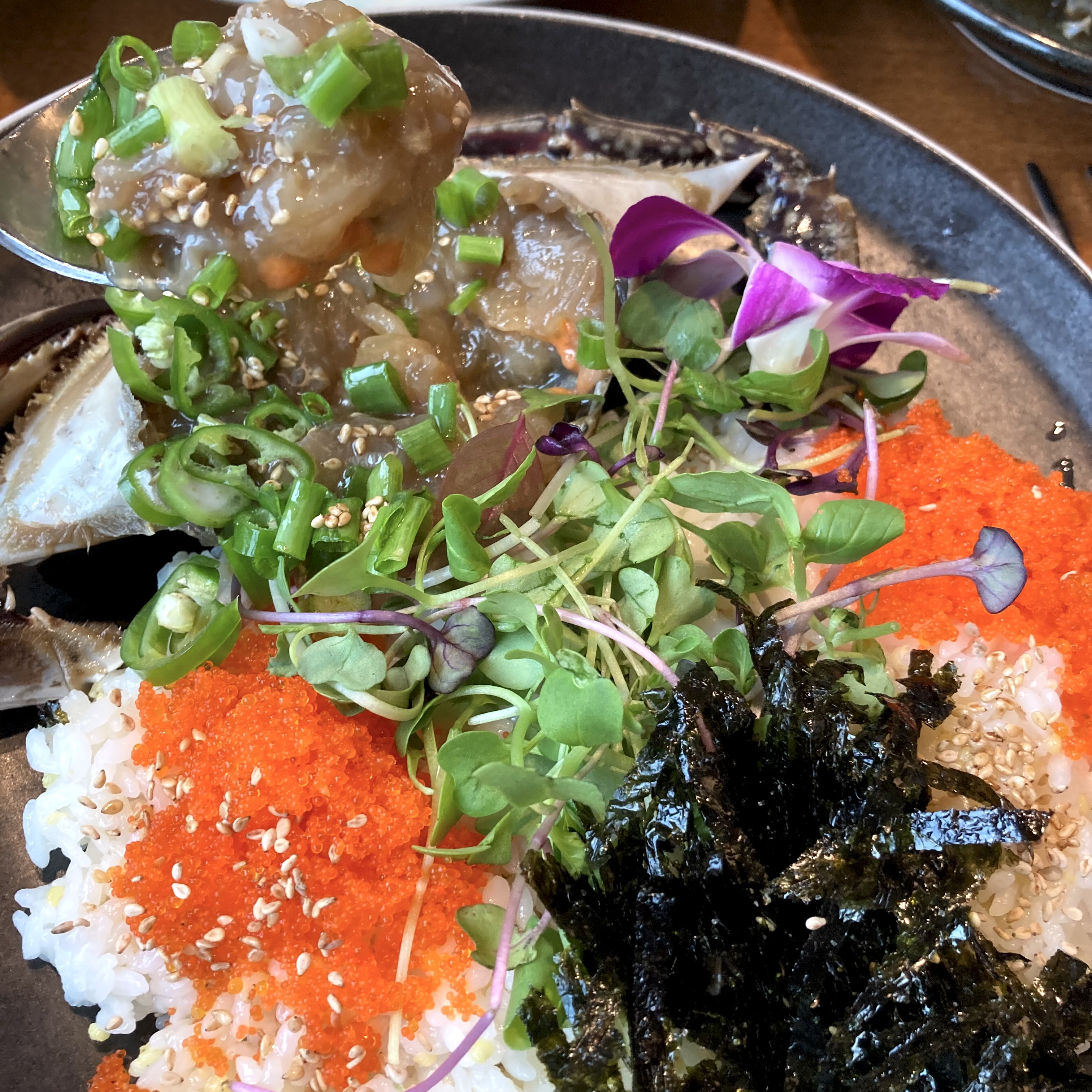
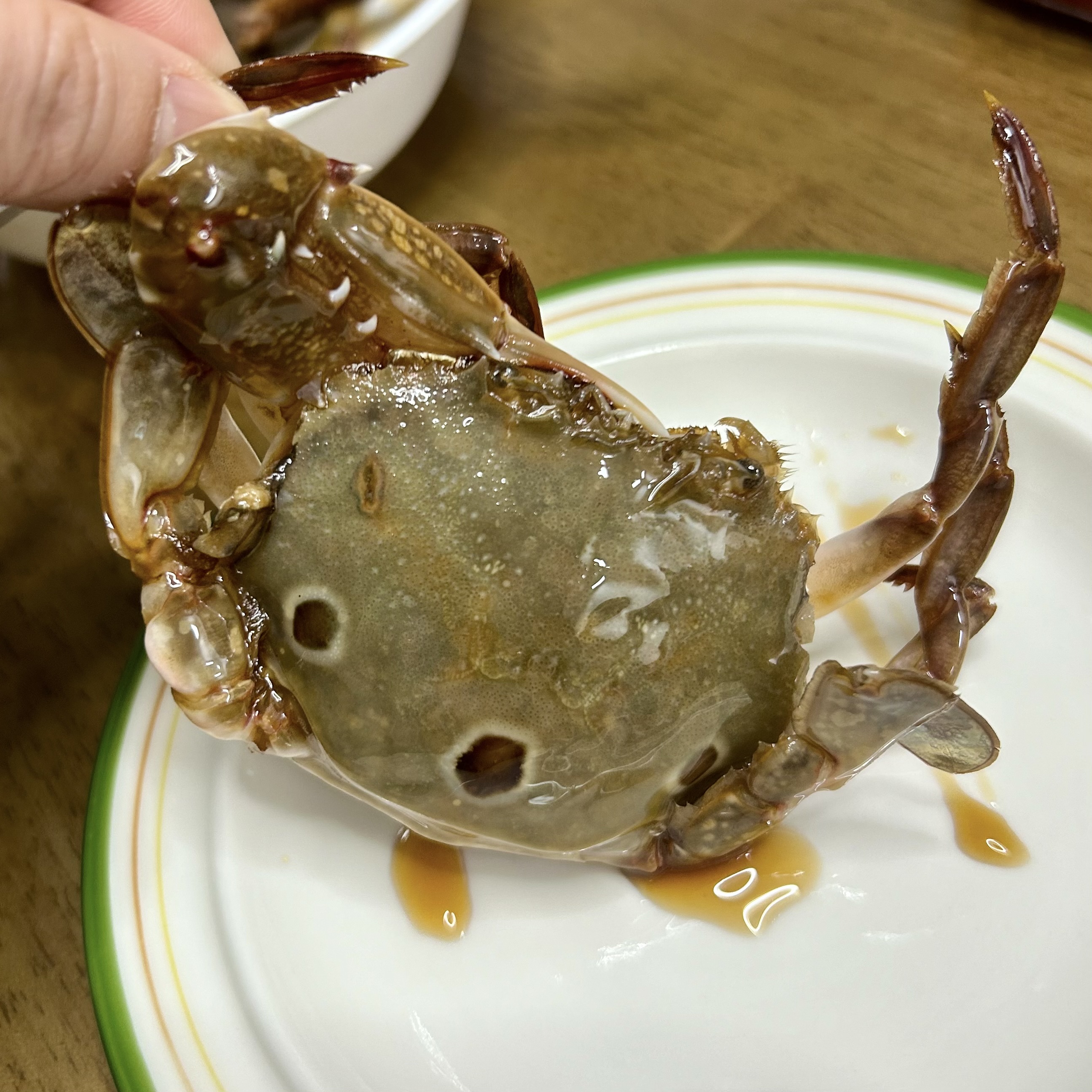
My parents always order dolgae (돌게), the smaller crab, when given the choice. They say the taste is better. I don't believe it. The shell is harder. There is barely any meat. You might break a tooth if you bite down on the wrong part. But they insist, and I have come to understand that they are quietly making room for me to have kkotgae (꽃게), the larger one I prefer. They just won't admit it. So I have learned to stop arguing and simply order the kkotgae.
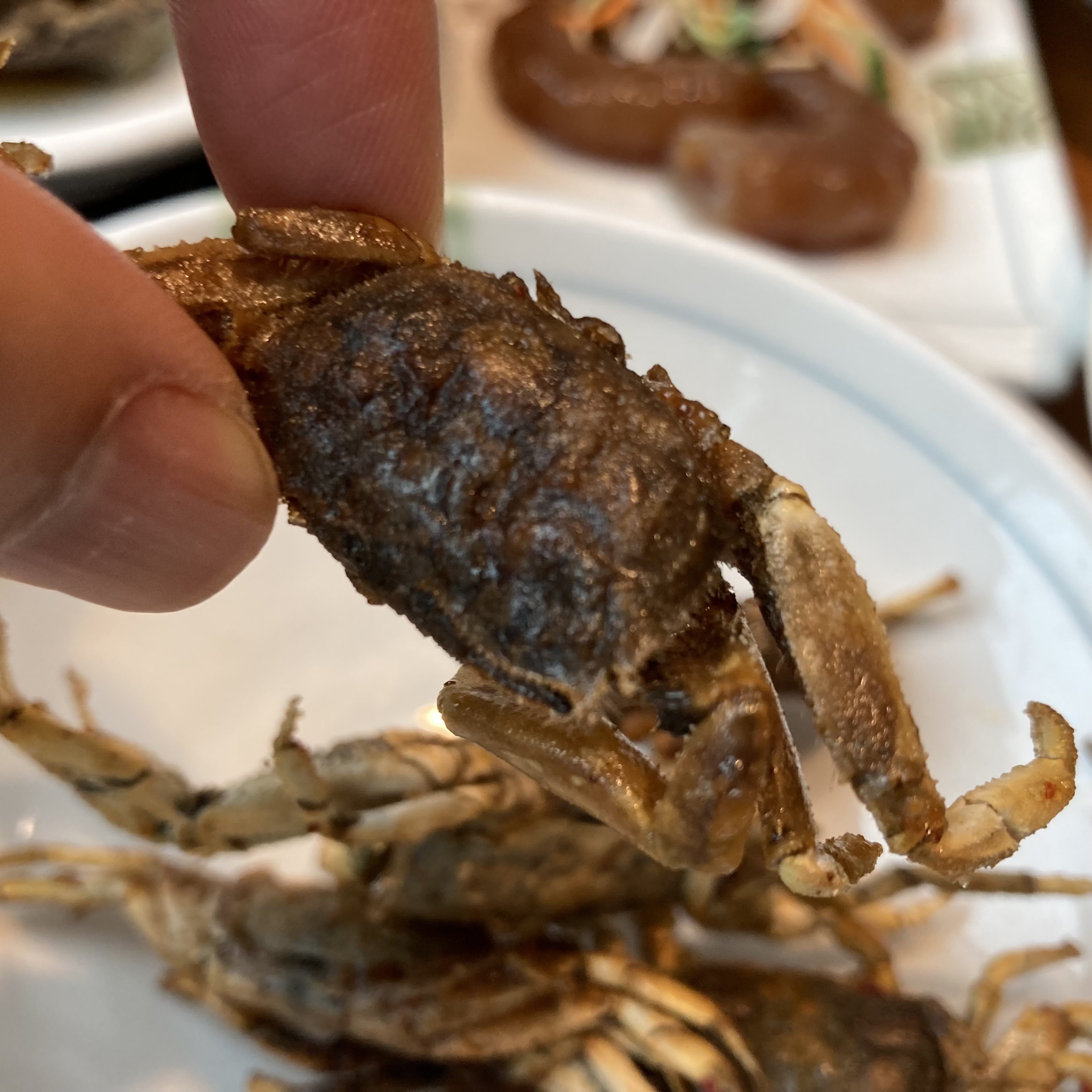
At a good ganjang gejang restaurant, the small shore crabs, chil-gae or bang-gae, arrive as banchan, deep-fried whole and crispy. You eat the entire thing, shell included.
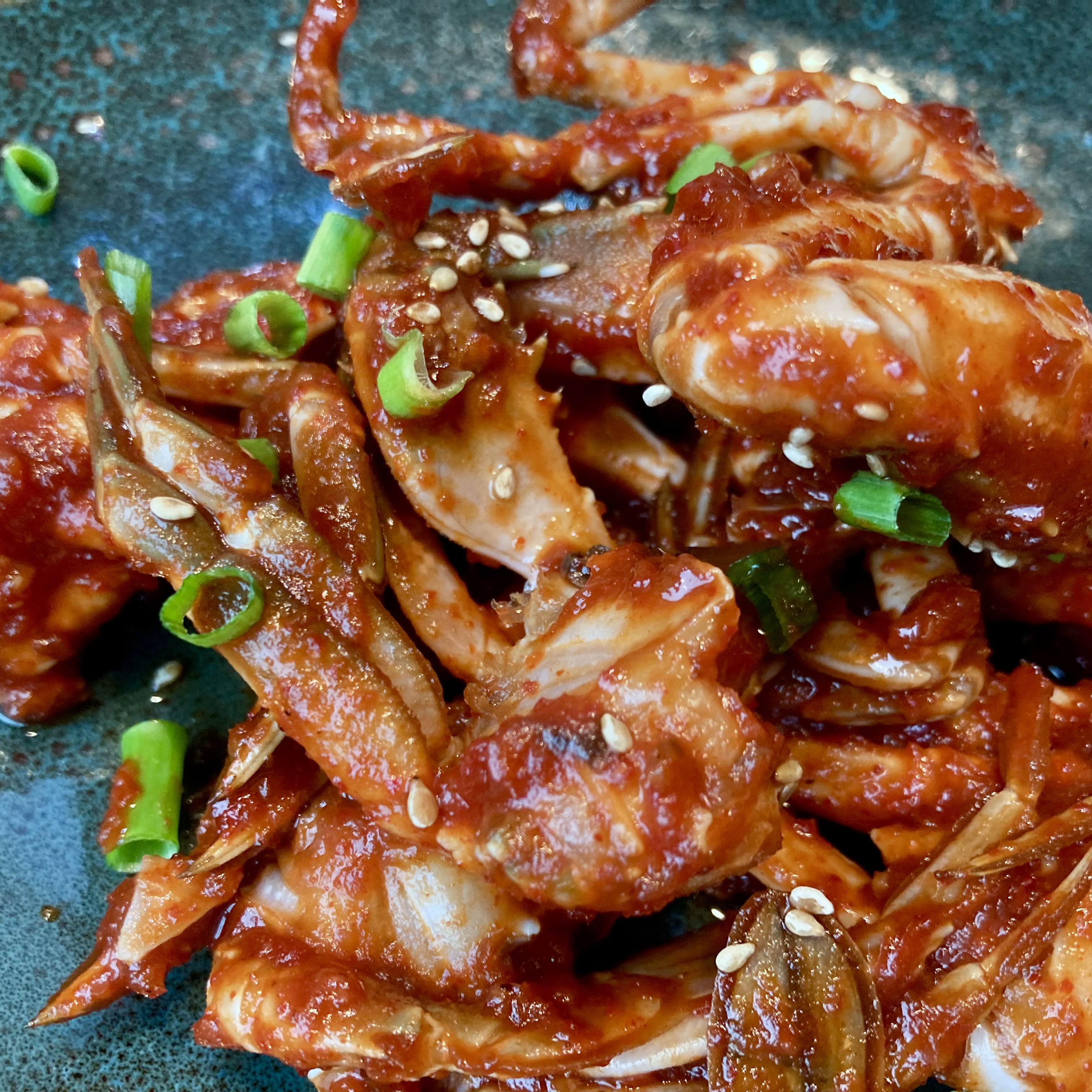
Yangnyeom gejang (양념게장) is the spicy version, and unlike ganjang gejang, it doesn't require days. One to two hours in the fridge after mixing the crab with the yangnyeom sauce is enough. The crab is cut into quarters, each piece heavily dressed in gochujang sauce, sesame, green onion. Bright red, intensely flavored, a lot of sauce relative to the amount of meat. You pick it up and your hands are immediately covered in that spicy yangnyeom. You try with chopsticks but you still can't suck out all the meat, especially from the thin legs, where you know there is something worth getting to. The meat inside each piece is soft and jellylike, difficult to extract fully. I love it and I hate it. You don't eat yangnyeom gejang for the meat. You eat it for the sauce, the way it mixes with rice and coats everything. You feel a little guilty for not extracting all the meat. But you learn to let it go and move on to the next bite.
Ganjang saewoo (간장새우) solved every problem I had with gejang. The crab is beautiful but demanding, not much meat, a lot of work, easy to lose half of it in the shell. The shrimp gives you more. Frozen shrimp in a bag, pour the ganjang sauce over, two days in the fridge. When it is ready, the rice cooker gets busy. A lot of rice will be gone. It earns the same nickname.
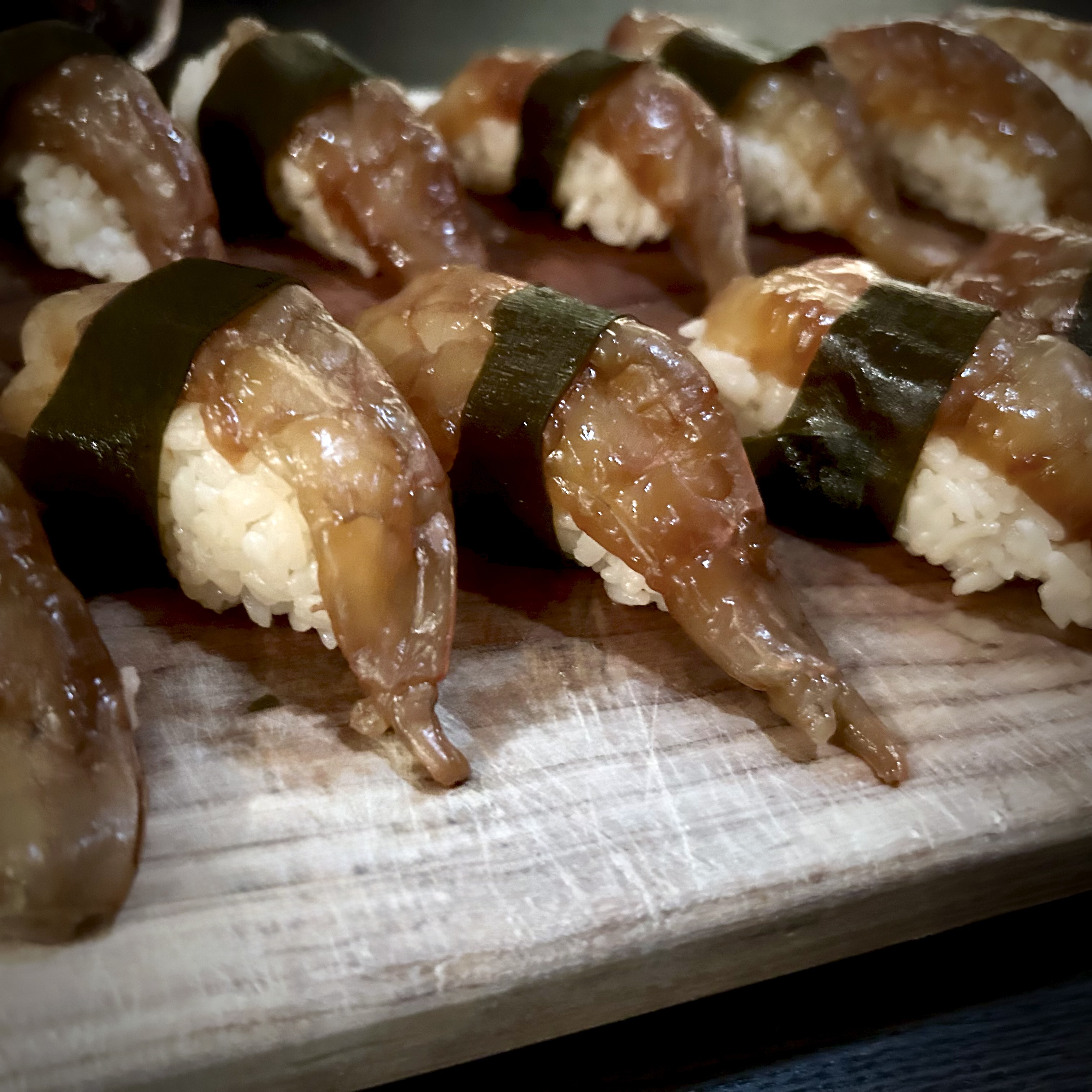
Out of laziness and creativity, I invented my own version: I peel the marinated shrimp, freeze them flat, and take them out about an hour before eating. They thaw back to exactly the texture they had when freshly marinated. Then I press each one over a small mound of rice, wrap it in a strip of dasima (다시마), and eat it like chobap. No one eats it this way in Korea. But it is the easiest, most satisfying thing. You just pick it up.
And then one day at Haagse Markt I saw live crabs and understood immediately what was going to happen. I never would have thought I would make ganjang gejang myself. Something so involved that was always something the adults made for us. I suppose I am the adult now.