Shared Flavors , Shared Memories
From Döner to Taco: A Structure in Motion
A rotating spit, repeated across continents. From döner to shawarma to taco al pastor, one cooking method reveals a history of migration.
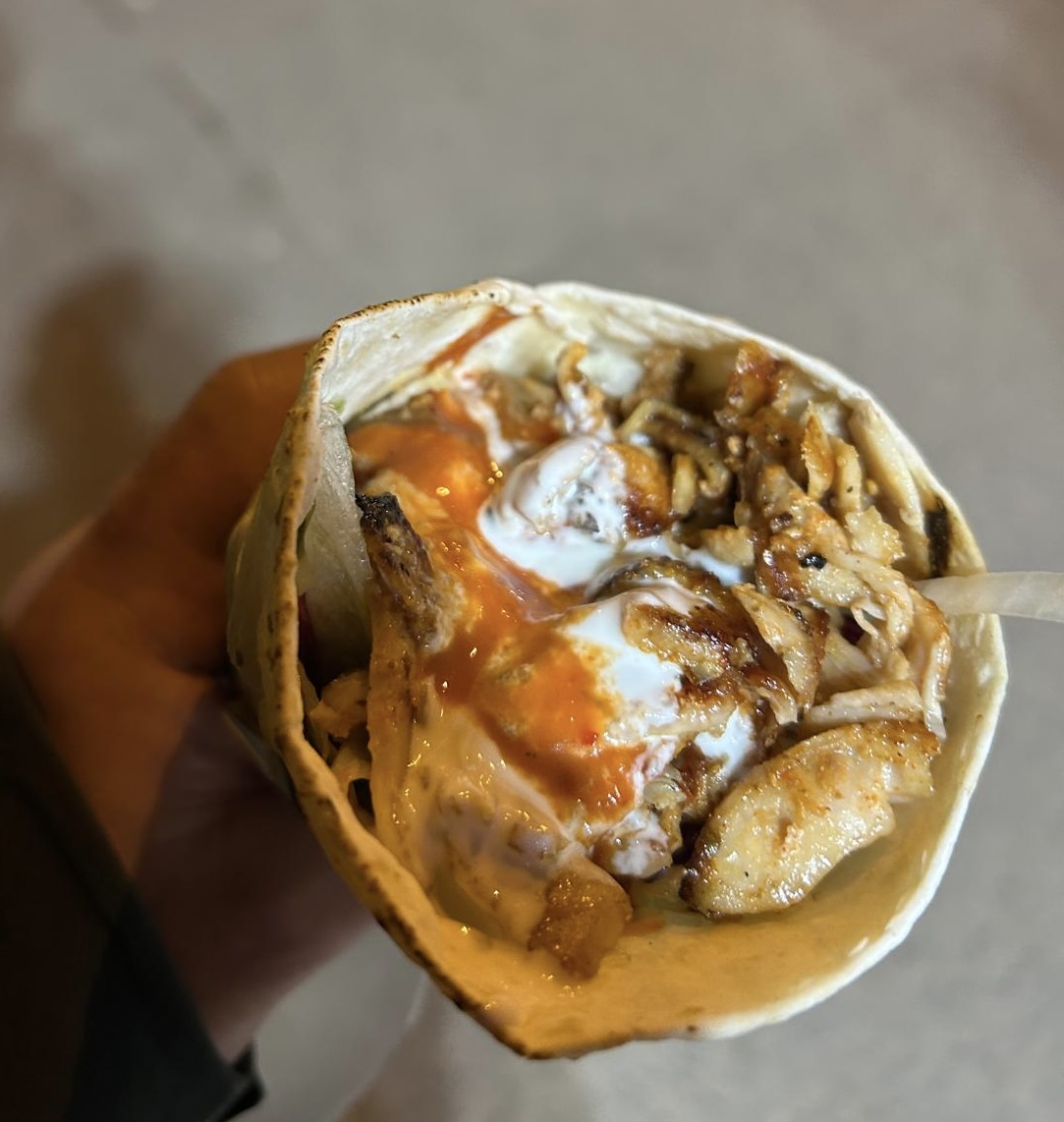
A rotating spit, repeated across continents. From döner to shawarma to taco al pastor, one cooking method reveals a history of migration.


Everywhere I travel in Europe, I see döner kebap stands. Near train stations, along busy streets, in quiet neighborhoods. Often the only place still serving food after everything else has closed. The interaction is simple: walk up to a window, place your order, leave with something warm and portable.
Behind the glass, a vertical spit of meat rotates slowly beside a heat source. The worker shaves slices as customers come and go. The space is compact, functional, designed for continuous service. It becomes a familiar presence, repeated across cities and borders.
At some point, I noticed another name for what looked like the same food: shawarma. The same spit, the same rotating stack, the same shaving motion. It looked so similar that I wondered what the difference actually was. Was it a different dish, or just a different name?
The similarity wasn't coincidence. The method originated in the Ottoman Empire and spread across its territories. Over time, the preparation adapted to local tastes and languages. The structure remained. The cultural context shifted.
Then, during a trip to Mexico, I sat at a small neighborhood taquería with Mexican friends, a place I would never have found on my own. People constantly moved in and out. We sat at a counter facing the center, where the owner carved directly from a vertical spit and assembled each taco in one steady motion.
I recognized the spit immediately.
The setup was nothing like the Tex-Mex tacos I knew in the United States. No elaborate toppings, no overloaded plates. Each serving arrived simply: shaved meat on two small tortillas. On the table sat two large bowls of salsa, shared among customers: one green, one orange. You added it yourself. The green one was sharply spicy, despite its mild appearance.
These were tacos al pastor. The name means "in the style of the shepherd," a quiet reference to its lamb-based origin. Because this food didn't start as Mexican.
Immigrants from the Ottoman Empire brought the technique to Mexico. At first, it was lamb on pita bread, known locally as tacos árabes. In the 1960s, the Mexican-born children of those immigrants began adapting it. Lamb gave way to pork. Dried chilies, achiote, and local spices replaced earlier seasonings. The meat was stacked on the same upright spit, often crowned with onion and pineapple, then shaved onto small tortillas with cilantro and onions.
When I mentioned this to a Mexican friend, he didn't take it well. He had always thought of taco al pastor as proudly, purely Mexican. When I explained the connection to Middle Eastern migration, he shook his head slowly.
"Nooooooooh."
He looked almost disappointed, as if I'd taken something from him. I understood. Finding out that something you thought was yours has roots somewhere else can feel like losing a small piece of it. But I've learned, through kimchi and gimbap and all the dishes I've carried across borders, that nothing is ever purely one place's. The traveling is what makes it real.
Once I noticed it, the resemblance was impossible to ignore. If taco al pastor came from shawarma, and shawarma from döner kebap, then the same cooking system had traveled across continents, from the Ottoman Empire to the Arab world to Mexico. What I had assumed was a common European street food was part of a much longer story.
In Germany, especially Berlin, Turkish migrants reshaped döner kebap into a sandwich suited to urban European life. Serving the meat inside bread made it portable. Vegetables and sauces reflected local tastes. Over time, it became one of the most beloved street foods in the country.
The vertical spit remained constant. Everything around it changed.
What once looked like a simple late-night meal now reads differently. The rotating spit carries a history of empire, migration, and adaptation, visible in plain sight, turning slowly behind glass.