Shared Flavors , Shared Memories
How Jjajangmyeon Became Korean

What felt like childhood comfort began as migrant survival food. Jajangmyeon traces how dishes travel, change, and become local.

The Chinese House (중국집)

Eating out was rare when I was growing up in Korea. Restaurants were not everyday places but small celebrations, and one type always felt slightly different from the rest: junggukjip (중국집), literally the “Chinese house.” Walking through its doors felt like entering another country while still being at home. The décor felt unfamiliar, the menus used words I did not fully understand, and the atmosphere suggested something foreign at a time when foreign food itself was rare.

For my family, the junggukjip marked special occasions. Good grades, birthdays, or graduation often ended with a bowl of jajangmyeon (짜장면). It was savory, slightly sweet, and softly salty, the sauce thick and glossy as it wrapped around the springy noodles. It was a flavor that appealed to everyone. I was still learning to control my chopsticks and would end up with chunjang (춘장), black bean sauce smeared around my mouth. Even then, no one minded. If we were lucky, we ordered tangsuyuk (탕수육) to share. This was the Chinese food I knew, junghwa yori (중화요리) in Korean, comforting and familiar, woven into childhood memory.
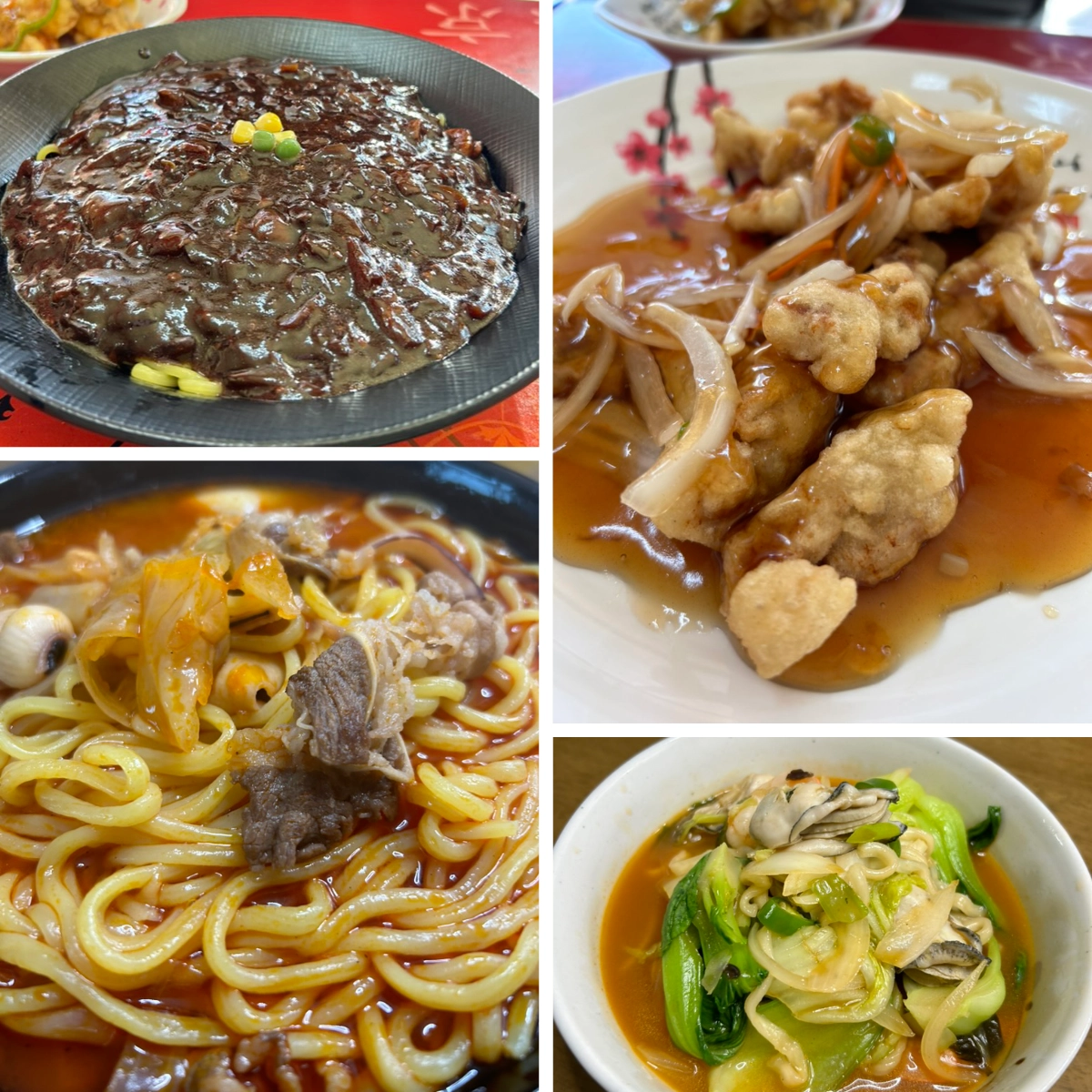
When I began traveling and tasting versions closer to Chinese cuisine itself, I realized it was a different food entirely.

It took me much longer to wonder how something that felt so Korean could have begun as migrant food.

Collage of Korean-Chinese dishes including a plate of black bean noodles (jjajangmyeon), a bowl of spicy seafood noodle soup (jjamppong), sweet-and-sour pork with onions in glossy sauce, and stir-fried vegetables in light broth.
Junghwa-yori (중화요리), Korean-Chinese restaurant classics: jjajangmyeon (짜장면), jjamppong (짬뽕), and sweet-and-sour pork (탕수육). Photo by the author

Migration and Port Cities

The story begins far from the dining table, in migration and movement. Chinese communities abroad often formed along trade routes and port cities. In Korea, places like Incheon, Gunsan, and Busan became entry points for migrants, many from Shandong province. Some arrived as laborers connected to regional trade, others as cooks or small business owners. They brought techniques rather than fixed recipes — noodles, stir-frying, sauces — methods flexible enough to adapt to whatever ingredients were available.

At first, the food they prepared was practical. It needed to be fast, filling, and affordable for workers in busy port environments. Early Chinese dishes in Korea were not designed to become cultural symbols. They were survival food, sustaining people far from home.

Chinese migration to Korea unfolded within a broader global shift. During the nineteenth and early twentieth centuries, labor systems were restructuring worldwide. After the abolition of slavery in many regions, plantations and industrial projects still required large workforces. Economic hardship pushed many Chinese workers abroad. Across the Americas, Southeast Asia, Japan, and Pacific islands such as Hawai‘i, Chinese migrants settled in port cities. Where workers arrived, small restaurants often followed, helping explain the repeated emergence of Chinatowns around the world.

When Food Stops Being Foreign

In each place, migrant cooking adapted to local conditions. In Peru, Chinese cooking blended into what became known as chifa. In Japan, Chinese-inspired dishes evolved into chūka ryōri (中華料理). In the United States, Chinese-American cuisine developed its own distinct identity. The structure remained recognizable, but ingredients, seasoning, and expectations shifted.

Hawai‘i offers a clear example of this transformation. Plantations recruited workers from many places: Chinese, Japanese, Korean, Filipino, and others. Living and working together meant eating together. Over time, shared meals produced foods like plate lunch, Spam musubi, and saimin. These dishes did not belong to one group alone. They reflected coexistence.

Plate lunch combined rice, meat, and macaroni salad on a single tray, not as separate traditions but as a practical accommodation among many. Spam musubi drew on Japanese rice forms and American military provisions. Saimin blended Chinese noodle techniques with Japanese and local flavors. Eventually, saimin became so embedded in everyday life that even McDonald’s locations in Hawai‘i began serving it — a sign that what began as migrant food had become local food.

As migrant cooking settled into new environments, it rarely remained unchanged. It often began as food made by migrants for themselves, reproducing familiar flavors with limited ingredients. Over time, local tastes reshaped dishes, and economic realities such as price, speed, and convenience determined what endured. Eventually, certain foods crossed a threshold. They stopped being seen as foreign and became part of everyday life, tied to memory and routine rather than origin.

White Chinese American takeout containers filled with dishes such as fried rice, lo mein, broccoli with shrimp, dumplings, and sweet-and-sour items spread across a large office table with chopsticks and sauce cups visible.
Chinese American takeout spread across an office table — open cartons, shared dishes, and a working lunch. Photo by the author

How Jjajangmyeon Became Korean

Jjajangmyeon followed this path closely. Chinese restaurants in Korea began as unfamiliar spaces, almost exotic environments. Gradually, the food changed alongside Korean society. Shandong migrant cooks adapted recipes, urban Chinese restaurants expanded, and government wheat policies in the 1960s and 70s made noodle dishes more common. Price controls encouraged affordable menus, and delivery culture, with cheol-gabang (철가방) stacked on scooters, turned jajangmyeon into a meal that could arrive at your door. Before long, the dish shifted from something foreign to something ordinary, tied to moving day, quick lunches, family celebrations, and childhood nostalgia.

Similar transformations occurred elsewhere. In New Orleans, yakamein emerged when Chinese noodle techniques met Creole and African American cooking. In the Netherlands, Chinese noodle traditions influenced Indonesian bami goreng, which later returned through Dutch colonial ties and reappeared in snack form as bamischijf. What began as migrant noodles became deep-fried convenience food, layered through multiple migrations.

What Noodles Carry

One reason noodles appear repeatedly in these stories is their flexibility. They are inexpensive, filling, quick to prepare, and easy to adapt. A simple structure repeats across cultures: noodles combined with sauce or broth and local seasoning become something new. Jjajangmyeon, yakamein, saimin, and chifa noodle dishes all follow this logic. Noodles travel easily, but they rarely arrive unchanged.

I still remember the first time I tried zhajiangmian (炸酱面), the Chinese dish that gave rise to Korean jajangmyeon. I was curious to taste it in its earlier form, to see how it might compare. I was surprised. The structure was familiar, wheat noodles topped with black bean sauce, but the flavor was sharper, less sweet, and the texture different.

I had expected to meet the original. Instead, I encountered something related, but distinct. The resemblance was structural, not sensory. Jajangmyeon was not a copy. It was a transformation. In Korea, jajangmyeon, along with junghwayori dishes like jjamppong and tangsuyuk, no longer feels foreign. It belongs to childhood, delivery scooters, moving day, and everyday life.

Seen this way, migrant food does not remain migrant for long. It adjusts to labor systems, ingredients, pricing structures, and ordinary routines. In that process, origin becomes less visible than use.

Inside a bowl of noodles are traces of ports, workers, and cooks who adapted to unfamiliar places. The dish may look simple, but its history is layered. Food does not simply preserve where people came from. It records how they stayed.