Shared Flavors , Shared Memories
From Pindakaas to Saté: A Shared Food History
Peanut butter on bread. Peanut sauce on fries. The same ingredient, shaped by migration and everyday habits.
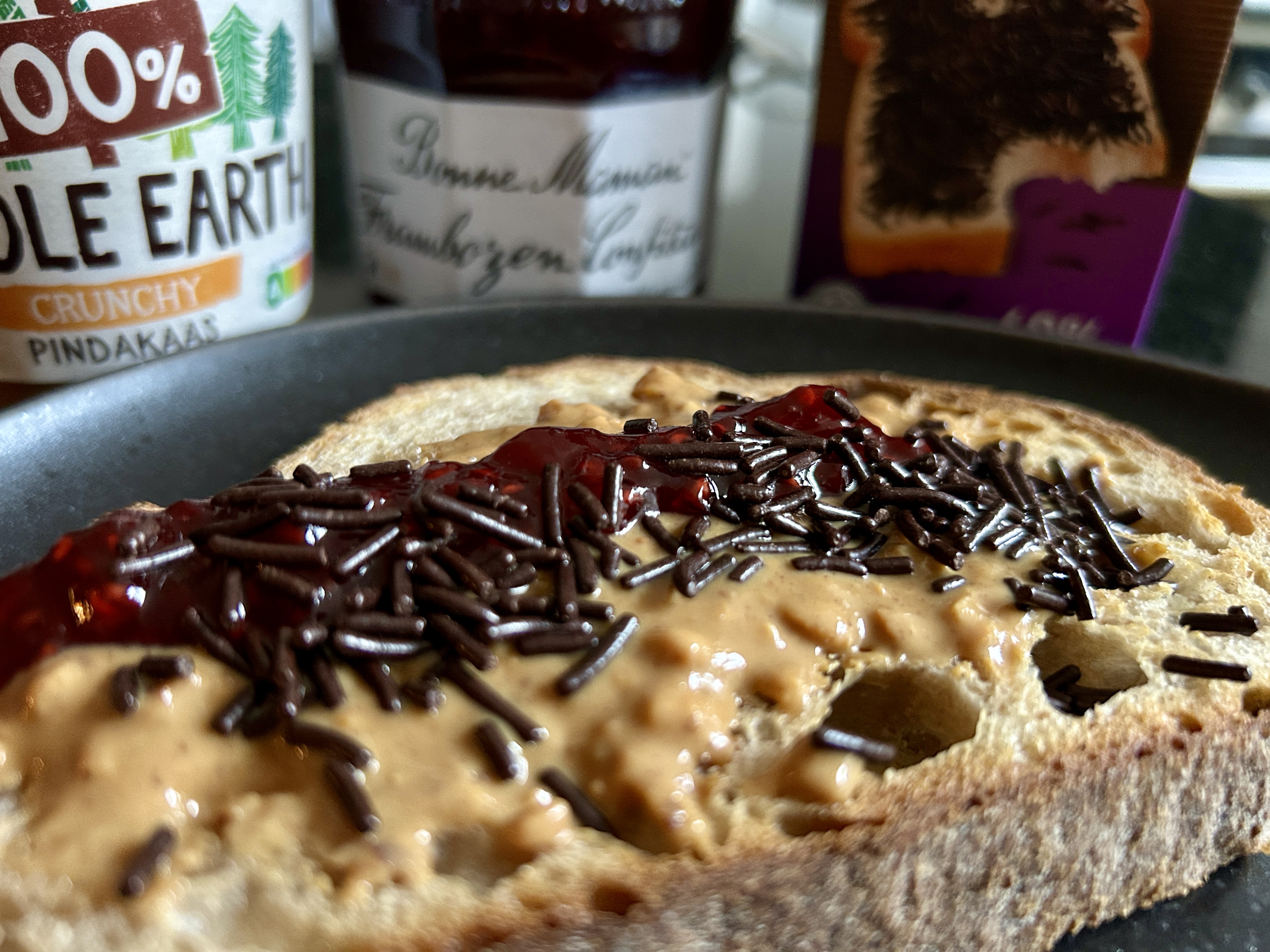
Peanut butter on bread. Peanut sauce on fries. The same ingredient, shaped by migration and everyday habits.

I was careful with my husband's lunchbox.
Not with the food itself. I mean...I knew how to cook. But I was aware that what was inside would be seen. In the Netherlands, lunch is a public meal. People sit together in the office. They open their boxes. They notice.
"How was your lunch?" I would ask when he came home. I meant: how was it received?
Our lunchbox was borderless. Rice one day, pasta another. Sometimes Hungarian, sometimes Korean. His colleagues, by contrast, ate bread. A large loaf arrived at work, accompanied by a jar of peanut butter. Slices were assembled as they were eaten. Just as rice anchors my meals, bread anchors theirs.
But the peanut butter was not used the way I expected. No second slice on top. No PB&J. Just an open face, spread thick, sometimes topped with hagelslag, tiny chocolate sprinkles. Pindakaas met hagelslag. Adults eat this without irony. For many, it carries childhood straight into Monday morning.
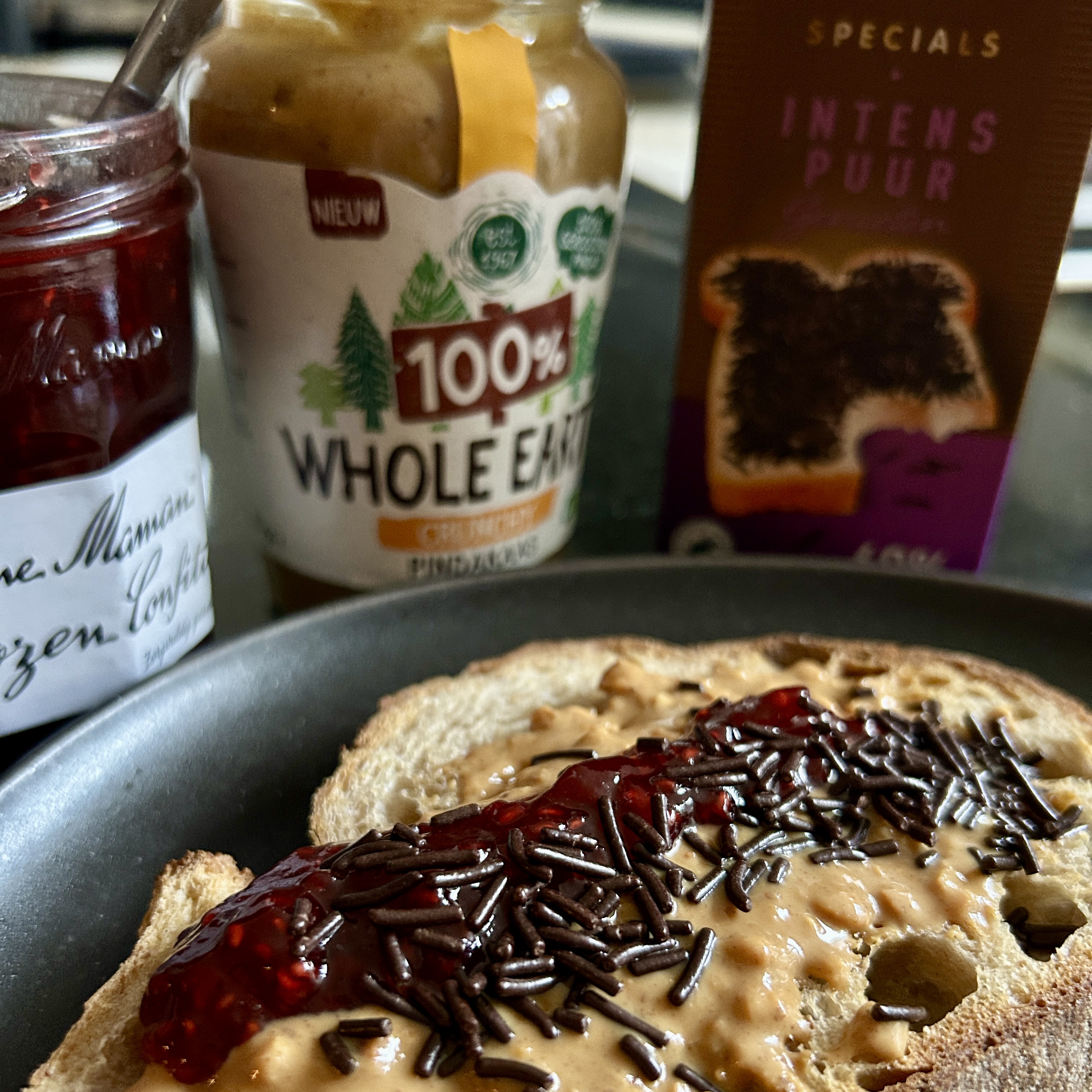
The Dutch call it pindakaas, not pindaboter. I assumed this was a national affection for cheese.
Partially true. But kaas in Dutch naming often describes texture. Something dense, sliceable, rather than dairy. Leverkaas contains no cheese. Hoofdkaas is pressed meat. Pindakaas follows the pattern.
There was also a legal reason. Only dairy products could use the word boter. Since peanut butter contains no dairy fat, the name pindakaas was born instead.
It fit so naturally into Dutch life that it entered the language as a joke. Helaas pindakaas, literally "unfortunately, peanut butter," is a playful way of saying "too bad." The rhyme matters more than the meaning. Peanut butter had become ordinary enough to be a punchline.
The first time I walked into a Dutch supermarket, I stopped in front of the satésaus aisle. Mild, sweet, spicy, in endless variations. The section was as large as the peanut butter shelves. Maybe larger.
At first, I assumed the Dutch simply loved peanuts.But satésaus tells a different story. It arrived with people, not trade ships. Indonesian migrants brought their cooking traditions to the Netherlands. Peanuts, originally from the Americas, carried to Southeast Asia through colonial exchange had already embedded themselves in Indonesian cuisine. Saté, gado-gado, peanut-based sambals. When those flavors traveled back to the Netherlands, they transformed again.
Peanut sauce found its way onto fries. Patatje oorlog, meaning "war fries," layers satay sauce, mayonnaise, and raw onions into a beautiful mess eaten from paper trays with small forks. What was once shaped by colonial trade had settled quietly into late-night street food.
The two peanut traditions developed in different worlds before meeting on the same shelf. In Indonesia, peanuts appear in communal meals, layered sauces, spice and heat, served with rice. In the Netherlands, peanut butter is mild, creamy, individual. Spread on a single slice. Practical.
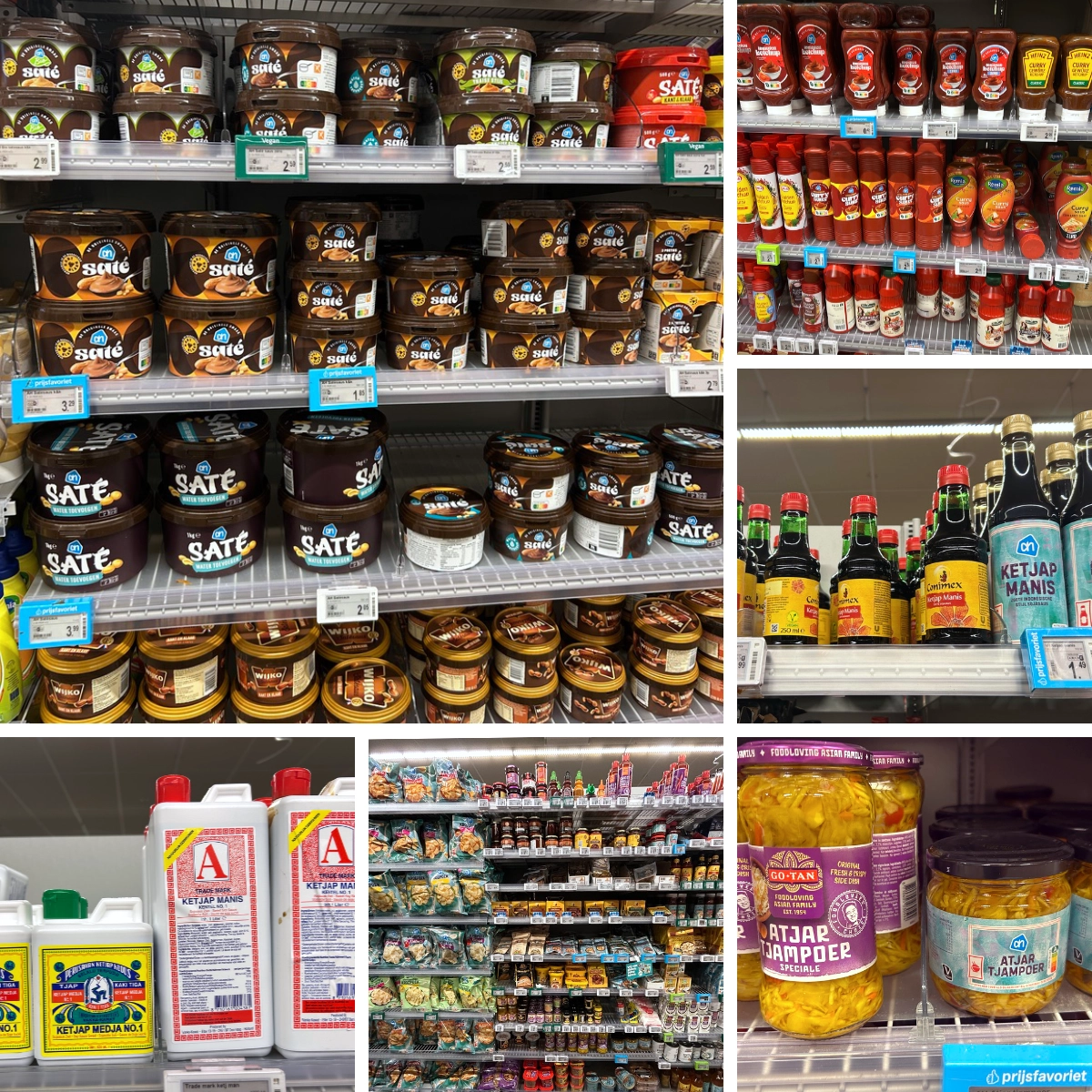
After Indonesian independence, migration to the Netherlands increased. Indonesian restaurants became common. Supermarket shelves filled with satésaus, sambal, ketjap manis, tempeh. The combination of Dutch and Indonesian food created something new: rijsttafel, bamischijf, nasischijf with currysaus. Neither purely Dutch nor purely Indonesian. Something between.
Even spiciness was recalibrated. "Dutch spicy" became its own measure.
I learned this the hard way. When asked how spicy I wanted my food, I answered confidently. Years of cooking with gochutgaru had prepared me, I thought.
The kitchen did not adjust. The heat was closer to what I imagine Sumatra to be. It was not "Dutch spicy." It was something else entirely.
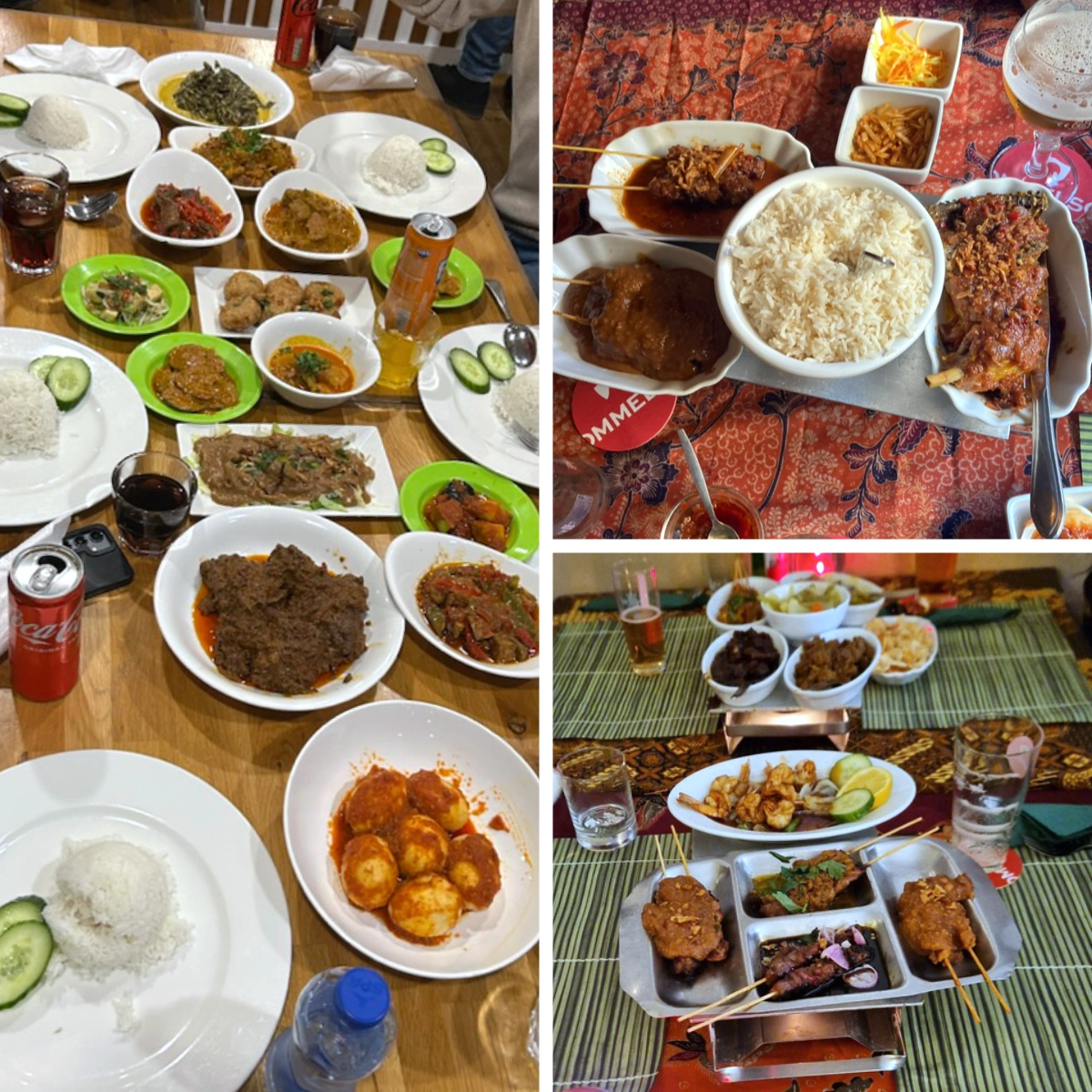
Over time, these ingredients entered my own kitchen. Ketjap manis sometimes stands in for ganjang. Sambal for dadaegi. Kimchi sits beside oma's gehaktballen. The substitutions are not deliberate statements. They are practical adjustments.
I began to notice the similarities. Sweet soy sauces, fermented chili pastes, preserved vegetables. Different names, different histories, familiar functions. The pantry no longer feels divided into Korean and Dutch, or Indonesian and European. The borders blur quietly, through use.
A jar of pindakaas and a bottle of satésaus sit side by side. They no longer belong to a single place. Neither, perhaps, do I.