Shared Flavors , Shared Memories
Why Cilantro Tastes Like Soap to Me

Cilantro, cumin, garlic. And the question of how taste is learned.
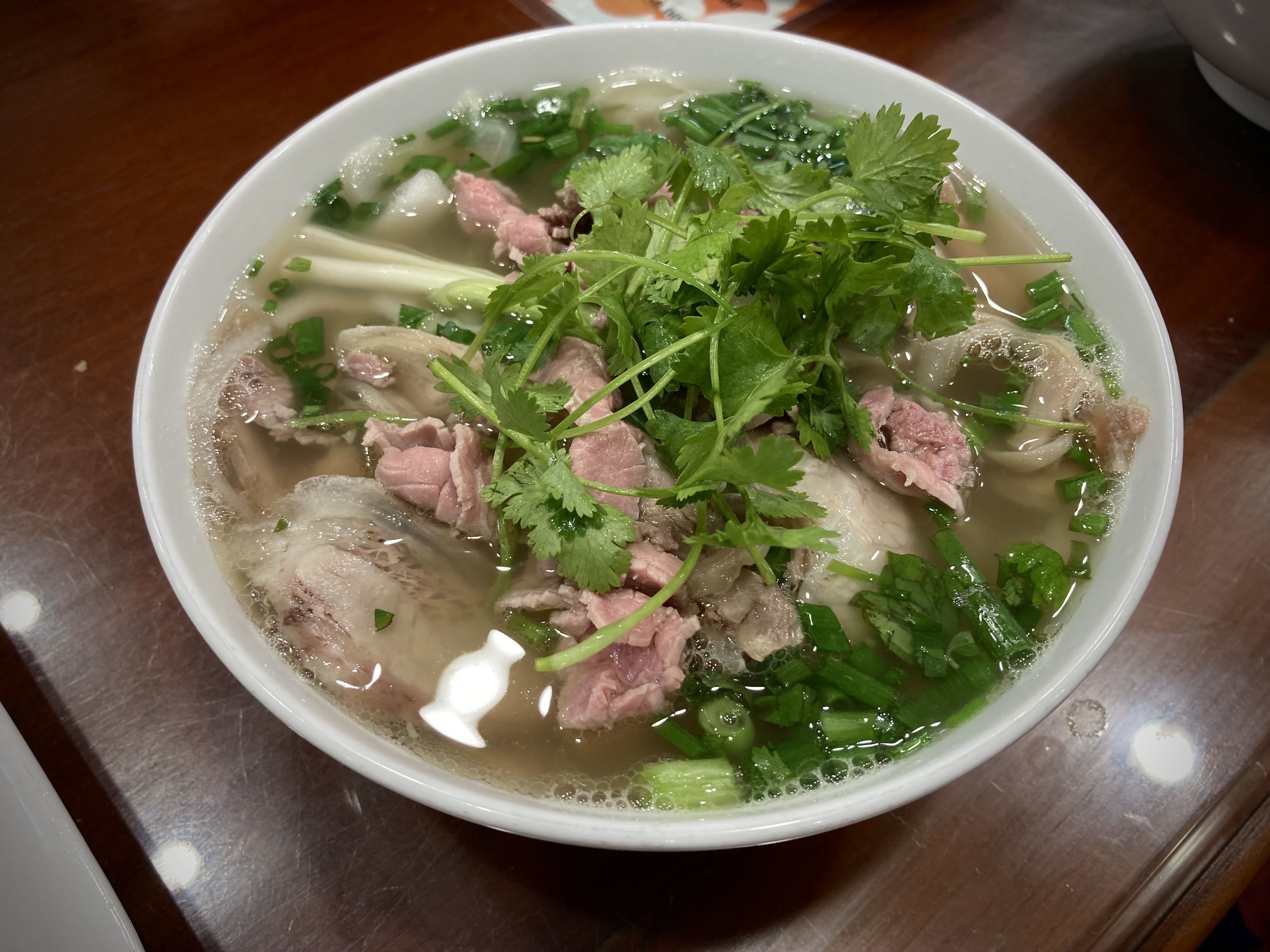
Soap in My Pho

I love pho, except for the cilantro that always comes with it. Most people around me know I don’t like cilantro. When it appears in my bowl, uninvited, I remove every piece before taking my first bite. Every green fragment has to be picked out, one by one, with the precision of decades-long chopstick skills. To me, it tastes like soap.

Cilantro is the term I learned in the United States when I began falling in love with pho and the pico de gallo that accompanies my beloved tacos. In American English, cilantro refers specifically to the leaves of the plant. In Europe, the same plant is usually called coriander. It originated in the eastern Mediterranean and western Asia.

Cilantro spread through colonization and trade. Spanish colonizers brought it to Mexico, where it paired naturally with chili, lime, and tomatoes. In Vietnam, it became part of a broader herb culture built around freshness and balance.

Collage of Tex-Mex dishes topped with fresh cilantro, including tacos, braised meat with avocado and egg, tortilla chips with dip, and sliced steak with pickled onions.
Cilantro layered across Tex-Mex plates, from tacos and braised meat to dips and grilled steak. Photo by the author

Cilantro may rank at the top of my don’t-eat list, but it is not alone.

There is also cumin, with its warm, dusty aroma that clings to meat. Used lightly, it deepens flavor without announcing itself. I love tacos and curries, and I know cumin is there, somewhere beneath the surface. It belongs there.

But sometimes it takes over. The first time I bit into lamb chuanr (串儿) at a Chinese restaurant, the smell reached me before the taste did. Earthy, heavy, almost bodily. The meat was coated in it, each bite thick with cumin. I did not know then what it was called. I only knew that it overwhelmed everything else.

Is It Genetic?

Cilantro belongs to a family of aromatic, often polarizing plants. Other herbs share similar compounds. People tend to either love or strongly reject certain herbs and spices such as cilantro, cumin, fennel, and anise. All contain powerful aroma compounds that the brain interprets differently.

Some explain this reaction as partly genetic. A smell receptor gene called OR6A2 detects aldehydes in cilantro, compounds also found in soap. People with certain variants of this gene perceive cilantro as unpleasant. However, genetics alone does not determine preference. It does not explain why my mother loves it and I do not.

Historically, Korea did not sit along the major spice trade routes that connected India, the Middle East, and Southeast Asia. Many of the spices that defined medieval European and Middle Eastern cuisines passed through those corridors, not East Asia. It was much later, through travel, that I encountered the full range of spices and herbs used elsewhere. Until then, I thought Korean food used a wide variety of spices. It did, but differently.

Map titled “Routes of the medieval spice trade” showing red trade lines from India, Southeast Asia, and China through the Middle East to Venice and northern Europe, with Korea outside the main routes.
Map of the major medieval spice trade routes linking South and Southeast Asia to the Middle East and Europe, with trade corridors bypassing the Korean peninsula. Source: Smithsonian Magazine, “The Spice Trade and the Rise of Venice,” illustration by David Griffin.

Korea’s Different Path to Intensity

For a long time, I assumed complexity came from spices. That the more spices a cuisine used, the more sophisticated it was. Korea pursued intensity through different means.  Where some cuisines layer dried spices carried across continents, Korean cuisine builds depth through fermentation and time.

Its foundation lies in ingredients that transform rather than simply season. Garlic, ginger, and chili provide sharpness and heat. But the deeper structure comes from fermentation.

Doenjang (된장), fermented soybean paste, carries an earthy density. Gochujang (고추장), fermented chili paste, adds sweetness alongside heat. It is fermentation that gives Korean food its backbone.

In Korean cooking, flavor is often carried not by dried spices but by liquids shaped over time. Kimchi brine becomes seasoning. A spoonful of kimchi liquid can define an entire dish. Dongchimi (동치미), a mild water kimchi, produces a broth that stands on its own — cold, clean, and bright, without bones or spice blends. That broth becomes the base for dishes like naengmyeon (냉면), while kimchi brine anchors kimchimaliguksu (김치말이국수) and kimchimalibap (김치말이밥). What might look like leftovers is, in fact, the structure of the meal.
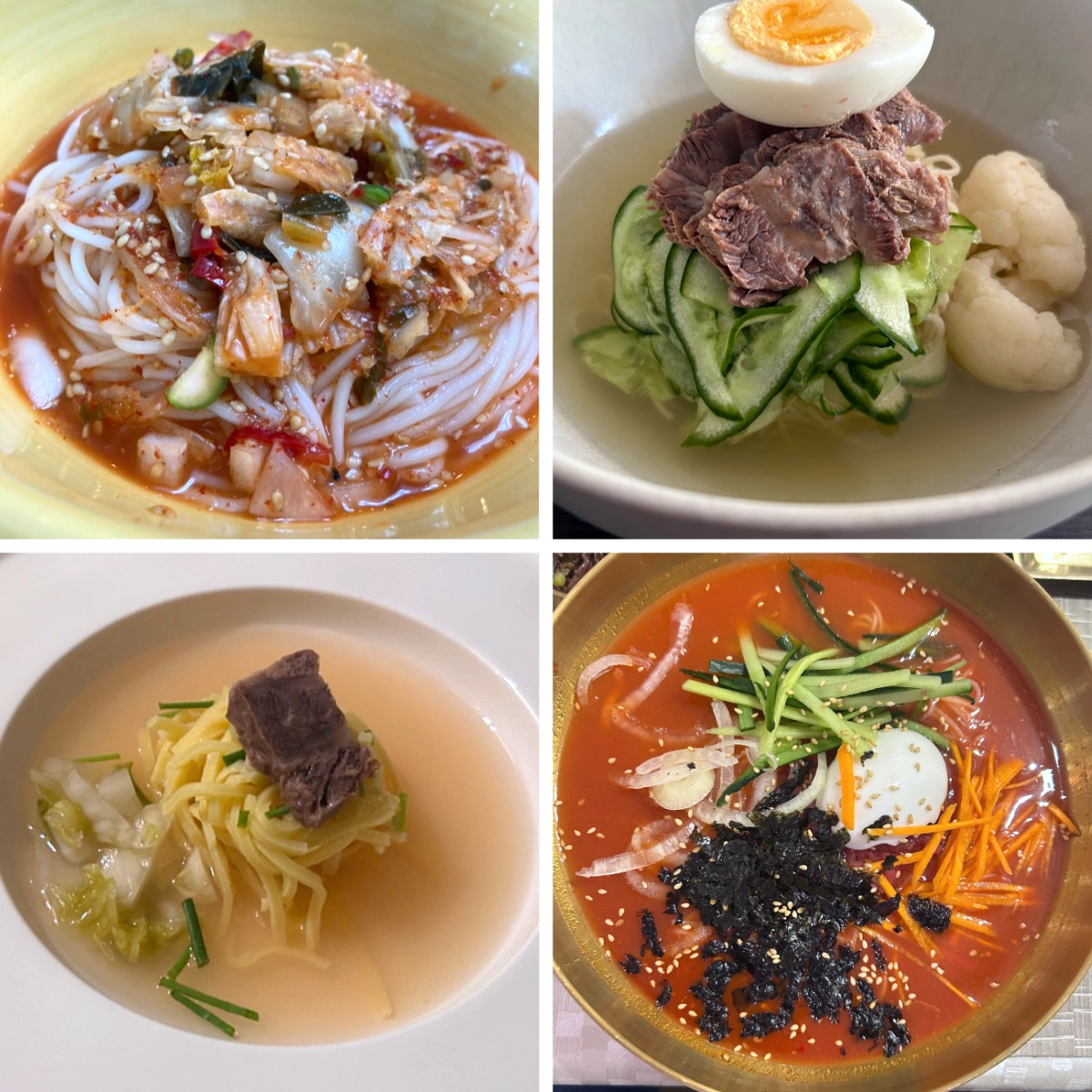
Four bowls of Korean cold noodles: spicy kimchi broth noodles, clear beef broth mul-naengmyeon with cucumber and egg, a light dongchimi-style broth with noodles and beef, and a red chilled noodle soup topped with vegetables and seaweed.
Cold noodle dishes built on broth: kimchi-based noodles where the liquid carries the flavor. Photo by the author

Fermentation intensifies further in the southern regions. There, kimchi is often seasoned more heavily with jeotgal (젓갈) and gochugaru (고춧가루), developing a deeper, saltier, and more pungent character as it matures.

These are flavors Koreans learn early, before questioning them. They are familiar but not mild. To someone encountering them for the first time, the smell can feel excessive, even unsettling. What feels natural to one person may feel overwhelming to another. The unfamiliarity I felt tasting cumin may not be different from what someone else feels when encountering jeotgal or mukeunji (묵은지) for the first time. What I experienced as intrusion, they might experience as home.

When Flavor Feels Like Intrusion

I remember hearing this firsthand while traveling in Chile. A tour guide told me that many Chileans dislike garlic. I struggled to understand. Garlic forms the backbone of Korean cooking. It is not something I notice. It is simply there, inseparable from the food itself.

Yet Chilean cuisine follows a different logic. The flavors felt quieter to me, less aggressive, more restrained. What feels essential in one country can feel excessive in another.

In Vietnam and Thailand, intensity comes not from fermentation or dried spices but from freshness. Herbs like cilantro, Thai basil, and sawtooth herb are used in handfuls, not sparingly. They are not garnish but structure. Their presence defines the dish. What feels overwhelming to me feels necessary to them.

Collage of Vietnamese dishes featuring plates of fresh herbs alongside soups, rice noodles, grilled meats, spring rolls, and dipping sauces on wooden tables.
Bowls and platters built around fresh herbs. In Vietnamese cooking, mint, cilantro, and perilla are not garnish but structure. Photo by the author

Even small differences between similar herbs reveal how deeply taste is learned. An Indian friend once told me about her first trip to an American grocery store. She bought what she thought was cilantro, only to realize after tasting it that it was parsley. Confused, she wondered what kind of cilantro it was, because it tasted wrong. She had grown up with cilantro as a constant presence. Parsley, though visually similar, belonged to a different flavor system entirely.

Not Mine

I still remove cilantro from my food. That has not changed. But I no longer see it as a flaw in the dish or a mistake.

It is simply not mine.

It belongs to a different system of taste, shaped by geography, history, and expectation. What tastes like soap to me tastes like freshness to someone else. And perhaps somewhere, the smell of aged kimchi carries the same distance for someone else.