Shared Flavors , Shared Memories
Sikgu: Mouths That Eat Together
In Korean, the word for family and the word for eating together are the same. This is a story about what that means and how a table becomes a relationship.
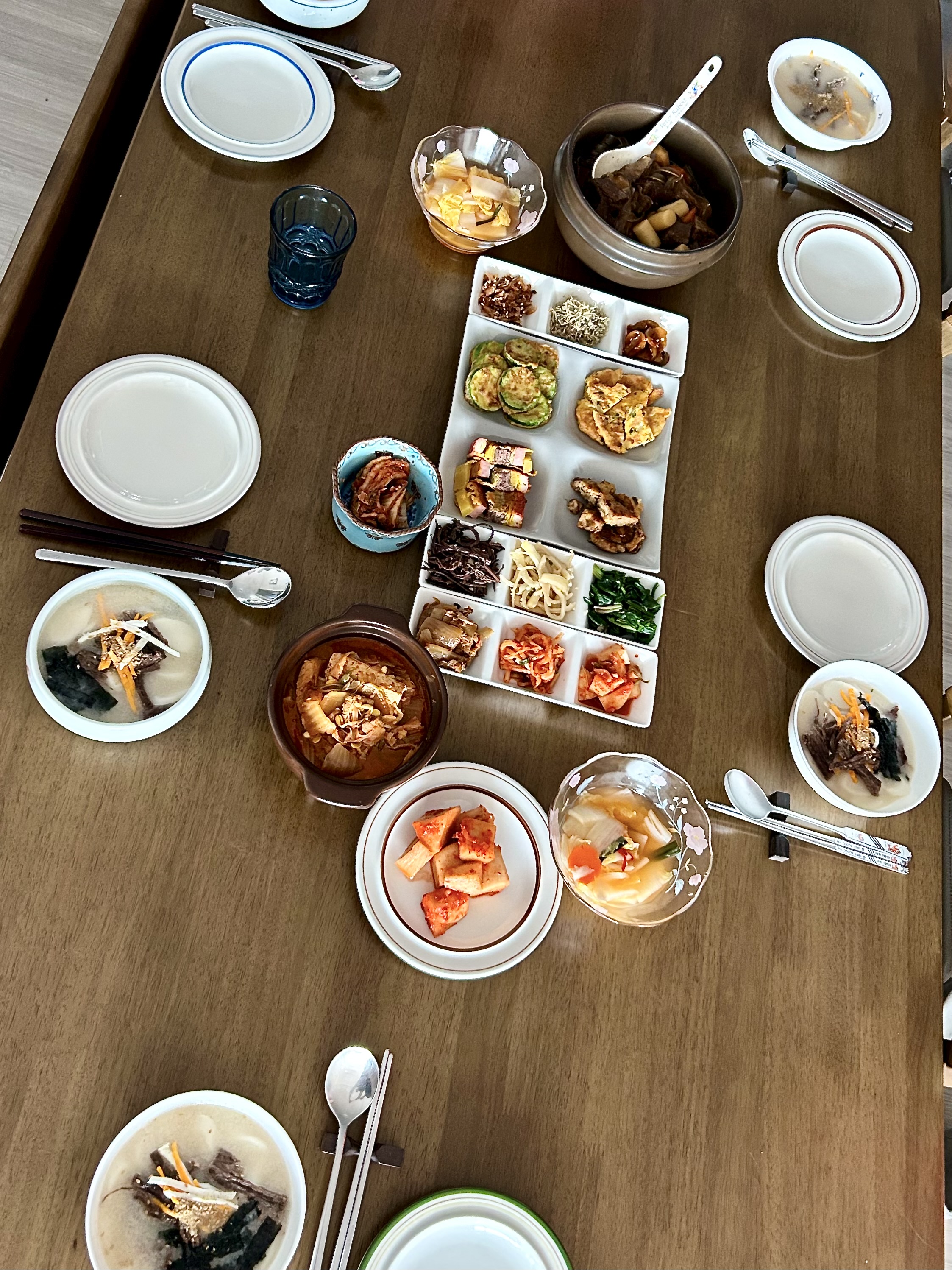
In Korean, the word for family and the word for eating together are the same. This is a story about what that means and how a table becomes a relationship.

In Korean, there is a word for the people you eat with: sikgu (식구, 食口). It literally means "mouths that eat together." It's the same word used for family. Not the family you're born into, necessarily, it's the family you feed. The people whose mouths share your table. In Korean, to eat together is to belong together. The two are the same act.
I think about this word whenever I return to Korea.
The thing I look forward to most is jipbap (집밥), home-cooked meals. Waking up to the sound of rice finishing its cook and the smell of doenjangjjigae (된장찌개) is enough to reassure me that I'm home. What awaits in the kitchen is a table filled edge to edge. Rice, a soup or stew, and an array of banchan (반찬). Nothing waits its turn. Everything arrives at once, hansang charim (한상차림), meaning "a full table setting". There's even a saying: sangdariga bureojige charyeotda (상다리가 부러지게 차렸다), meaning "the table is so full the legs might break." But the abundance isn't excess. It's the architecture of sharing. A Korean table is set this way so that everyone can reach into the same dishes, the same jjigae, the same banchan, the same kimchi. The fullness exists because the meal is designed to be eaten together. You can't be sikgu at an empty table.

That's why the physical act of sharing is so specific. Families dip into the same pot of jjigae, pick from the same banchan. Sometimes someone makes ssam (쌈), a lettuce wrap with meat and rice, and places it directly into another person's mouth. In English, we might call this "family-style." In Korean, the concept runs deeper. You don't just eat the same food. You eat from the same source. The act of reaching into the same dish is what makes you sikgu.
When I was young, Sundays were for meal prep. My mom worked all week, but she spent Sundays cooking banchan in batches, enough to fill the fridge for the days ahead. That way, no matter how busy the week got, dinner could be assembled in minutes. Warm rice from the baptong. A few banchan from the fridge. Leftover jjigae or guk reheated on the stove. And kimchi...always kimchi. It was always there, like the rice itself.
She did all of that so we could still sit down together on a Wednesday night. The prep wasn't the point. The table was. Even when she wasn't home, the system held. The banchan was there. The rice was there. We could feed ourselves and still feel fed, not just with food, but with the care she had built into the fridge days earlier. On lazy nights, all it took was mixing whatever was left into bibimbap (비빔밥). Bibimbap isn't about creating something new. It's about using what's already there. Even a meal of leftovers can feel complete.
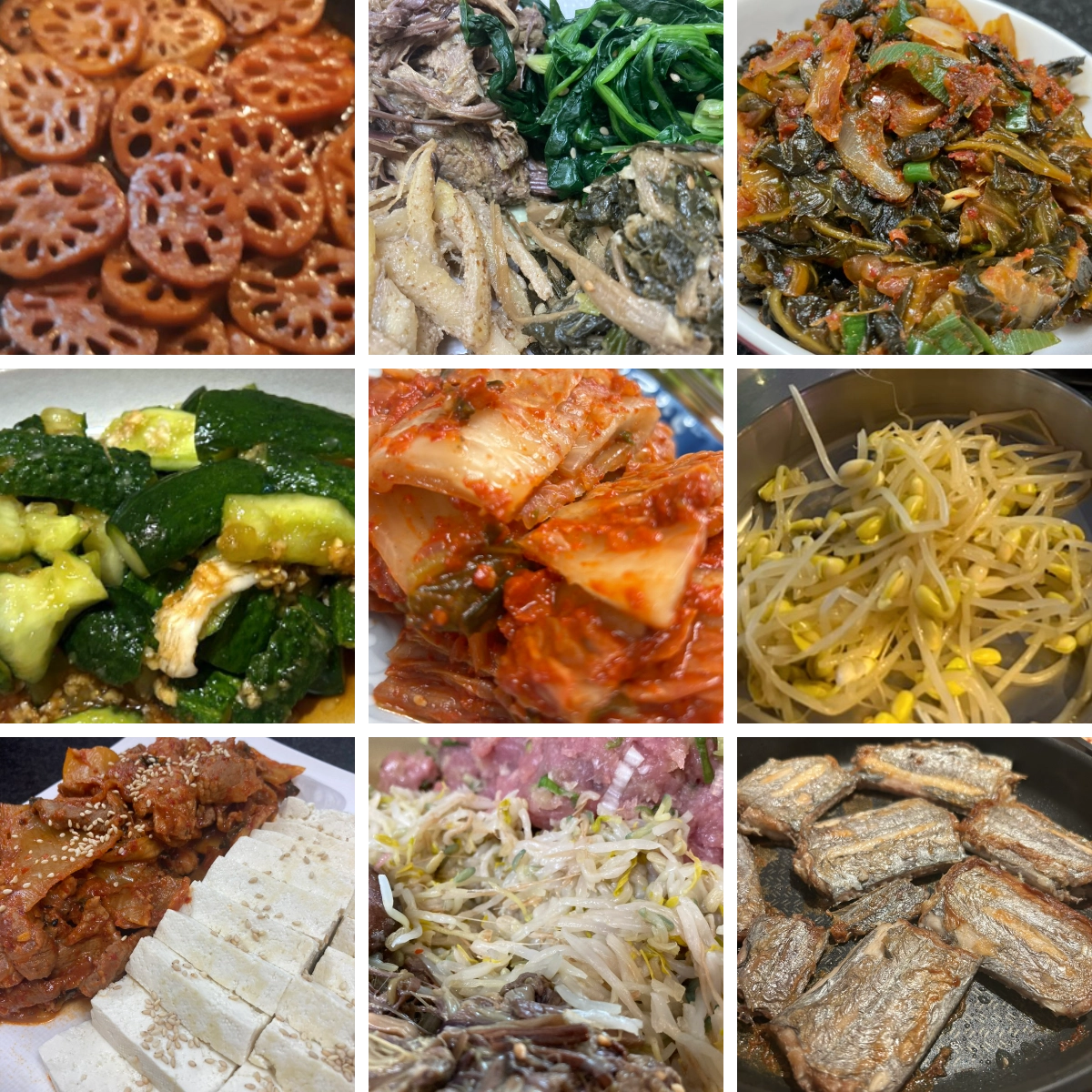
That same logic that banchan always being present, always completing the meal, extends into restaurants. Every Korean meal comes with banchan, plentiful and refillable. Run out, and you ask for more. Sometimes the server brings an extra dish on the house, a gesture known as seobiseu (서비스). These small acts are rooted in jeong (정), the quiet warmth that connects people. The restaurant becomes a kind of sikgu too, a place where you're taken care of, even by strangers.
Lately, I've noticed a shift. Some places now charge for kimchi. It's a small change, but it makes me wonder what gets lost when generosity becomes transactional. When the table stops being abundant, does the feeling of sikgu shrink too?
Maybe that's why, wherever I travel, I look for a Korean restaurant. It's not just the food. It's that familiar feeling of being taken care of. Of being sikgu, even far from home.
There's an old saying: "We only need another spoon." It means there's always room for one more at the table. The abundance makes that possible. One more mouth can always eat.
I've felt this same spirit elsewhere. I've been invited to Thanksgiving dinners, Christmas lunches, welcomed into traditions not originally my own. Sharing those meals made me feel included. To give back, I began hosting New Year's breakfasts. In Korea, the year begins with tteokguk (떡국), rice cake soup. A meal that marks time not with celebration, but by eating together.
A table is where people meet, share, and recognize one another. And sometimes, all it takes to become sikgu is sitting down.