Shared Flavors , Shared Memories
From the North, Carried South
What began as a way to survive, a fermented dish made from unsold fish, became something carried across loss, war, and generations.

What began as a way to survive, a fermented dish made from unsold fish, became something carried across loss, war, and generations.

I ate these foods my whole life without knowing what they carried.
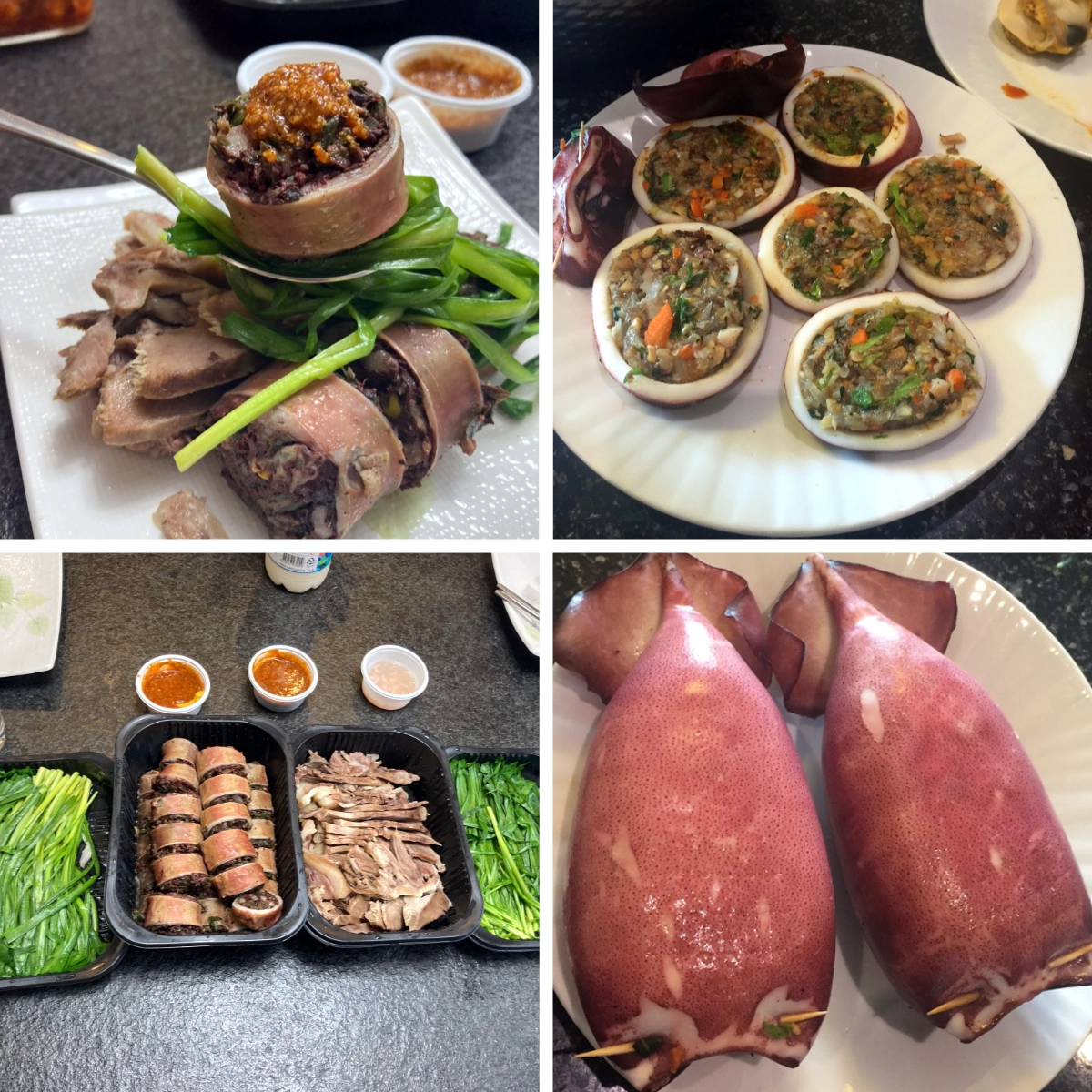
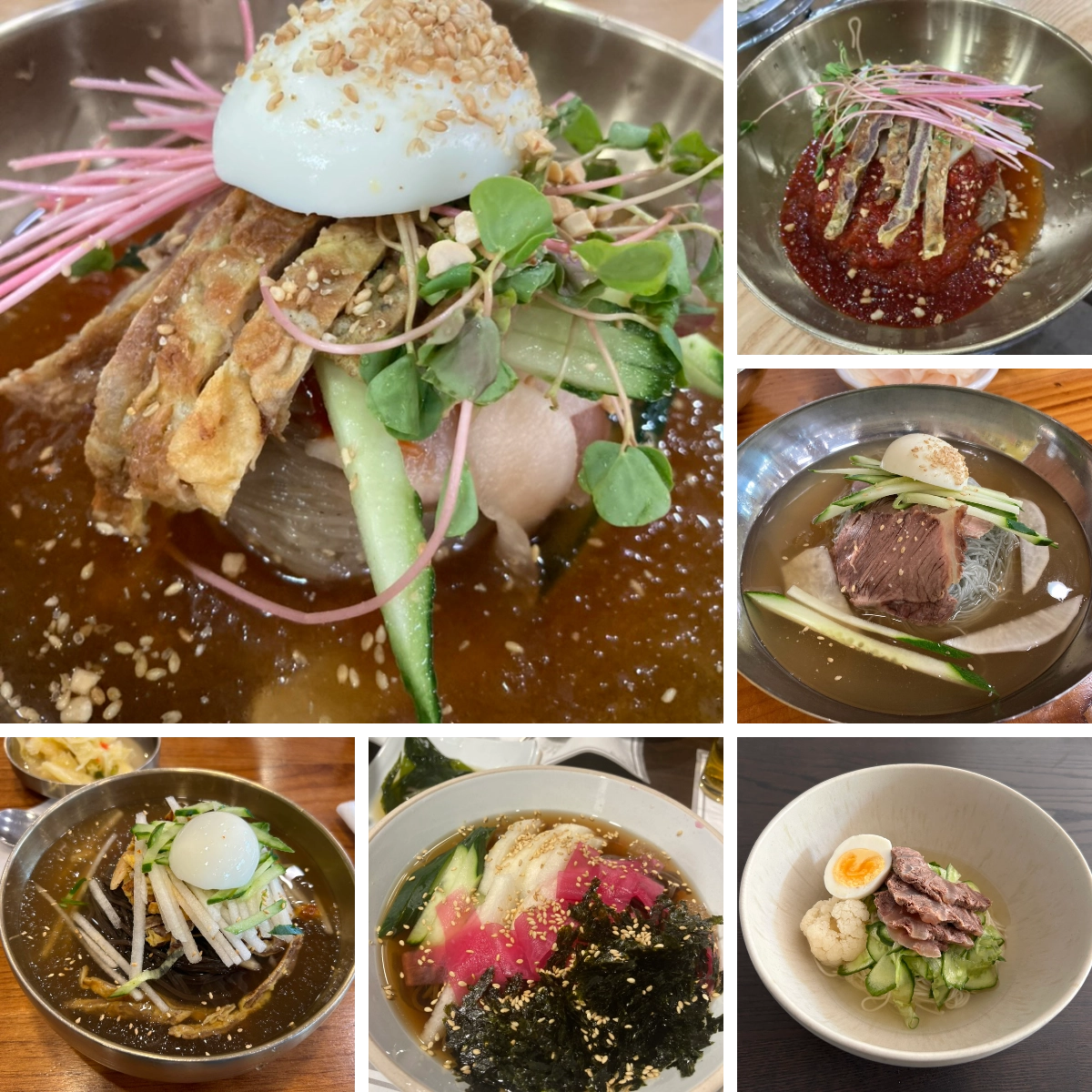
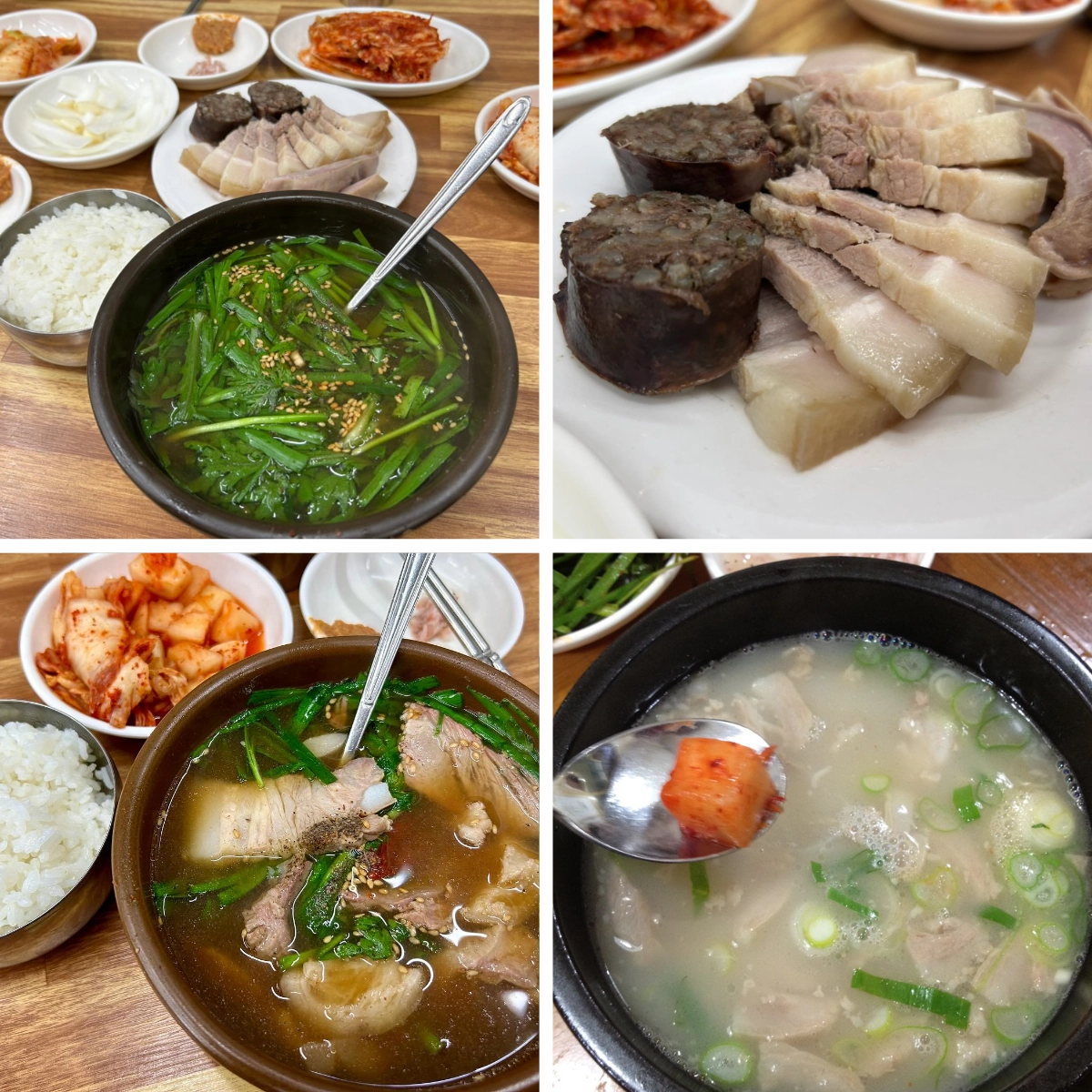
Ojingeo sundae (오징어순대), stuffed squid, was something I ate with my parents growing up. Naengmyeon (냉면), cold noodles in icy broth, was a summer ritual. Dwaeji-gukbap (돼지국밥), pork bone soup with rice, was the kind of meal that cost almost nothing and filled you completely. I thought they were just food. Everyday, ordinary, always there.
I first learned the story through a documentary about displaced families in Sokcho.
They called her sapse eomeoni (삽세 어머니) because she wandered the docks calling out "sapse," meaning "buy," as she tried to sell fish. When food was scarce, letting unsold fish spoil was unthinkable. So she began making sikhae (식해) with what she couldn't sell: a salty fermented side dish, most commonly made with flounder, gajami sikhae (가자미식해).
After fleeing the North during the Korean War, she had settled in a small fishing village in Sokcho, where she raised three children on her own. Making sikhae was first a way to survive. But it also became a way to hold on to something familiar from home.
As her son tells this story, his voice breaks. He cries remembering the hardship his mother carried, not only to feed her children, but to keep a piece of their lost home alive. Today, he is one of the few second-generation war refugees still continuing the tradition after his mother passed away.
Sikhae is a traditional fermented dish from Hamgyeong-do, in what is now North Korea. After the war, many refugees from the region settled in Sokcho, forming a small community known as Abai Maeul. Close enough to the border to see what they could never return to.
There is a name for this kind of cooking: silhyangmin eumsik (실향민 음식). Food made by people who lost not just their hometown, but the possibility of return.
Alongside sikhae, dishes like abai sundae (아바이순대) emerged in these refugee communities, and variations like ojingeo sundae, which used squid instead of the traditional casing. These weren't inventions. They were adaptations, familiar techniques rebuilt with whatever was available in the South.
The same pattern repeated across the country. People moved South. Refugees poured into Busan, the last city still standing.
Milmyeon (밀면), a cold noodle dish now beloved in Busan, was born when refugees replaced scarce buckwheat with wheat flour from American relief supplies. Its chewy texture and rich broth reflect both necessity and adaptation.
Dwaeji-gukbap emerged the same way, refugees drawing on techniques from northern soups like seolleongtang, but substituting pork bones discarded by U.S. military kitchens for scarce beef. Warm, filling, affordable. Like budae-jjigae (부대찌개), it began as necessity and stayed because people kept eating it.
These dishes spread because they were cheap and satisfying. Over time, the urgency that shaped them faded. People ate them simply because they tasted good.
But for the families who first made them, these dishes were never just practical. Cooking familiar food with unfamiliar ingredients was a way to stay connected to a place they could no longer return to.
That is what silhyangmin eumsik carries. Not nostalgia. Evidence of endurance. I ate ojingeo sundae as a child without knowing it traced back to Hamgyeong-do. I slurped naengmyeon without knowing the noodles followed refugees south. Many of us eat these dishes every day, unaware of their origins. That, too, is part of how food survives, by becoming so ordinary that no one thinks to ask where it came from.
Now I ask.