Shared Flavors , Shared Memories
What Kind of Kimchi Am I?
From Hungary to the Netherlands, making kimchi with local ingredients became less about copying tradition and more about creating a version that felt truly my own.

From Hungary to the Netherlands, making kimchi with local ingredients became less about copying tradition and more about creating a version that felt truly my own.

One of my mother's biggest concerns when I moved abroad was this:
"What will you do without good kimchi?"
She wasn't being dramatic. There's a Korean theme song that goes, "I can't live without kimchi, I really can't..." It's a little joke, but also not a joke at all. Koreans love kimchi so much we have an entire appliance dedicated to it: the kimchi fridge, designed to mimic the old tradition of storing kimchi underground in winter. I don't know exactly how the technology works. I just know that most Korean homes wouldn't be caught without one.
In the cities where I could find Korean brands, the problem was manageable. But in Hungary, it wasn't. Korean ingredients were hard to come by. So I started making my own.
The first thing I had to let go of was the idea that kimchi meant one thing. The most widely known version is baechu-kimchi (배추김치), made with napa cabbage. But the word kimchi itself comes from dimchae (딤채), meaning "submerged vegetables." It began not as a fixed recipe but as a way of preserving whatever you had. Salt, and vegetables sturdy enough to stay crisp. That's the foundation. Everything else is adaptation.
Once I understood kimchi as a method rather than a recipe, finding substitutes felt natural.
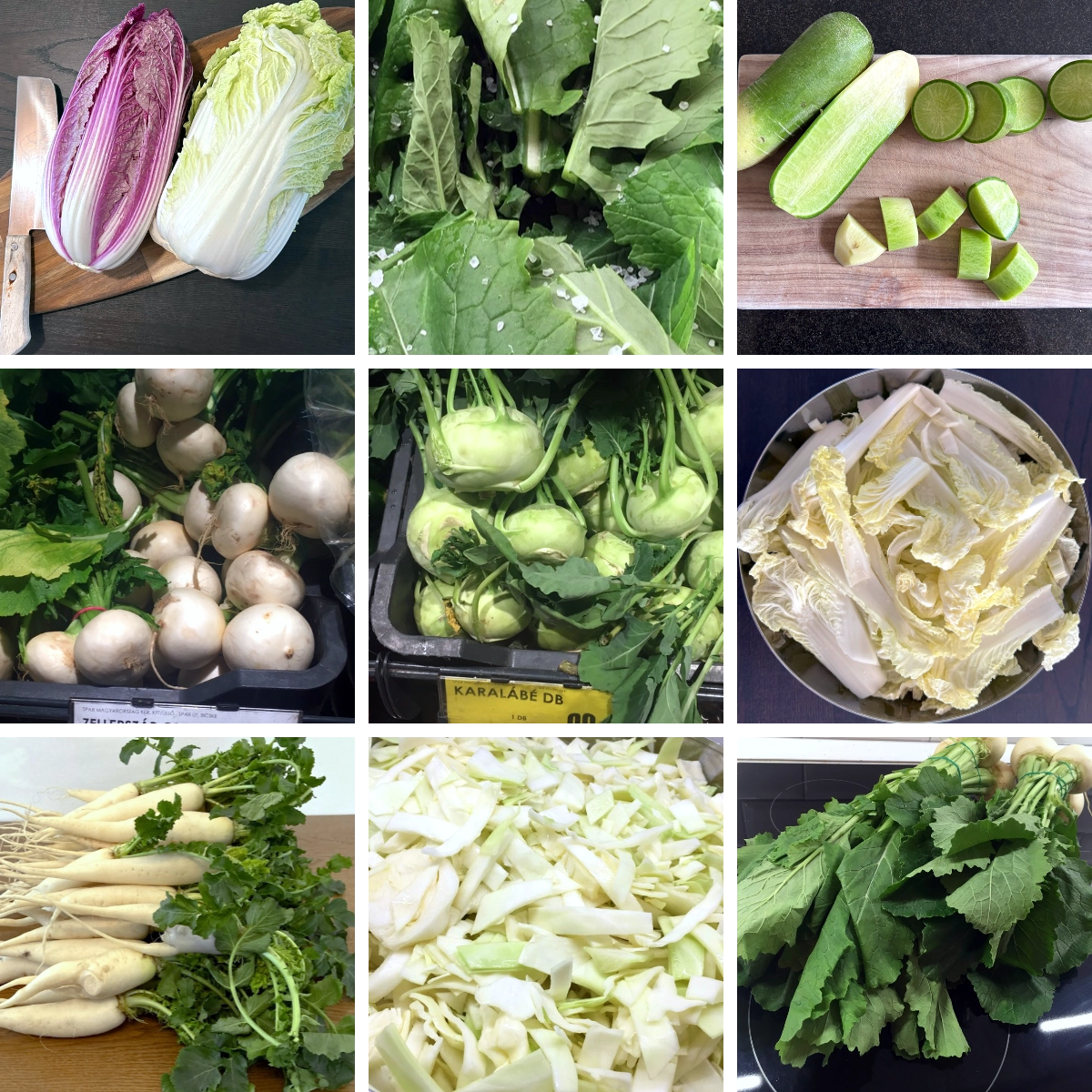
At the open-air markets in The Hague, I encountered radishes I had never seen before. I didn't know their names at first. Through trial and error, I learned which ones held up to salting and which collapsed. Some turned out surprisingly well.
The harder question was heat. Gochugaru (고춧가루), coarsely ground red pepper, is the defining ingredient in the kimchi most people recognize. In Hungary, paprika is everywhere, but it's finely ground. Wrong texture. I found that mixing Hungarian paprika with crushed red pepper flakes came close. Later, my mother-in-law found a Hungarian-made paprika blend created specifically for kimchi. A sign that the dish was gaining fans far beyond Korea.
In the Netherlands, I kept adapting. I mixed local peppers with chili flakes from Turkish and Moroccan shops. Not traditional, but close enough to evoke the heat I craved. And then I discovered pul biber from Türkiye, remarkably similar to gochugaru. Different origin, same purpose.
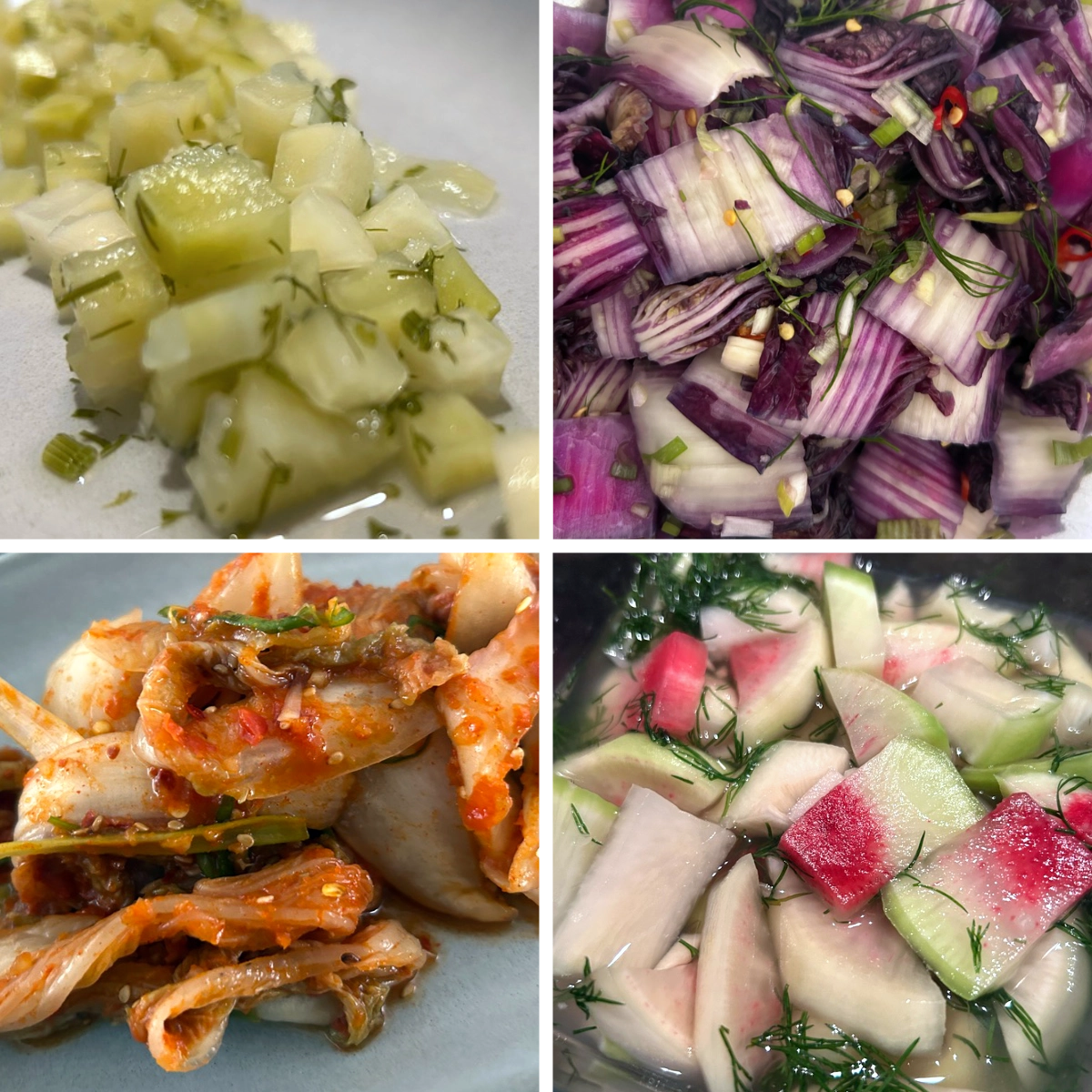
Not all vegetables welcome red. Green radish, red cabbage, the color of gochugaru clashes. For these, I skip it entirely and lean on other things instead. Dill, inspired by pickles. Green chili for brightness.
Fish sauce was another negotiation. Korean varieties range from clear filtered sauce to unfiltered anchovy brine. In a pinch, I've used Thai or Vietnamese fish sauce, different, but layered enough to carry the spirit. For vegan friends, I skip it entirely and build gamchilmat (감칠맛), what the Japanese call umami, from dasima (다시마) and mushroom broth, ground tomatoes, sweet paprika, dates, sometimes persimmon.
Each substitution moved me further from what I grew up with. And each one taught me something.
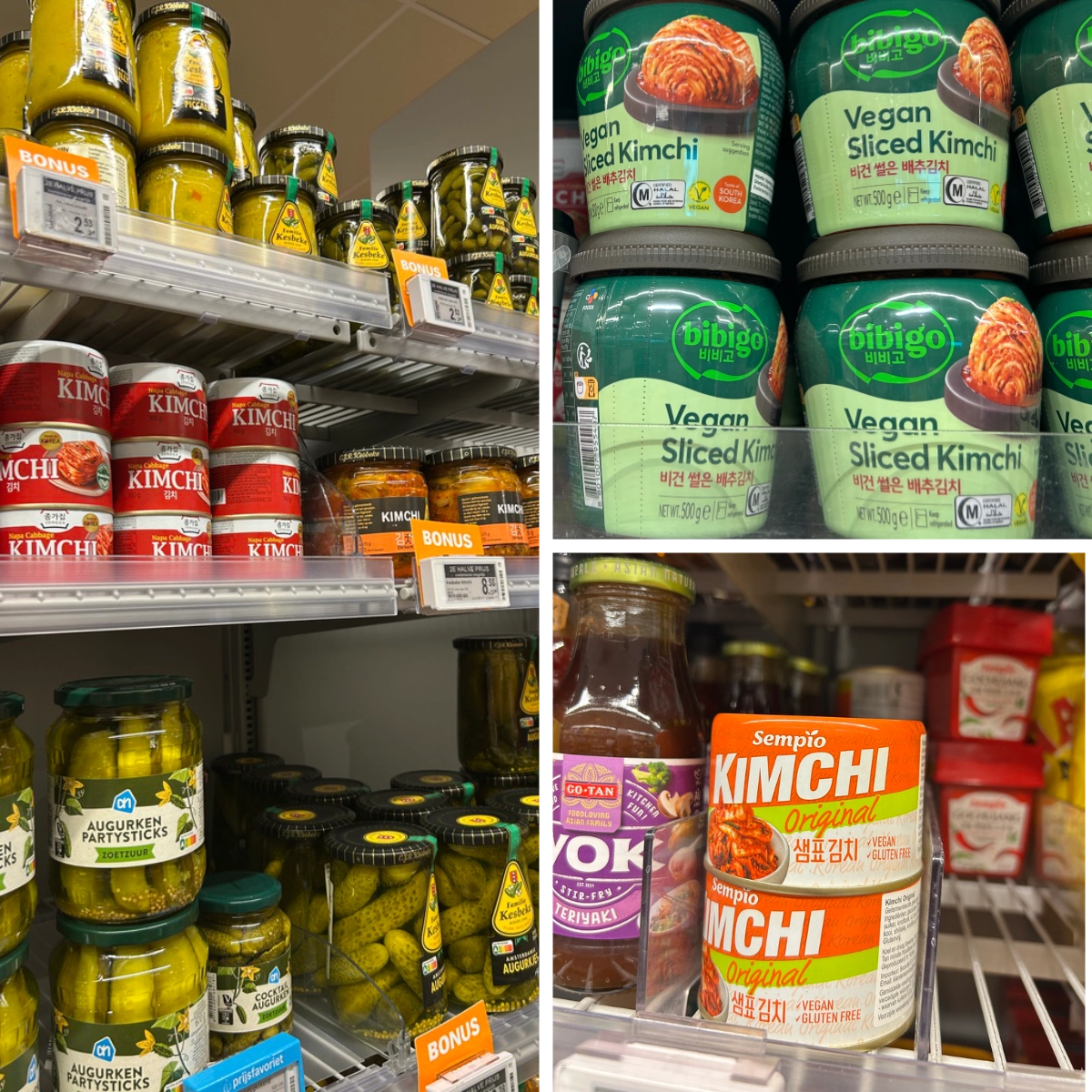
Lately, I've seen more non-Korean brands of kimchi in mainstream stores. Albert Heijn, Jumbo, ALDI, even boutique grocers. They're chopped like coleslaw, sometimes sweet, sometimes mild. Definitely not what you'd find in a Korean household.
But are they kimchi? Yes.
Are they good? Also yes. They're different, and still valid.
I've experimented with countless variations trying to recreate the taste I remember from childhood. I eventually realized that not only was that impossible, but I had ended up creating my own kind. It's not exactly Korean-style kimchi anymore. Could I call it Hungarian kimchi? Dutch? Or maybe there's no need to name it by nation at all.
Maybe it's just mine. The kimchi I call my own.