Shared Flavors , Shared Memories
Cuckoo Has Made Rice
My mom sent me a rice cooker without asking. It talks, it sings, and it tells me to stir the rice, exactly the way she used to.
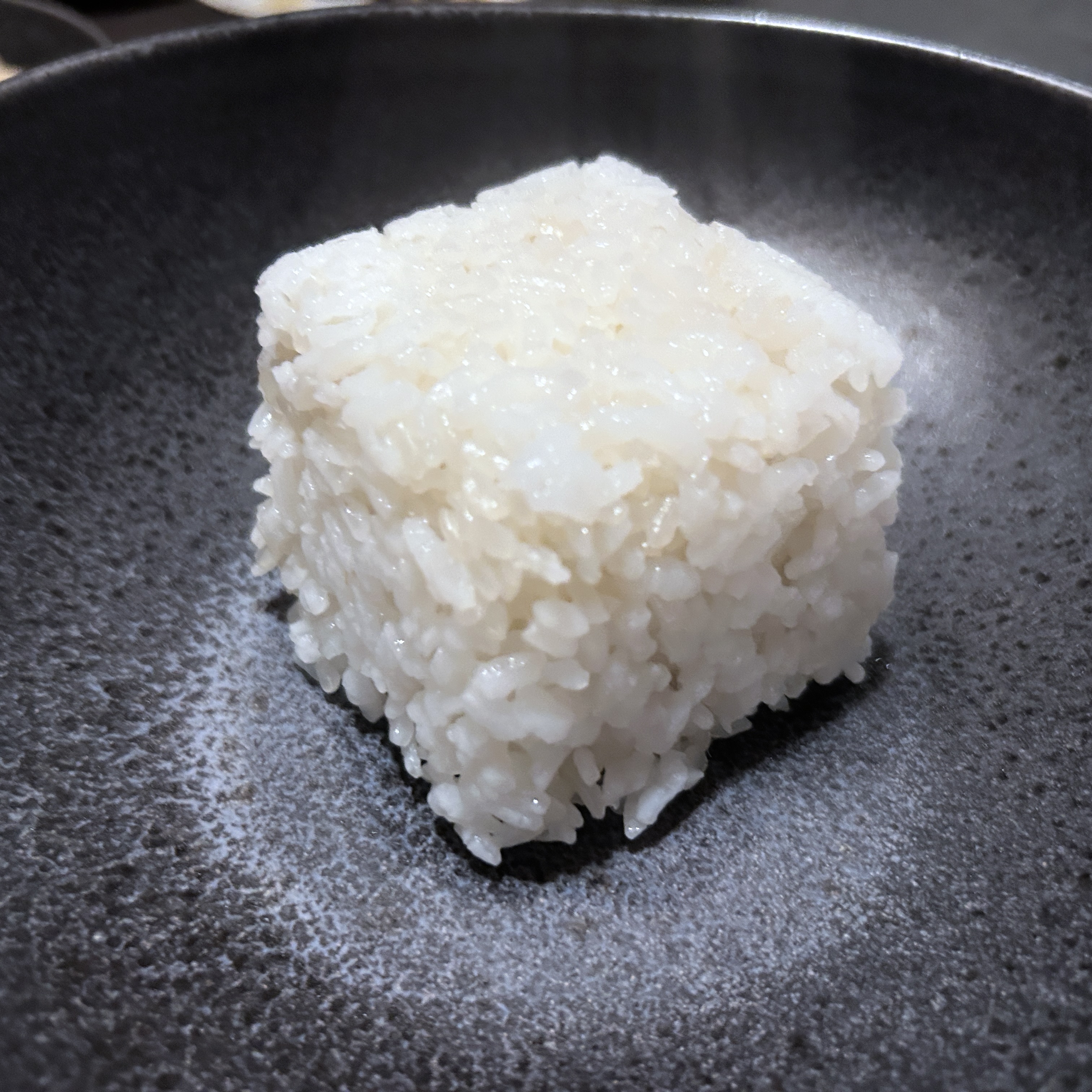
My mom sent me a rice cooker without asking. It talks, it sings, and it tells me to stir the rice, exactly the way she used to.

In my early days living in Hungary, my mom called to make an announcement. There was no discussion. That is how she is sometimes. Once she decides something, she goes all in. In her mind, I think Hungary felt even farther away than the US, a country she knew little about before I moved there. She asked the questions she always asks: “What do you eat these days? Bread? How do you live without rice? Are you even cooking it properly?” Then she got to the real reason for the call. “There’s not much I can do for you, but at least I want to buy you a rice cooker… By the way, I already bought one.” She said it like I had no say in the matter. It might already have been on its way while we were still talking.
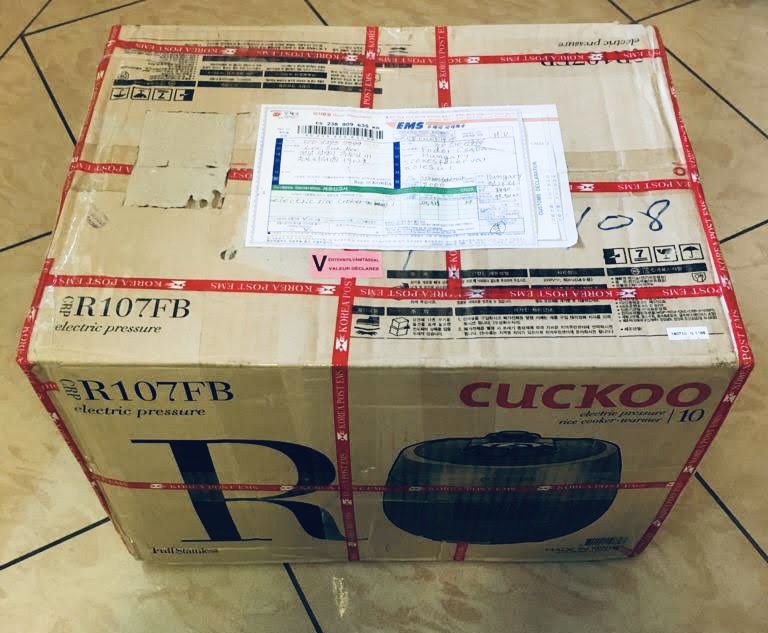
A few days later, it showed up at our door in a huge box, with a picture of the rice cooker printed on the outside. It was wrapped in EMS tape, the shipping slip still attached, her name and address written in her hand. It was my mom. She had really sent it. She had sent the whole thing in its original packaging, probably to protect it. It was heavy, big enough for ten servings, at least that is what the box said. That is how my mom does things. She does not go halfway. It probably was not cheap either, especially with the shipping. She was determined to send this machine, to make sure I had proper rice, and then some. She was flexing.
It was supposed to make better rice by heating the water beyond its normal boiling point, something about breaking down the starch to make it extra sticky. And it actually did taste better. When it finished cooking, it released steam, almost like a train pulling into a station. Then it spoke in Korean and sang its little tune: “Cuckoo has made rice, please stir it well, Cuckoo.”
My mom used to give me that exact task growing up, stirring the rice at the end. It feels as if she sent a small piece of herself along with the Cuckoo, one that gives me the same instruction. I never questioned why I had to stir the rice as soon as it finished cooking. I only understood when I forgot one day. My husband asked why I always did it. I told him it was like airing wine. You want the grains to breathe a little, so they do not clump together or cake. Each grain should still feel alive. Even the machine knows to ask for it.
Honestly, I have never used all its functions. It is not just a rice cooker. It can make samgyetang (삼계탕), nurungji (누룽지), and there is a manneungjjim (만능찜) setting that we use most often, my husband’s favorite, for beef stew simmered with a little red wine and paprika. My husband puts it simply: we do not need to do anything. Cuckoo does all the work.
Koreans call this kind of machine a baptong (밥통), literally a rice container. The word can also mean a stomach, the place rice goes. Teasingly, it can be used for someone who seems to have more appetite than thought, someone a little slow. I always thought that was unfair. A baptong works hard only to feed you. In Korea, many people leave theirs on all day, every day, keeping the rice warm and ready whenever you are hungry. Add a few banchan from the fridge, and that is a full meal.
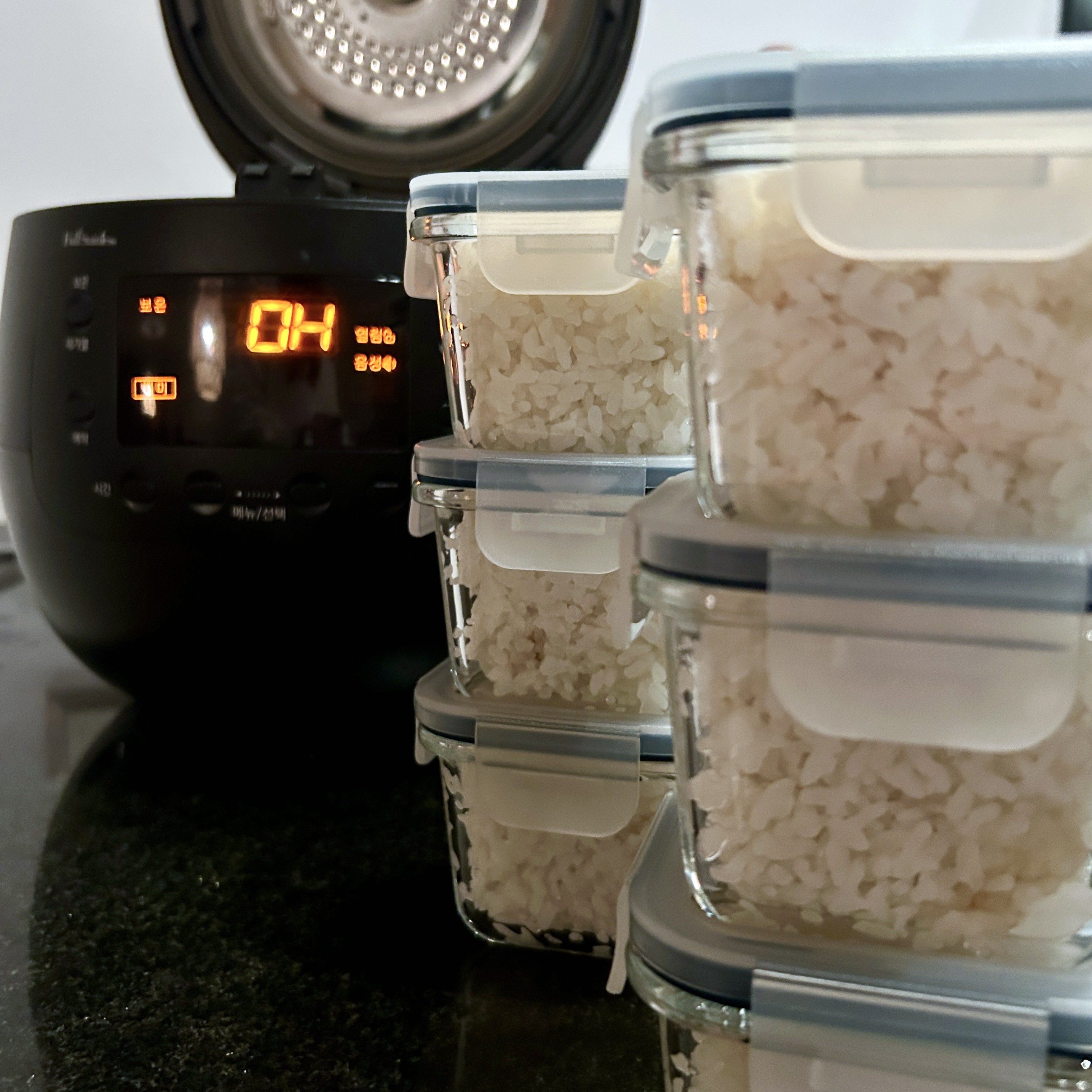
We do not use ours that way. I cook one batch, portion it out, and freeze it. Two minutes in the microwave, and it tastes freshly cooked again. Then I hide it away in a cabinet until the next time I need it. It ends up with a chanbap sinse (찬밥 신세), literally “the fate of cold rice,” an expression for being neglected or pushed aside. The irony is that a baptong exists only to keep rice warm.
But on the other side of the world, I have seen a pot of rice take center stage and receive applause. Pan-cooked, scorched, and flipped. It was my first real introduction to tahdig (تهدیگ), at my Iranian friend’s housewarming party. I arrived a little early. Cold mezze were already out on the table, with olives and drinks, people settling in. She had been cooking since morning, with pots and pans everywhere. But she said everything else was ready. We were just waiting on the rice. I remember us waiting patently. The rice had to cook low and slow so the bottom could form that crispy layer. When it was finally time, everyone gathered in that small open kitchen, holding their breath as they watched her flip the pot. The second it came free, the room erupted. Cheering, clapping, genuine excitement. It looked like a cake, with a golden-brown crunchy shell on the outside and saffron yellow showing through the cracks.
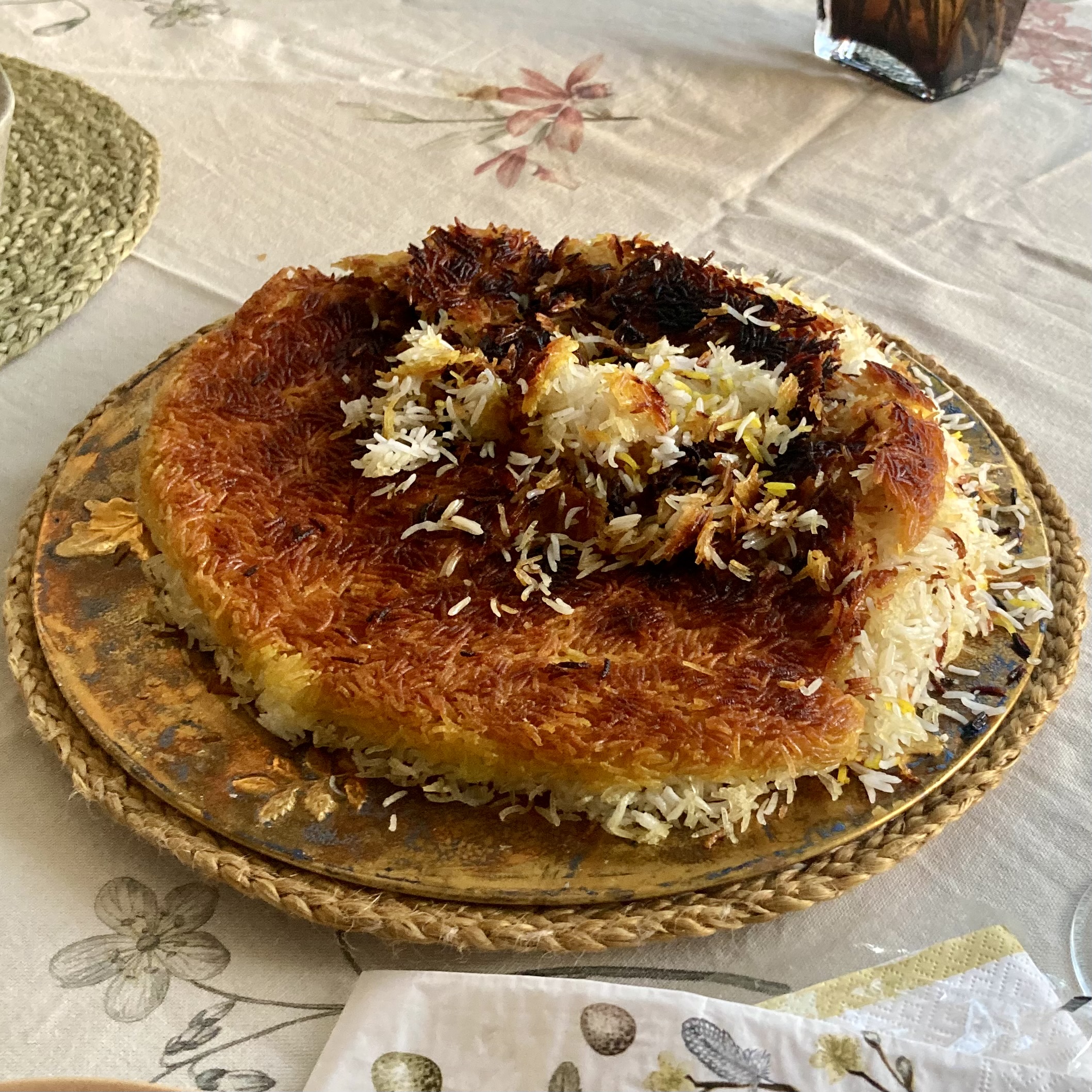
This was not actually the first time I had seen tahdig. Years earlier, in Austin, I was at a huge party thrown by an Iranian guy I knew then, in a packed apartment full of an international crowd. Someone said his mom had cooked. Then a pot of rice came through the crowd, held high in the air as people made room for it. It was flipped over onto a plate, the burnt bottom now on top. Everyone cheered. Back then, I thought it was just party energy.
That first crunchy bite at my friend’s housewarming party reminded me instantly of nurungji, the dried, crispy rice left at the bottom of the pot. When I was a child, we sometimes sprinkled sugar over it and ate it as a snack. You had to be careful, though. It could be hard enough to hurt your teeth. Now Cuckoo makes soft rice perfectly every time. Nurungji only happens if I choose its special function.
In older kitchens, that crispy layer formed on its own, whether you wanted it or not. Before gas stoves, rice was cooked in a gamasot (가마솥) over a wood fire. I imagine even more nurungji formed that way. By my parents’ generation, rice was cooked in a regular pot over a gas stove. I remember how happy my mom was when she brought home a German-made pressure cooker. It was supposed to cook rice better than the regular pot she had been using. But it made no difference to the rice at the bottom. German-made or not, the gas flame left behind that crisp, burnt layer.
We ate the soft rice first. Then my mom poured a little water into the pot and let the burnt rice boil while we finished our meal. By the time we were done, the sungnyung (숭늉) was ready: burnt rice softened in water. We had it as husik (후식), loosely translated as dessert. Not dessert in the Western sense, exactly, but something that clearly marked the end of the meal. Once electric rice cookers arrived in Korean kitchens, sungnyung stopped waiting at the end of the meal. That part of the meal has to be asked for now, and in many homes it is simply gone.
Growing up, my parents reminded me how hard farmers worked to grow rice, and that not a single grain should be wasted. At the end of a meal, I was taught to pour a little water into my bowl when a few grains were still stuck to the bottom or sides. Chopsticks alone could not reach every grain. I would let the water sit for a moment, then drink the rice-soaked water so nothing was left behind.
At my friend’s house, I saw how tahdig was celebrated, the thing everyone waited for. The rice is cooked low and slow with fat until the bottom turns crisp, making something that might otherwise be discarded into the most desirable part. As my friend explained later, it was also about not wasting a single grain. That way of thinking did not feel so different from the rice I grew up with.
Even to this day, I cannot leave even a few grains stuck to my plate. It just does not feel right. A fork and knife can still do the job.