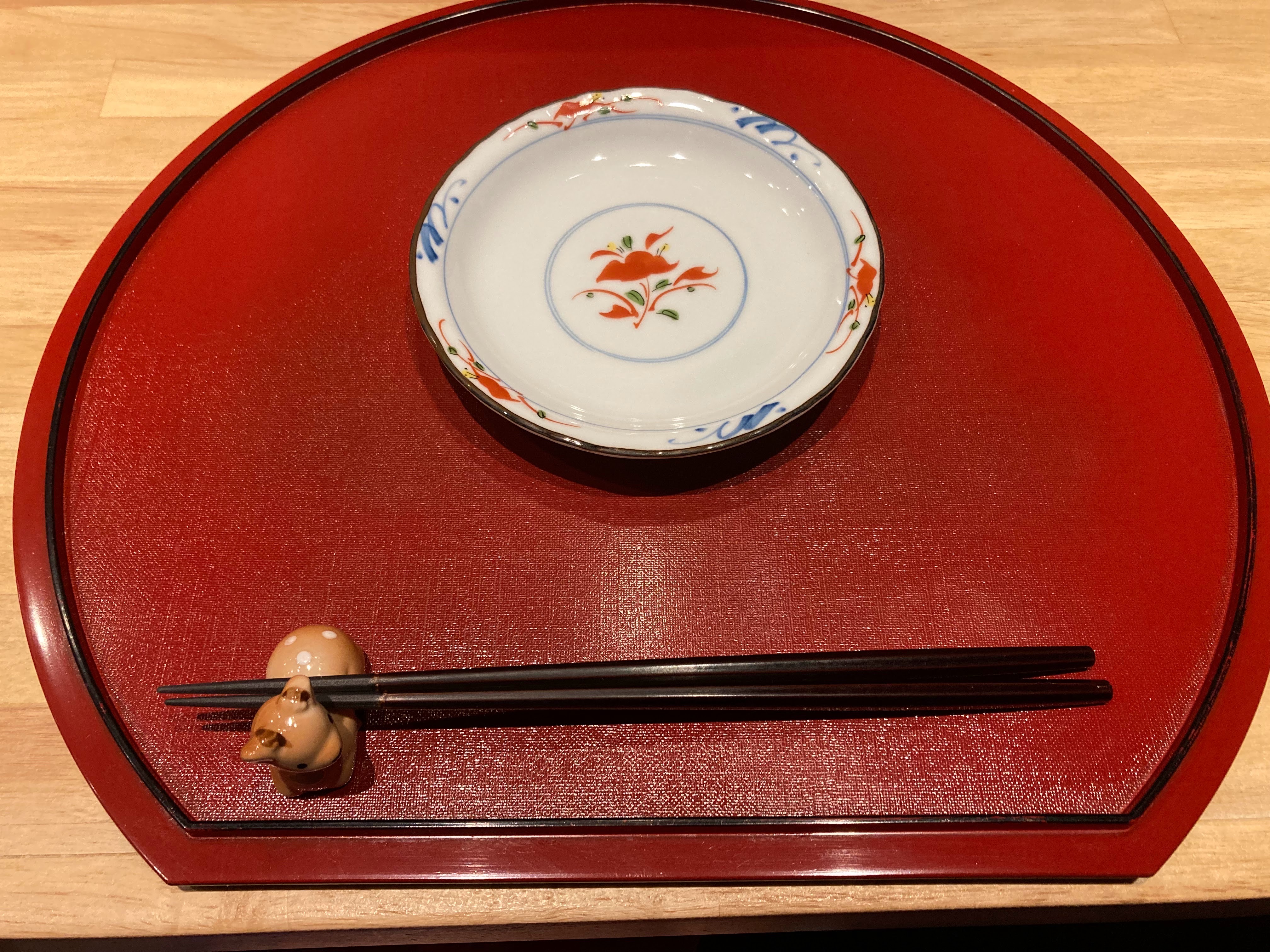
Growing up in Korea, table manners were something you practiced into your body. Chopsticks weren't instinctive; they were learned, through patience and repetition. I still remember a school challenge where we had to pick up a single piece of kongjaban (콩자반) with chopsticks and walk up and down the stairs without dropping it.
Beyond technique, there were rules you absorbed quietly. You didn't start eating before the eldest. In my house, that meant waiting for my father's first spoonful of soup. You didn't make noise while chewing. Before every meal, you said jal meokgetseumnida (잘 먹겠습니다); after, jal meogeotseumnida (잘 먹었습니다). Even utensils had their order: spoons for rice and soup, chopsticks for side dishes and never held in the same hand, never rested across a bowl.
These weren't just rules. They were lessons in respect, patience, and family hierarchy.
When our kitchens and friendships become borderless, the rules we grew up with don't always apply so neatly. I've encountered this most in mixed settings. A Korean meal served with Japanese-style miso soup, for instance. Do I use a spoon, as in Korea, or sip directly from the bowl, as in Japan? Either choice feels slightly off. Not wrong, exactly... just context-dependent. And I've found myself wondering: what even counts as correct here?
An Indian friend once shared a similar tension. As a child, she was sent to etiquette school to learn Western table manners. But when she later ate Indian food at home using a fork and knife, her mother stopped her: Why are you eating like that? That's not how we eat. My friend's response still makes me smile: But you told me to learn manners, and now you don't want me to use them?
The problem wasn't the fork. It was who gets to decide what proper looks like, and for which meal.
Traveling in France, I encountered a very different kind of dining lesson.
In Arles, I sat down for a chef's-choice dinner that stretched over three and a half hours. For someone used to eating in five minutes, often with my phone in one hand, it felt endless. Dish after dish arrived, punctuated by wine and long pauses. I grew tipsy, restless, and quietly impatient.
Across from me, a young family with two small children seemed perfectly at ease. They ate when the food arrived, then returned to coloring. No phones, no tablets... just crayons, conversation, and a patience I couldn't understand.
On my way back from the restroom, I stopped to tell the parents how impressed I was. The father smiled and admitted: "We're actually trying really hard."
That moment stayed with me. What looked effortless from the outside was something learned, practiced, held together by intention. Just like table manners. Just like patience.
Etiquette isn't fixed. When I was young, making noise at the table was unthinkable. Chewing loudly, slurping noodles. These were drilled out of us early as signs of poor manners. Then, sometime later, Korea gained a new word: myeonchigi (면치기), a term that praises slurping noodles loudly to show they're delicious.
Many trace this shift to the rise of meokbang (먹방), live-streamed eating shows that turned exaggerated bites and noisy slurps into entertainment. Some suggest the term was even influenced by Japan, where slurping has long been part of noodle culture. In Japanese, susuru (啜る or すする) means to slurp or sip, and when it comes to noodles, it isn't rude. It's practical and appreciative. It cools hot noodles and signals enjoyment to the cook.
That contrast still fascinates me. In Korea, slurping once meant bad manners. In Japan, it signals gratitude. And now, shaped by media and generational shifts, Korea has begun to reframe the sound of eating, from impolite to pleasurable.
What feels "right" at the table depends on where you are, and who you're with. The more I travel, the less I think of manners as something fixed, and the more I see them as a shared language. One that asks us to notice, adapt, and respect the table in front of us.