Shared Flavors , Shared Memories
Burping Kimchi in Champagne
I knew nothing about making champagne. But the moment I saw the airlock on the fermentation tank, I recognized it immediately. I do the same thing every morning with my kimchi.
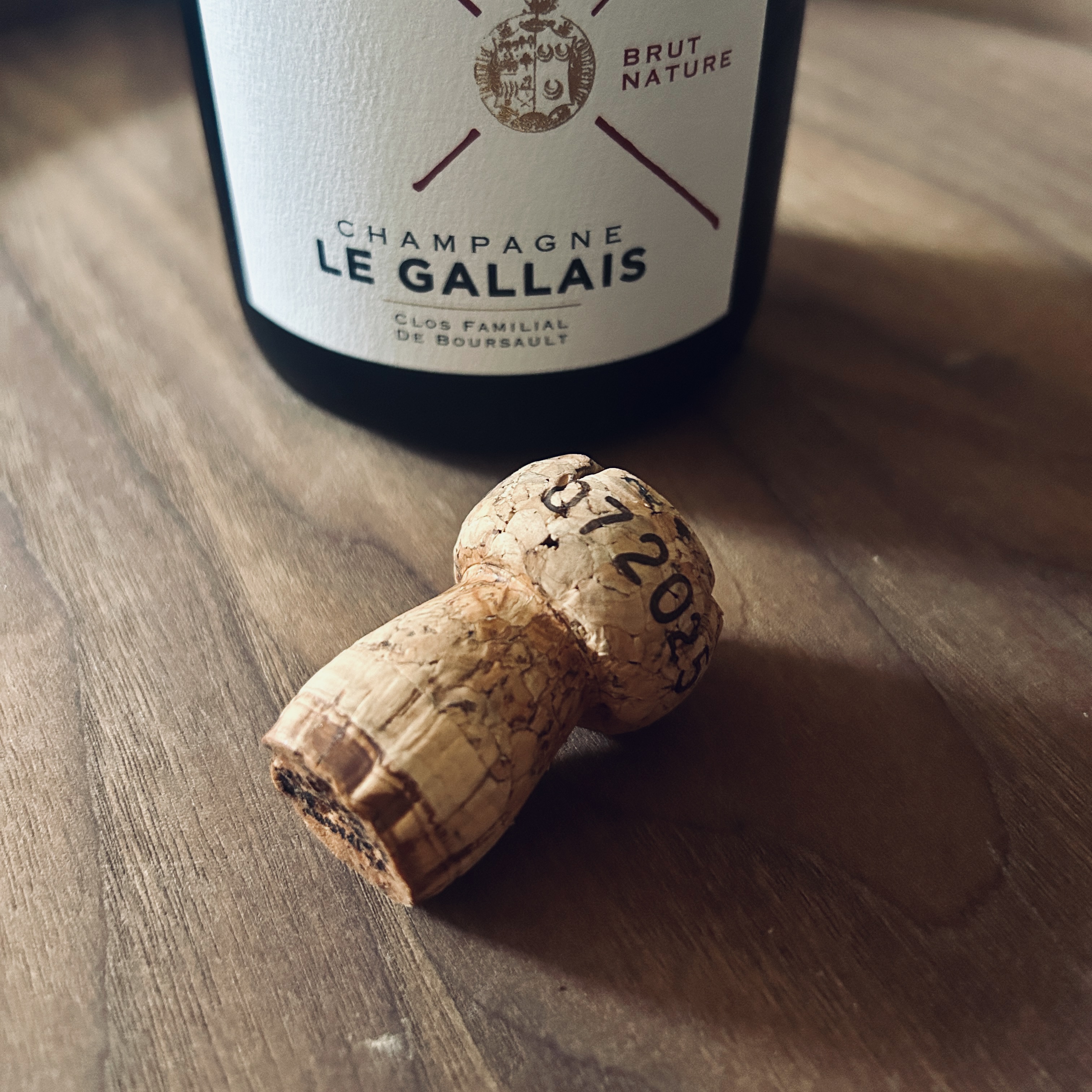
I knew nothing about making champagne. But the moment I saw the airlock on the fermentation tank, I recognized it immediately. I do the same thing every morning with my kimchi.

It was just before ten that morning when we arrived at our first stop of the tour, a small family champagne maker south of Reims. I could feel the air already warming up for the day. Stepping into the first fermentation room was a relief. Dozens of round, stainless steel tanks lined the walls, wide and tall, each topped with a small airlock and water trap. I knew nothing about making champagne, but I noticed it immediately. Yeast eating sugar in the grape juice, creating the gas that needs somewhere to go, so you give it a controlled exit. Our guide put it simply: Pac-Man eating sugar, letting out a fart. I am an expert at this. I call it burping my kimchi.
At home, there is a plastic container I use to make kimchi. It's a special one that has traveled with me across countries. There is a little insert inside that makes direct contact with the kimchi, separate from the outer lid, with a silicone rim around the edge to keep out oxygen. In summer, if the evening was warm, the morning will tell. The inner cover gets pushed upward as carbon dioxide builds up, trying to escape. I press it down, release the gas, close it again. Like burping a baby. Kimchi bubbles up, the volume increases as it ferments, so you have to leave room, especially in a jar. Otherwise you end up with something that looks like a murder scene in your kitchen. Red and bubbly. Experience cleaning up once and you will never want to repeat it.
When we arrived at the first champagne maker, Cécile, daughter of a winegrower from the hills south of Épernay, greeted us at the door and handed the key to our guide. Walking through the small family cellar where they kept decades-old bottles, probably too old and flat by now, still felt like moving through something: six generations of knowledge, through good times and hard ones, with pride carried forward underground. As we climbed back up from the cellar, we came across Cécile’s husband, David, hand-labeling bottles on a turntable, one by one. He was boxing up a custom order of sweet champagne for a private customer. When we asked if he liked it, he said no, without hesitation. I liked that honesty.
Passing rows of champagne bottles still fermenting upside down, our guide explained how high the pressure inside a bottle can be. With thicker glass and better corks, explosions are rare now, but they can still happen. I remember thinking: if the second fermentation happens inside the bottle that captures the fizz, did champagne as we know it even exist before thick glass bottles? Before I knew it, I was already asking the question. “Not for a while,” he said, “because regular wine bottles were too thin to hold that pressure.” He explained that yeast went dormant during cold winter, then reactivated as the weather warmed. Pressure built up, bottles kept exploding in every direction, people back then thought it was the work of the devil. And after many bottles arriving broken on the other side of the coast, the English began trying to capture the bubble like they did with beer and cider.
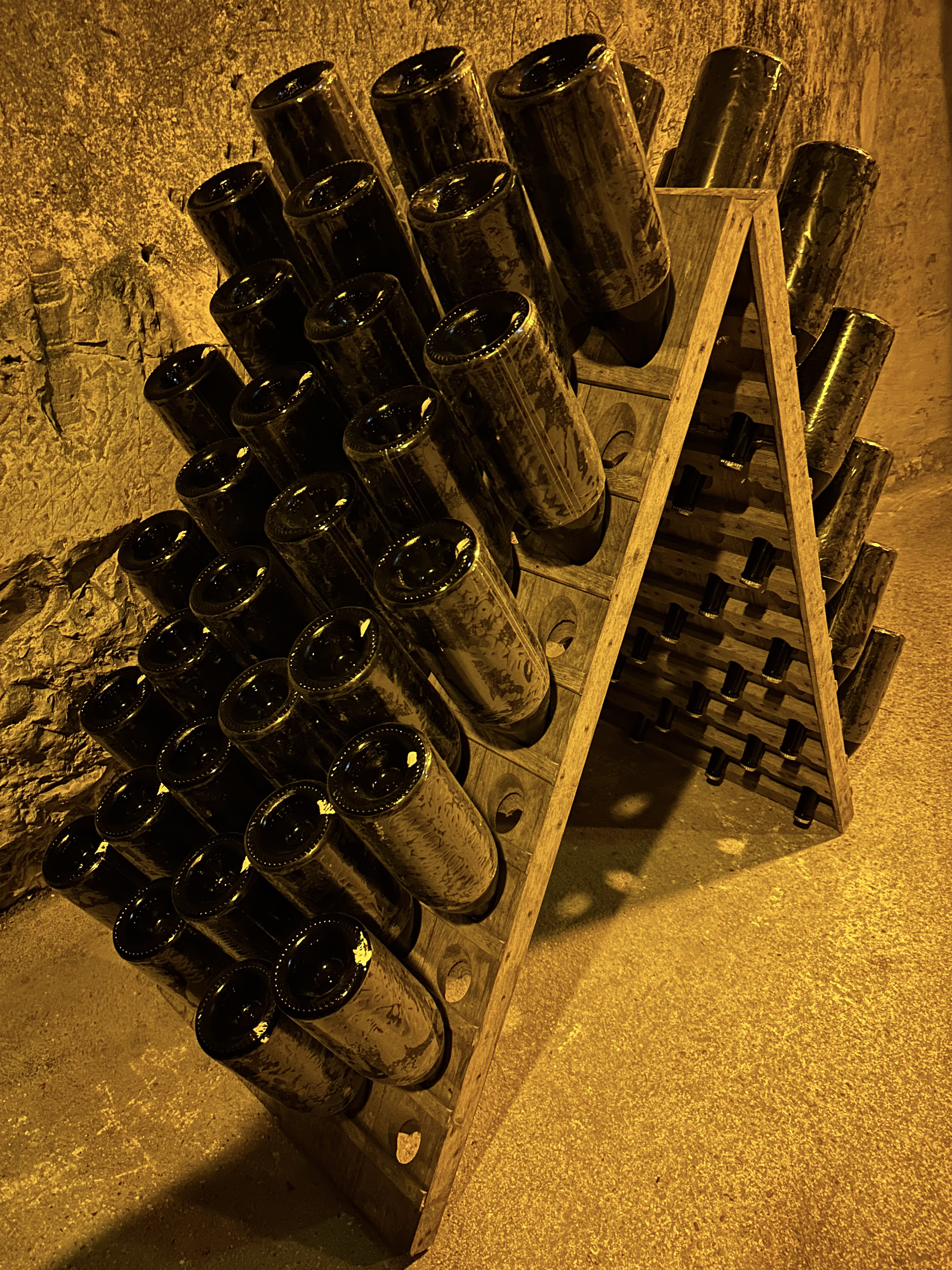
Imagining those bottles bursting on the way to England, I somehow thought of kimchi making its first journey to America and exploding halfway there, because the gas had nowhere to go. It could have been me. My mom once smuggled a plastic container full of kimchi into my suitcase without telling me. When my bag came around on the conveyor belt, I could already smell it. Lucky me. I rescued it just in time, before it exploded among everyone else’s luggage. These days, that kind of adventurous kimchi travel story is less common. Homemade kimchi made with love, tightly packaged with care, has likely been replaced with commercial kimchi made to travel safely, with a small packet tucked inside that reads, “Do Not Eat.”
I make most of my kimchi myself, except for a few kinds I can’t make here. Chonggak-kimchi (총각김치) is one of them, the one my mom once secretly packed to send me home with. As I got more serious about making kimchi at home, I thought it was time to commit properly: buy an onggi (옹기), the traditional ceramic jar used to store kimchi alongside ganjang and gochujang. It supposedly breathes through the clay itself, which matters for live food, something still fermenting, still active inside the jar. I may even dig a hole in the garden and bury one, the way people used to store kimjang-kimchi during the cold winter months back then. I’ve seen onggi buried in my grandparents’ backyard during kimjang, only the lids showing above the ground. When there was snow, you wouldn’t even know they were there. I still remember the kimchi that came out of those jars, so good and perfectly ripe.
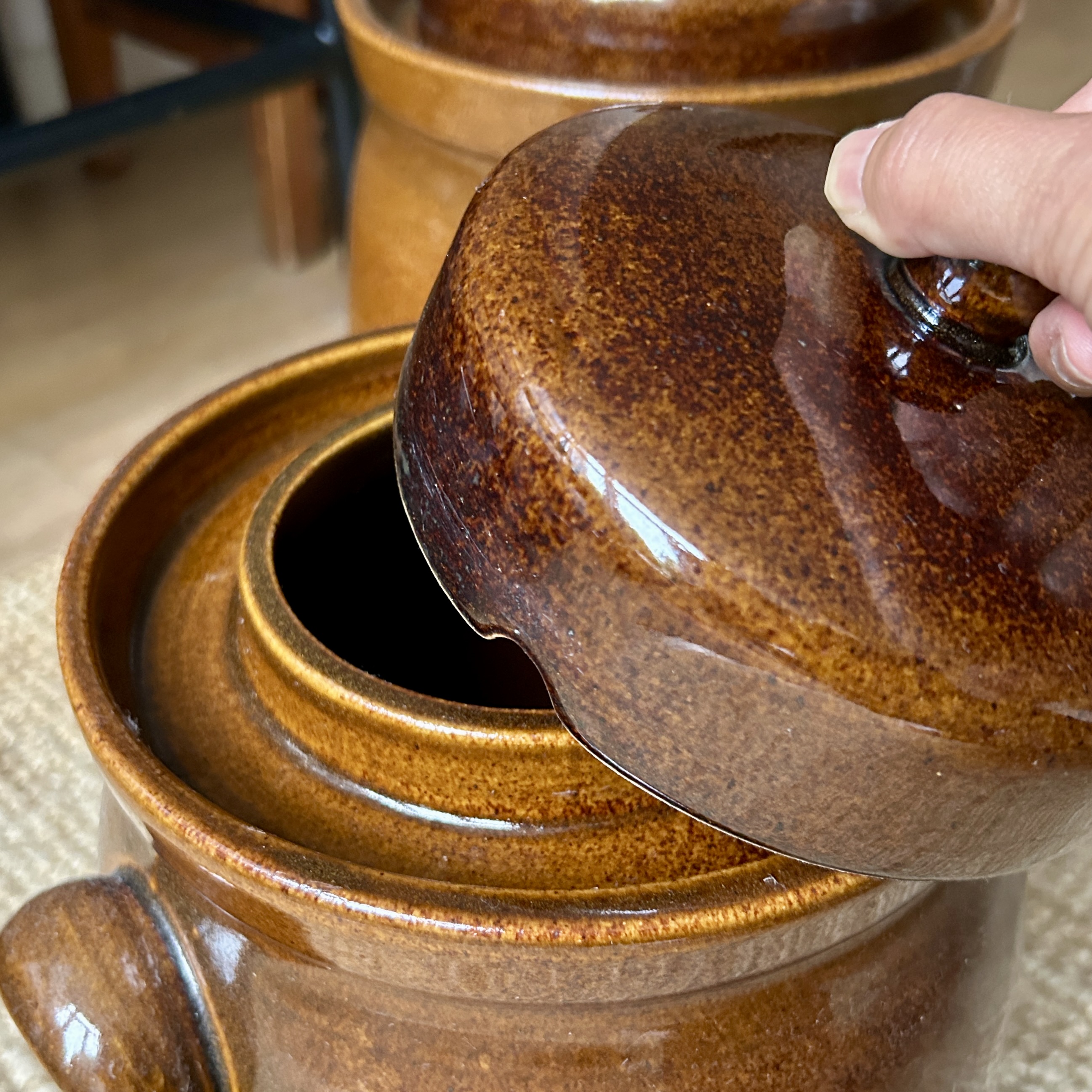
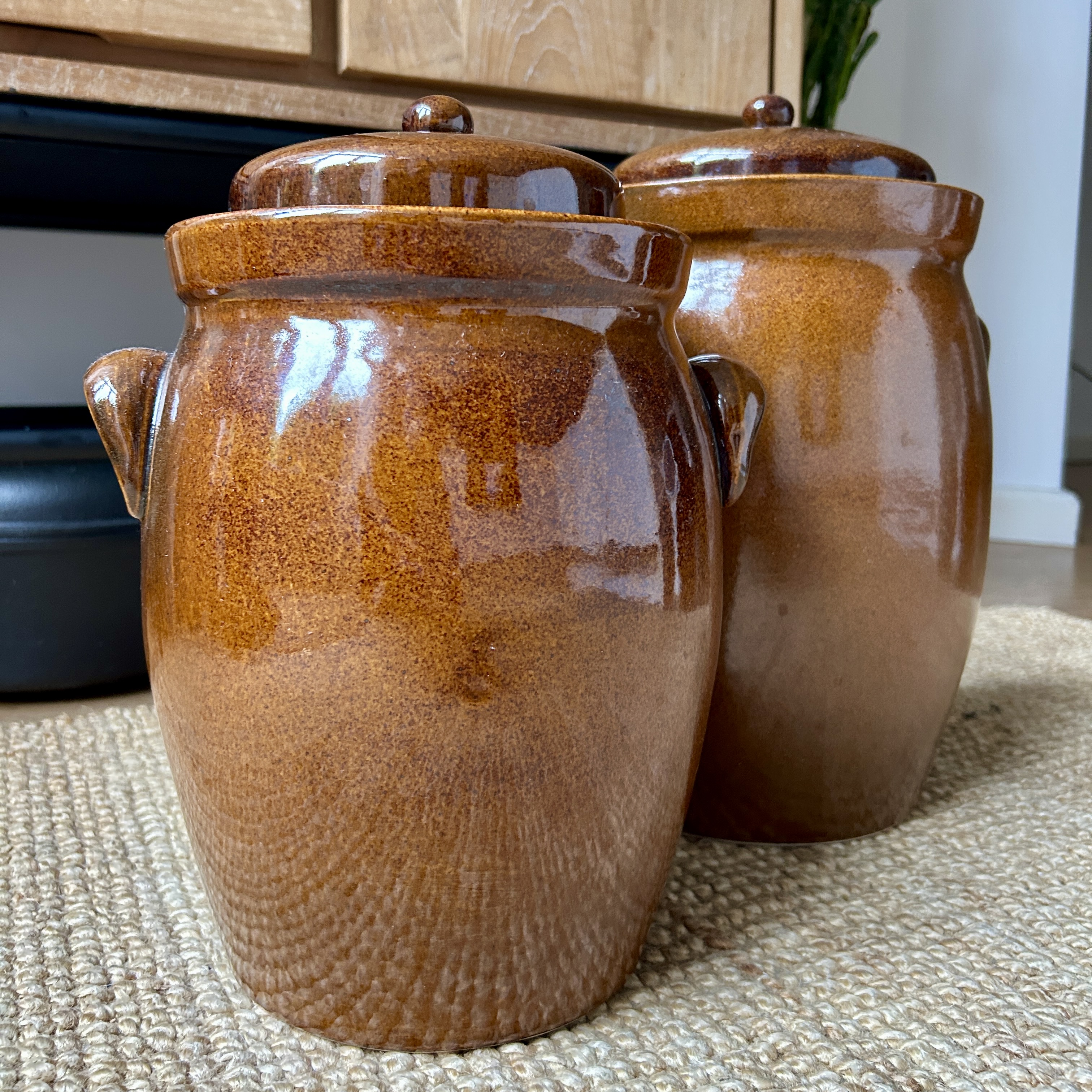
In the corner of my kitchen sit two large fermentation jars I ordered from Germany, the kind used for making sauerkraut. They are a compromise, since I cannot find onggi here. Each has a built-in water seal around the rim, locking out air while letting gas escape. Clever. I no longer need to burp the plastic kimchi container, though I still keep it in the pantry. It is one of those things I cannot quite get rid of. One day I will. For now, I am still holding on to it.
Champagne and kimchi are not an obvious pairing. But in that cool fermentation room at a small family winemaker’s, I saw the airlock and water trap. When the guide described fermentation as Pac-Man eating sugar and farting it out, I was picturing my own hands at home, pressing down the lid and burping my kimchi. Over generations, people passed down knowledge and found ways to make travel safer. But bottles still burst and bags still pop, because pressure has to find a way out.