Deep Dive

Common Gimbap Ingredients & How They’re Prepared

The ingredients for gimbap are prepared in various ways, including pickling, braising, blanching, stir-frying, and making rolled omelets, showcasing a range of cooking techniques that enhance their flavors and textures.

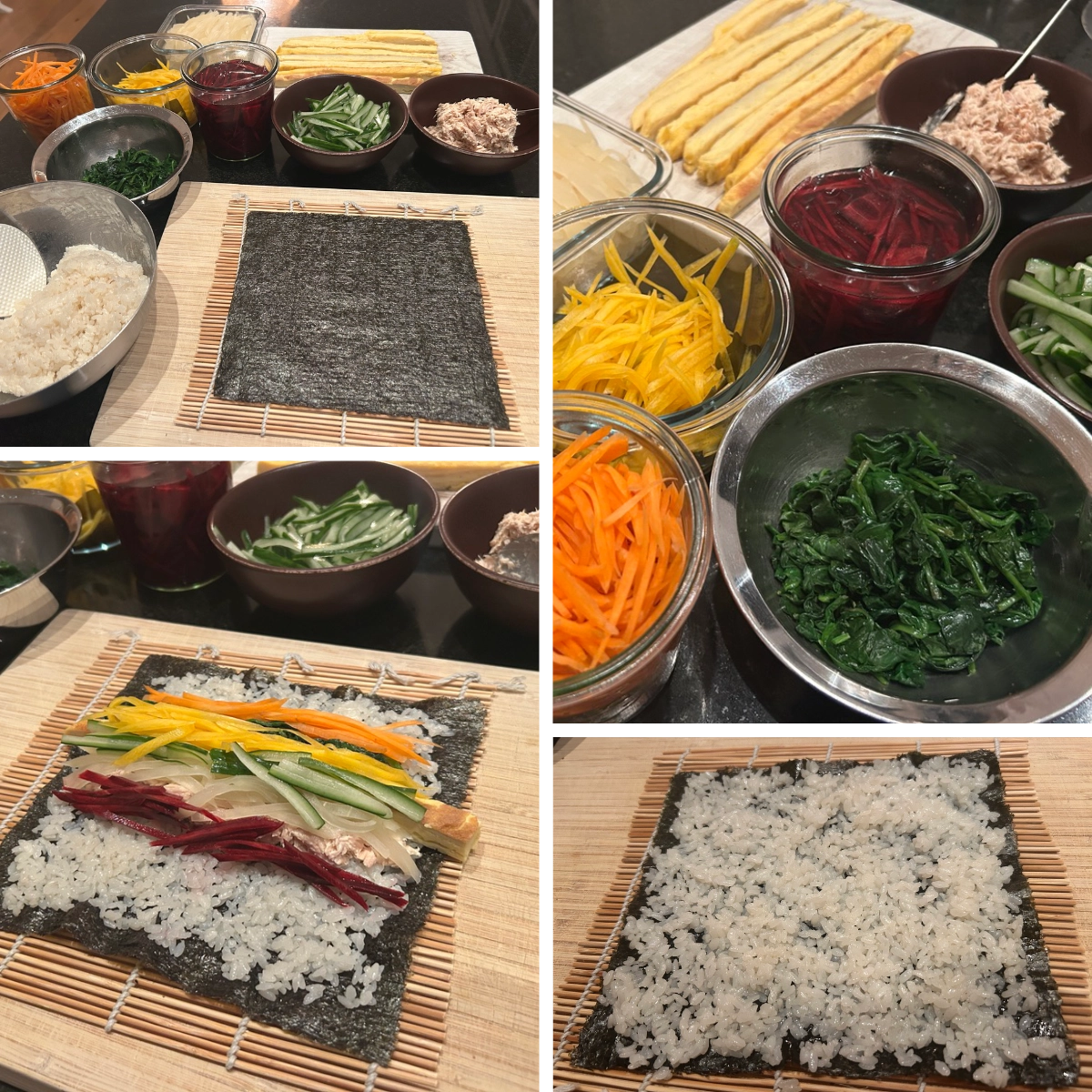
Each ingredient is cut into long strips to match the length of the gim, then rolled in seaweed topped with a thin layer of rice seasoned with sesame oil and salt to taste.

Gimbap preparation showing cooked rice on seaweed, neatly arranged vegetables, egg strips, and tuna laid out before rolling.
Making gimbap, step by step—ingredients prepped, layered, and rolled with care. Photos by the author.

Vegetables

  • 단무지 (danmuji): pickled — 절임 (jeorim)
    Sweet yellow pickled radish.
  • 우엉 (ueong): braised — 조림 (jorim)
    Burdock root simmered in soy sauce and sugar.
  • 시금치 (sigeumchi): blanched & seasoned — 무침 (muchim)
    Lightly salted, often with sesame oil.
  • 당근 (danggeun): stir-fried — 볶음 (bokkeum)
    Cooked briefly to soften but keep texture.
  • 오이 (oi): fresh or lightly seasoned — 무침 (muchim)
    Used sparingly for crunch.

Protein & others

  • 햄 (haem): pan-fried — 볶음 (bokkeum)
    Classic school-style filling.
  • 계란 (gyeran): rolled omelet — 지단 (jidan)
    Sliced into long strips.
  • 어묵 (eomuk): stir-fried or braised — 볶음 (bokkeum) or 조림 (jorim)
    Seasoned fish cake.
  • 맛살 (matsal): prepared as-is or lightly dressed
    Imitation crab, common in everyday gimbap.

← Back to the Article: 
The Best Cake in the World